
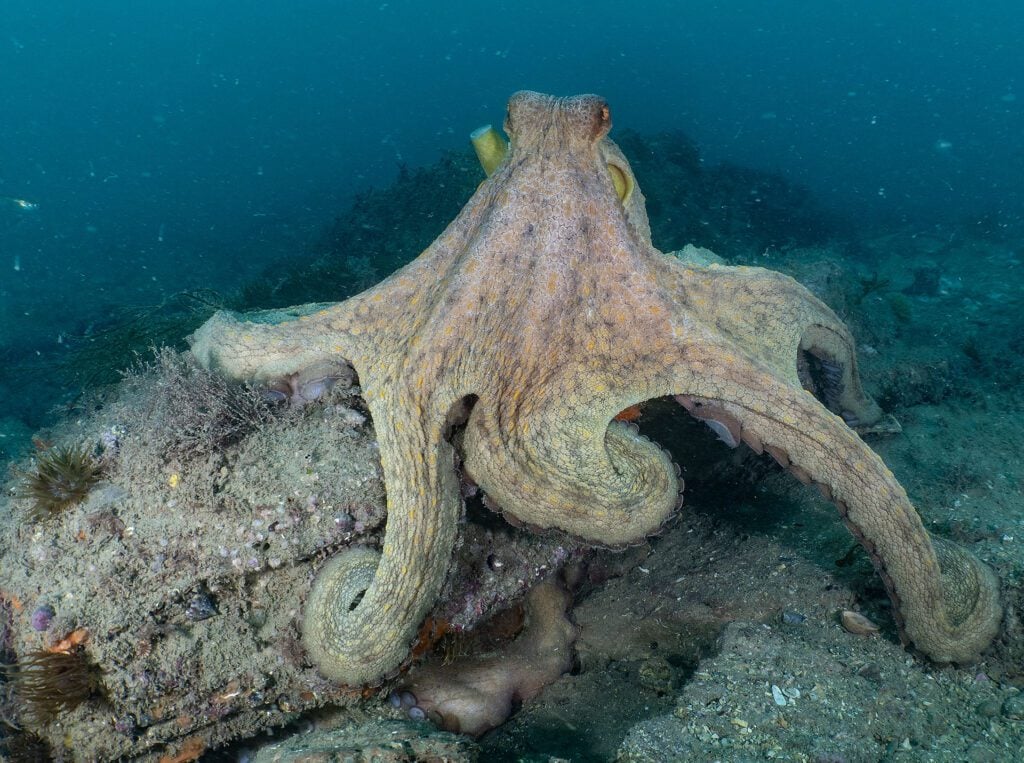
You may have heard about recent blooms in octopus, particularly in south-west England, whereby there have been a huge increase in sightings and catches of Common Octopus (Octopus vulgaris) since around January last year.
Although Common Octopus are native in the UK, they are generally rarely recorded, and are more common around southern Europe and the Mediterranean where the water is warmer. With rising water temperatures around our coasts being recorded, an increase in their numbers is really no surprise; a study by the Marine Biological Society confirmed that marine heatwaves were recorded during this and historically recorded octopus blooms.
A sudden change in species composition can have an effect on food webs as well as the fishing industry. Octopus are carnivorous predators; they will eat a range of prey including crustaceans, molluscs and small fish. Fishers in the west country have reported impacts to their catch where octopus had predated on it – particularly crabs, lobsters and scallops.
Although currently the blooms are principally in south-west England, a few sporadic reports have been made in Sussex waters, whereby octopus have been hauled up in fishing pots.
In order to track the changes, the Marine Management Organisation has launched a new Octopus Reporting Portal, encouraging sightings to be logged by anyone who sees one. If you’re a recreational angler, diver, or any other sea user, please do report your sightings!








Leave a Reply