Take action
Become a member
Memberships builds our community and gives us a predictable income, which lets us plan and sustain longer projects that can have a greater impact. The more members we have, the more we can do to protect the Sussex countryside and coast.
Make a donation
Membership builds our community and gives us a predictable income, which lets us plan and sustain longer projects that can have a greater impact. The more members we have, the more we can do to protect the Sussex countryside and coast.
Overview
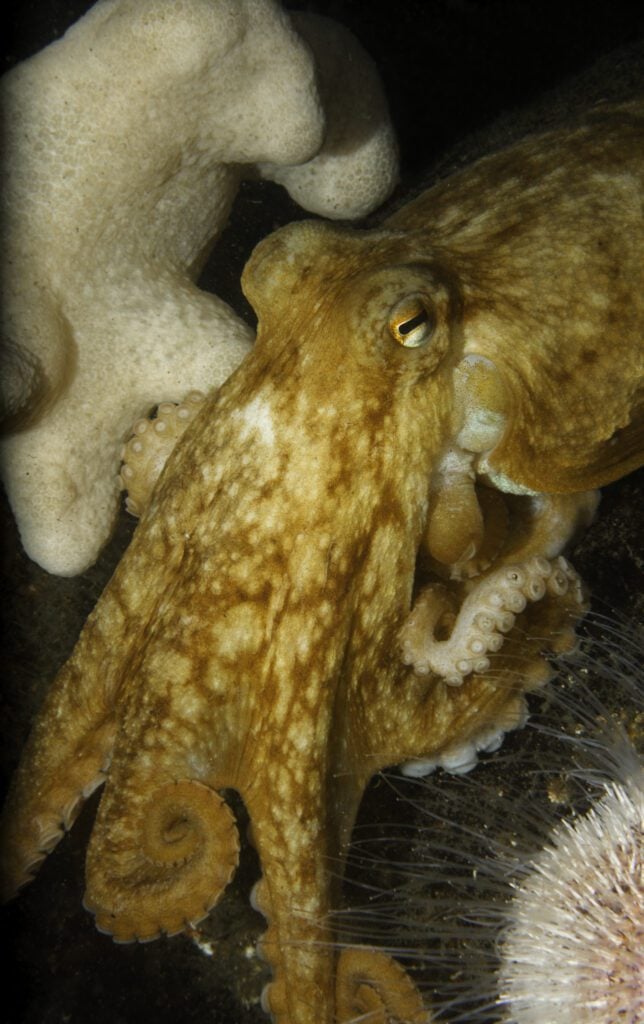
Octopuses are relatives of squid and cuttlefish – a group of molluscs known as cephalopods. Common Octopuses are masters of camouflage and will change colour and texture depending on their mood or the situation.
The Common Octopus’s favourite food is crabs – in fact a pile of empty crab shells is normally a sign that a well-fed octopus is somewhere nearby! Octopuses are pretty inactive during the daytime, so it’s easier to spot them out and about on a night dive.
Key Facts
- Common Octopuses have 8 arms attached to their head, each with a double row of suckers. They have a soft-bag like body and can squeeze into the smallest of spaces to avoid predators or hide from their prey. Their body is changes colour depending on their environment and mood, though it normally appears brownish-green.
- Female Common Octopuses are devoted mothers, watching over her eggs night and day and flushing them with water from her funnel in order to keep them aerated. She normally dies after they have hatched.
- Length: 60-100cm
Status
Common
Seasonality
All year round