Take action
Become a member
Memberships build our community and give us a predictable income, which lets us plan and sustain longer projects that can have a greater impact. The more members we have, the more we can do to protect the Sussex countryside and coast.
Make a donation
Membership builds our community and gives us a predictable income, which lets us plan and sustain longer projects that can have a greater impact. The more members we have, the more we can do to protect the Sussex countryside and coast.
Overview
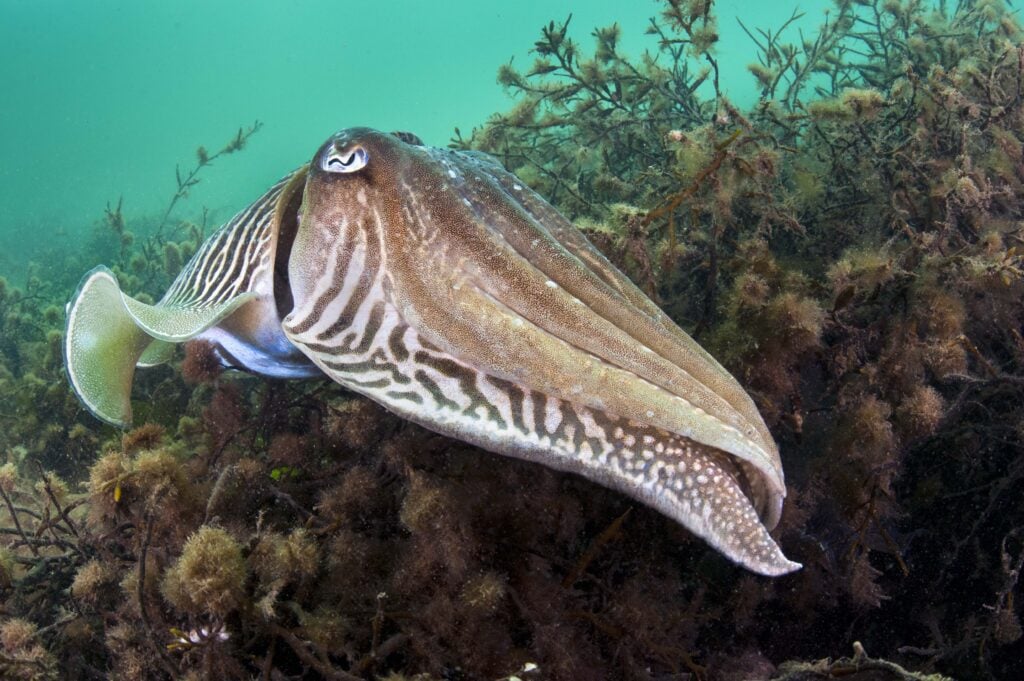
Common Cuttlefish are the largest found in UK seas and a fierce predator. They make light work of crabs, fish and even small cuttlefish! They live in water up to 200 metres deep but come to shallow waters to breed in spring.
Their eggs are dyed black with cuttlefish ink, which gives them the appearance of grapes – giving them their name ‘sea grapes’. Cuttlefish usually live for two years and die after they have bred.
Key Facts
- Cuttlefish are a chunky squid-like creature with a well-developed head, large eyes and mouths with beak-like jaws. They have a fin that runs around their body, eight ‘arms’ with suckers plus two tentacles around the mouth. Cuttlefish are extremely variable in colour, but are usually blackish-brown, mottled or striped. The cuttlebones found washed ashore are white, chalky and oval-shaped with thin harder ‘wings’ at one end.
- Cuttlefish can quickly change colour and texture to merge into their background, distract predators or attract mates. They can easily mimic different types of seabed and will sometimes even sink into a sandy seabed to hide from predators, leaving only their eyes exposed. During spring and summer, males engage in spectacular displays to attract females, passing pulses of colour rapidly along their bodies.
- Length: up to 45cm Average Lifespan: 2 years
Status
Common
Seasonality
All year round