Take action
Become a member
Memberships build our community and give us a predictable income, which lets us plan and sustain longer projects that can have a greater impact. The more members we have, the more we can do to protect the Sussex countryside and coast.
Make a donation
Membership builds our community and gives us a predictable income, which lets us plan and sustain longer projects that can have a greater impact. The more members we have, the more we can do to protect the Sussex countryside and coast.
Overview
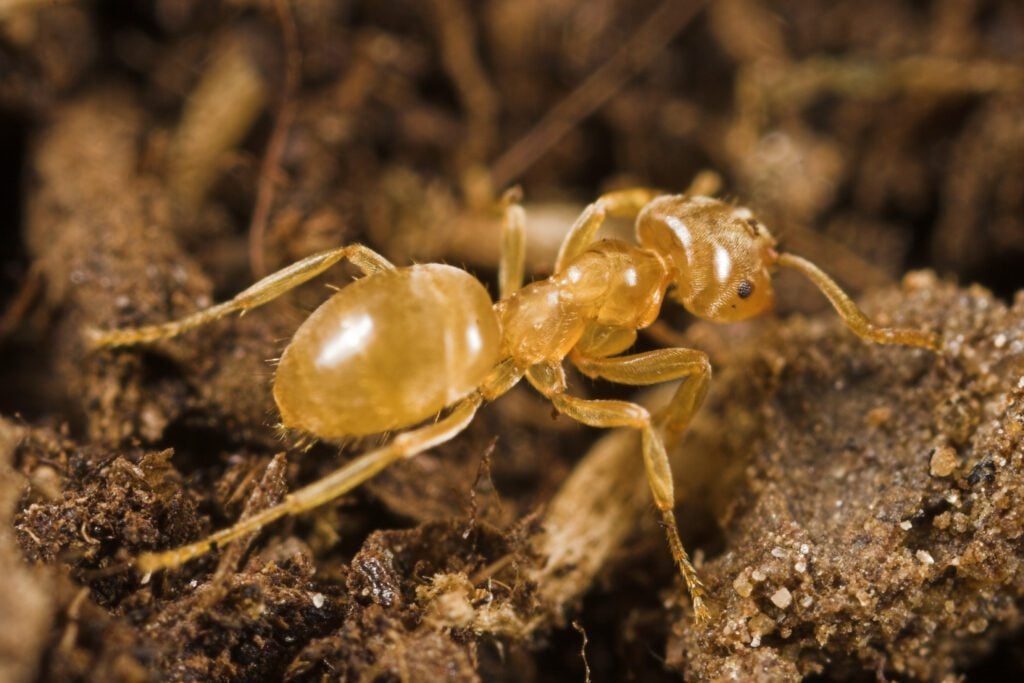
The Yellow Meadow Ant is familiar to us as the common ant that creates anthills in grassland and downland habitats, but also appears in our gardens if the grass is not cut too often. They build a soil dome above the nest, which can extend a metre below the ground, to help regulate temperature and humidity.
Key Facts
- The Yellow Meadow Ant is, as its name suggests, a yellowy-brown colour. It is one of several closely related and very similar species that build anthills.
- Yellow Meadow Ants spend most of their life underground where they feed on honeydew produced by aphids which they ‘farm’ on the roots of grass.
- Like all ants, the Yellow Meadow Ant is social and forms colonies; the workers are mainly active underground, however, and not often seen unless the nest is disturbed. During summer, winged adults pair and mate, the females dispersing to form new colonies.
- Length: 2-4mm
Status
Common
Seasonality
All year round