account arrow-down-select arrow-down arrow-left arrow-right arrow-small bluesky book calendar close email eventbriteexternalfacebook instagram linkedin locationphone pinterest plus quote search tiktok time twitter video-icon

Accredited training and teacher CPD

Our experienced education team have been delivering accredited training in outdoor learning since 2005.

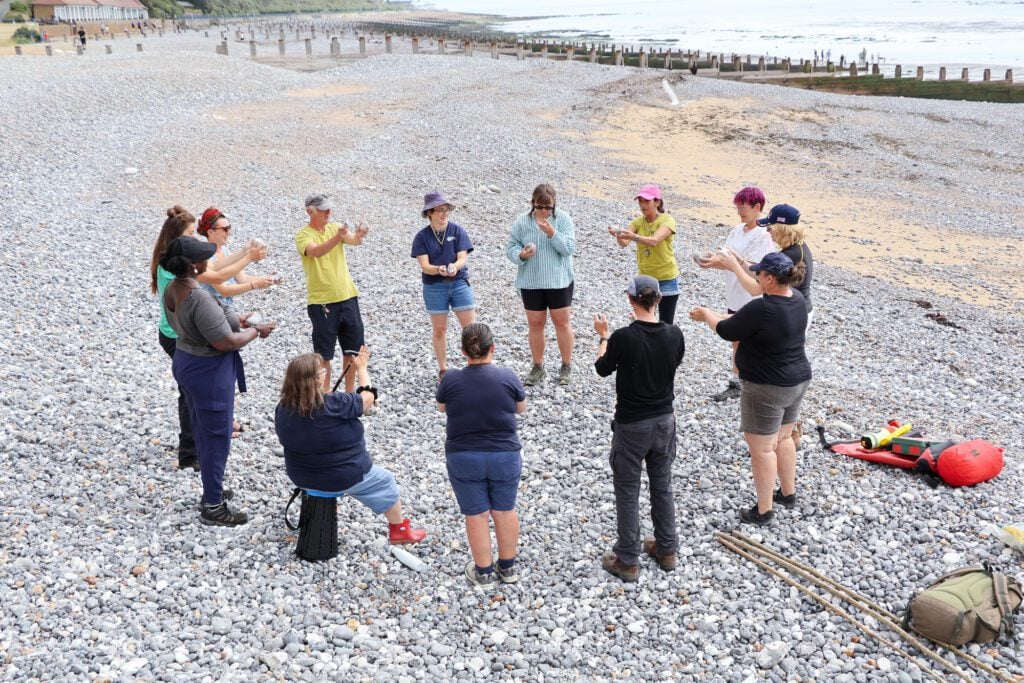
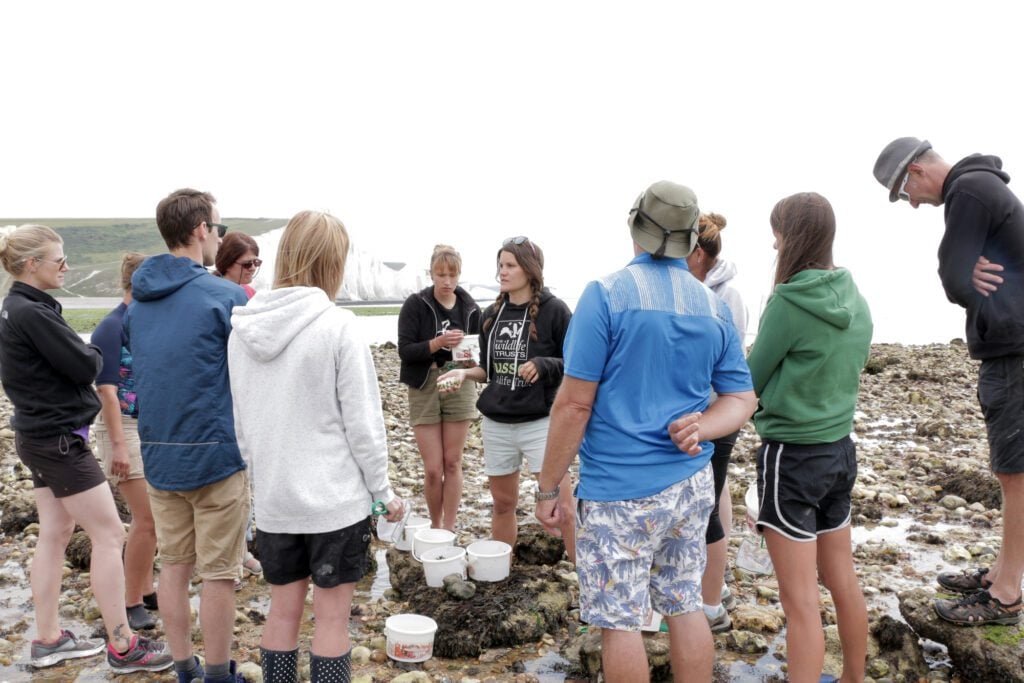
People standing in a circle on pebbly beach Wild Beach Training ©Kai Hilton
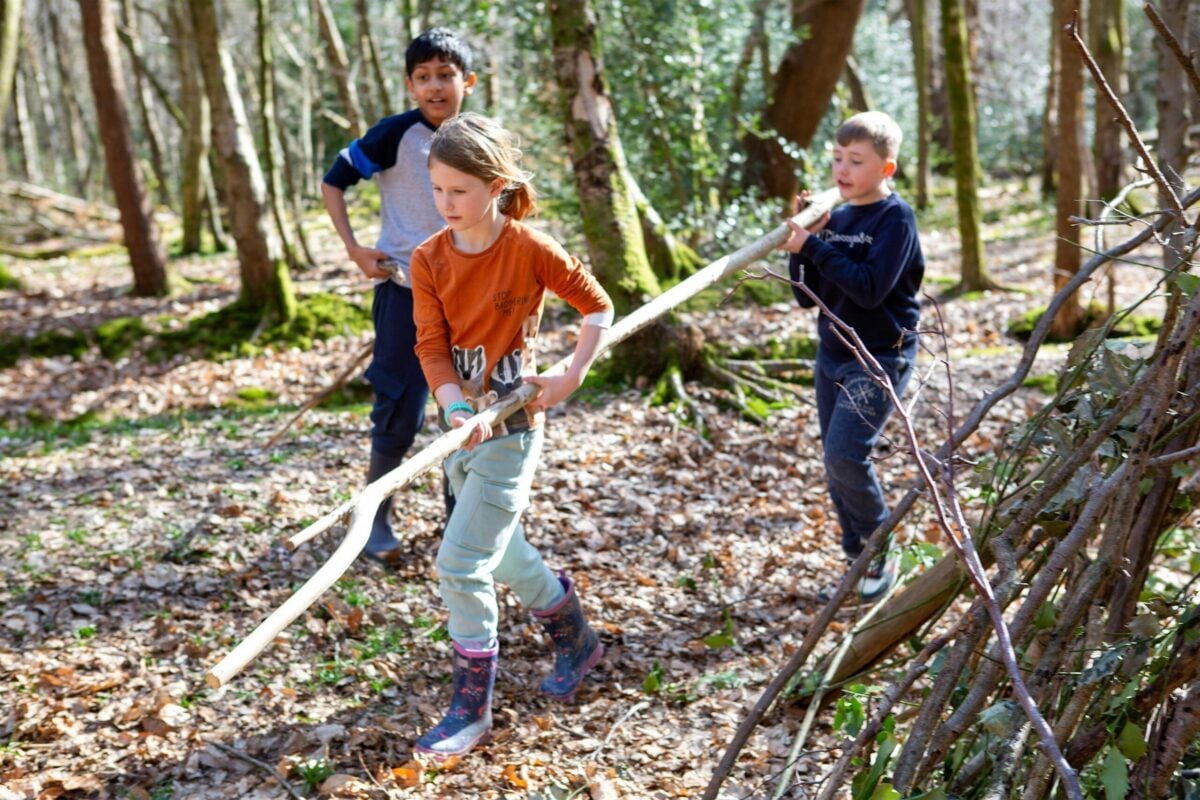
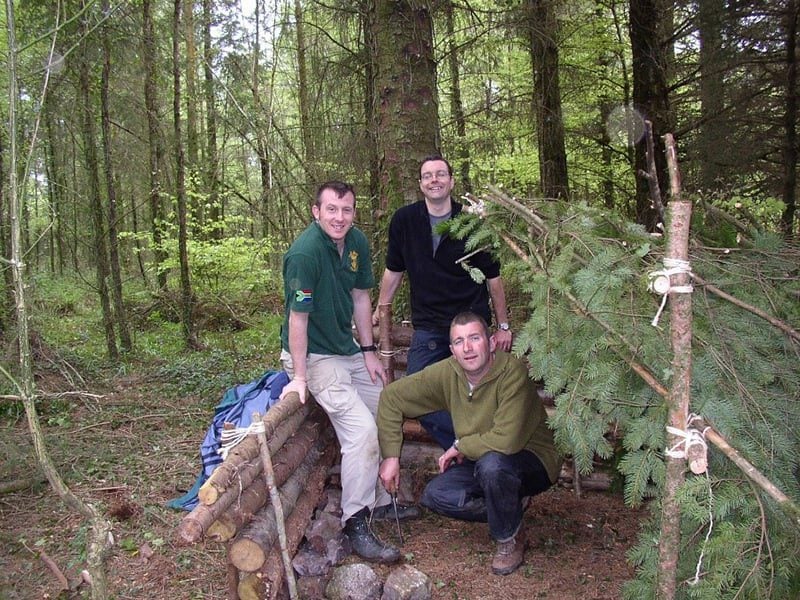
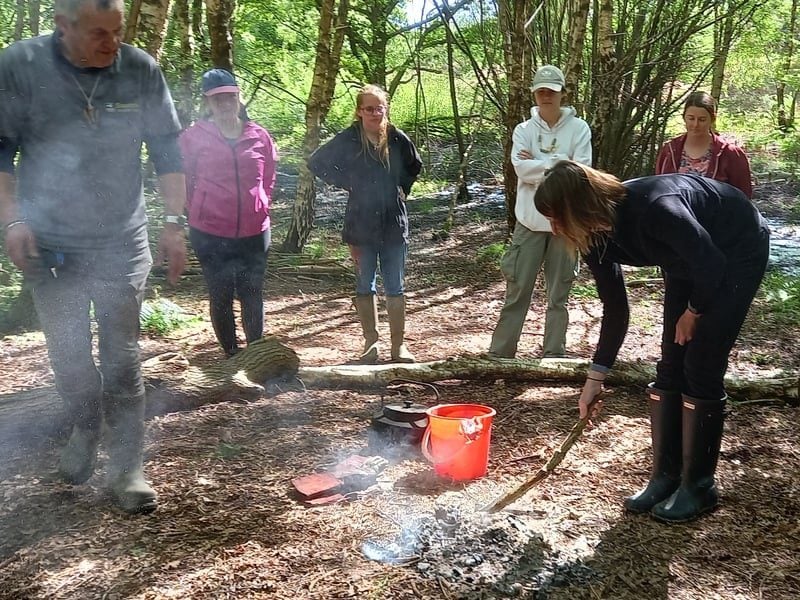
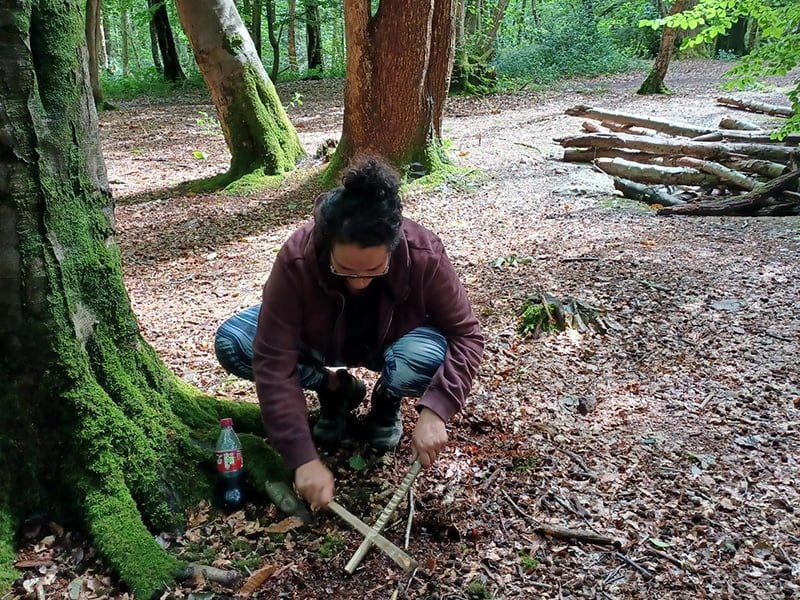
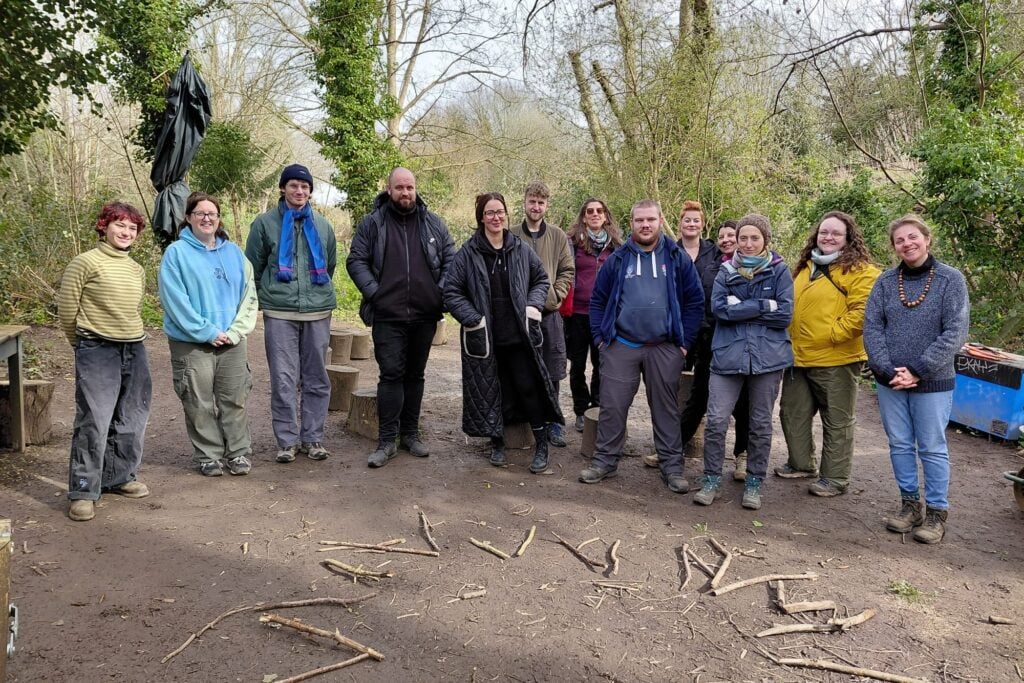
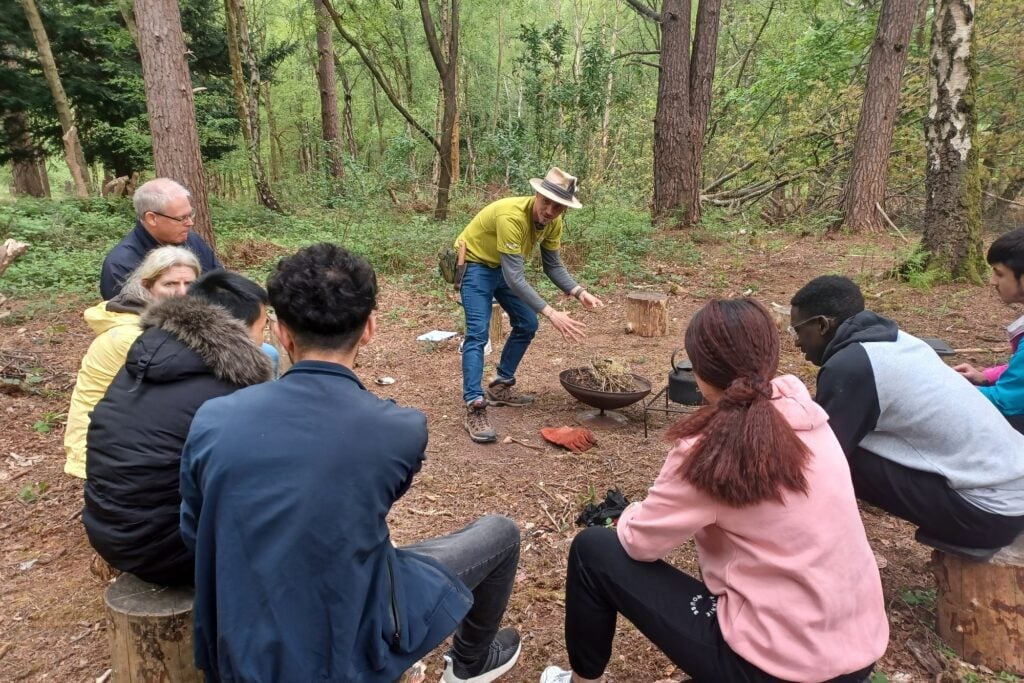
Forest School trainees © Natasha Sharma
Wild Beach Training @ Sam Roberts
Forest School with Mark Newton Gatwick Greenspace Tamara Jewell 1Forest School with Mark Newton & Gatwick Greenspace © Tamara Jewell

Empowering teachers to take learning outdoors

Recognised nationally for our Forest School Association (FSA) supported Forest School training programmes, and our pioneering Wild Beach training, we also partner with nationally recognised teacher CPD providers to deliver National Curriculum aligned training, support and networking on our nature reserves.

We empower teachers to take learning outdoors, whatever their outdoor space, subject or year group.

AIM logoAIM logo
315 Wild Beach trainees

trained with us over the last 10 years

942 Forest School trainees

trained with us over the last 10 years

82 training sessions

delivered in 2025 – 2026

36360 young people

influenced in 2025-2026 as a result of our training

What we do

Forest School training

AIM logoAIM logoSWT_21st_May_37

Our accredited Forest School training programmes have been delivered in Sussex by our experienced team since 2005.

Promoting the reconnection between people and their natural environment is at the heart of our ethos, and this is reflected in all areas of our courses.

We are active members of the Forest School Association (FSA) and deliver our training through OFQUAL regulated and FSA supported awarding body, Aim Qualifications and Assessment Group. We offer 3 levels of accredited Forest School training across locations in Sussex.
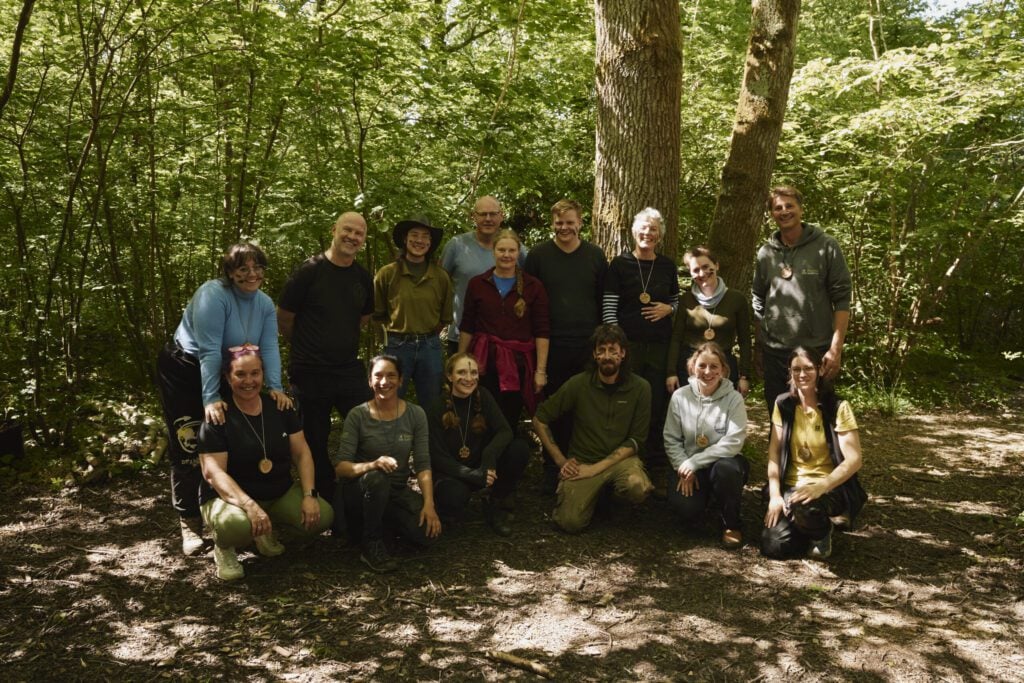
SWT 21st May 37

Course comparison – which level is right for me?

Level 1 – Introduction to Forest School

Who’s the course for?

Those who are interested in learning more about the Forest School approach to learning.

Entry criteria

  • Over 18 years of age 
  • Have an interest in working with children and young people outdoors

Accreditation level

AIM Qualifications and Assessment Group Level 1 Award in: ‘Introduction to Forest School Principles’ (QCF)

After completing, can I lead my own Forest School sessions?

No – assist only

Time commitment required for course completion

14 hours:

  • 1 day of in person training
  • 7 hours self directed study

Nice to have before you start

Have in mind a Level 3 Qualified Forest School Leader who runs sessions of which you could observe one session, after the course, to help complete your coursework.

Level 2 – Forest School Assistant

Who’s the course for?

Individuals wishing to assist with the delivery of a Forest School programme.

Entry criteria

  • Over 18 years of age 
  • Have experience in working with children and young people outdoors

Accreditation level

AIM Qualifications and Assessment Group Level 2 Award in: ‘Forest School Programme Support (QCF)’

After completing, can I lead my own Forest School sessions?

No – assist only

Time commitment required for course completion

70 hours

  • 4 consecutive days in-person training
  • 1 day of Woodland Management
  • 2 mentoring days (5 hours each)
  • 1 Networking Event (4 hours)
  • Online Moodle Hubken induction (1 hour)
  • 16 hours self directed study

Nice to have before you start

Identified a suitable Level 3 Qualified Forest School Leader for you to assist with at least 3 Forest School sessions.

Level 3 – Forest School Leader

Who’s the course for?

Individuals wishing to develop, lead and manage Forest School programmes and gain the nationally recognised standard of Forest School training.

Entry criteria

  • Over 21 years of age 
  • Holds Level 2 or higher qualification in teaching, pre-school education, youth work or have significant experience of working with young people in the outdoors
  • Must hold a First Aid certificate by the end of the course

Accreditation level

FSA Level 3 Certificate in Forest School Programme Leadership (QCF)

After completing, can I lead my own Forest School sessions?

Yes

Time commitment required for course completion

180 hours:

  • 8 days of in-person training
  • 2 days of Woodland Management 
  • 4 mentoring days (20 hours)
  • 1 Networking Event (4 Hours)
  • Online Moodle Hubken induction (1 Hour)
  • On-site supportive visit (4 Hours)
  • 84 hours of self-directed study

Nice to have before you start

Identified a suitable Level 3 Qualified Forest School Leader (with minimum 2 years experience), running a Forest School session for you to visit. A suitable site and group to deliver your ‘Introduction to Forest School’ programme. This will consist of a minimum 6 two-hour sessions with the same group.

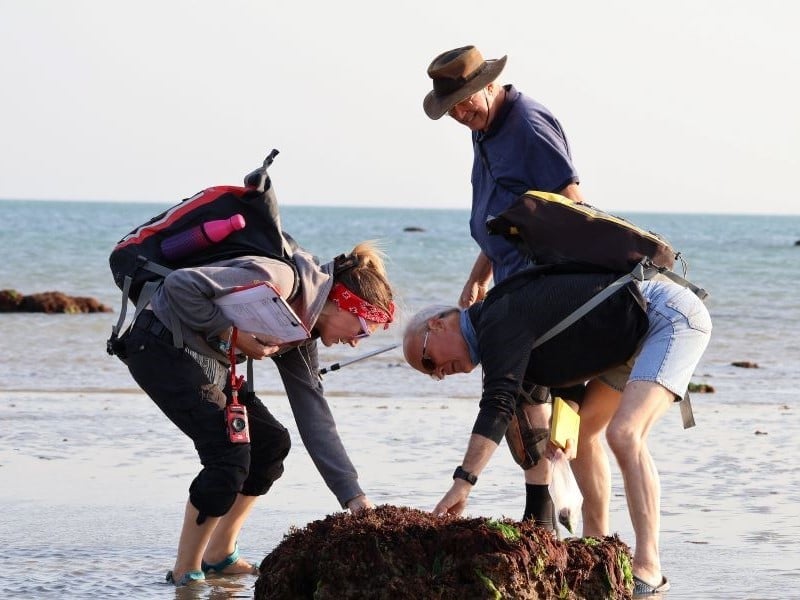
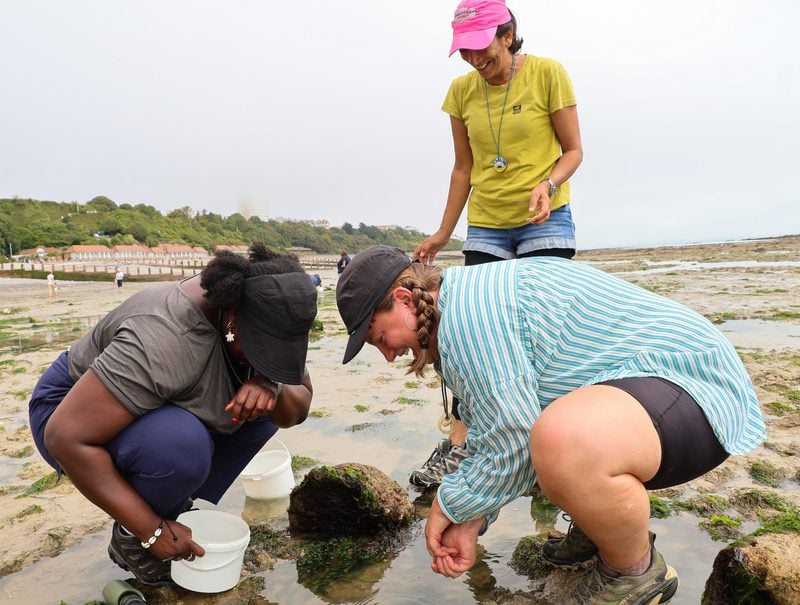
Three people looking at items on the beachWild Beach Training © Kai Hilton

What we do

Wild Beach training

AIM logoAIM logo

Train as a Wild Beach Leader on Sussex’s dynamic coastline with an accredited course uniquely developed by Sussex Wildlife Trust and now adopted by Wildlife Trusts nationally.

Grounded in a Forest School approach, you’ll gain practical skills in beach safety, shelter-building and coastal exploration, alongside a deeper understanding of marine environments.

Through hands-on experiences, you’ll learn to inspire ocean connection and create meaningful, nature-based learning on the beach, whatever your setting or age group.

Forest School Training FAQ

I want to enrol on level 2 or 3 – do I need to have completed previous levels?

You don’t need to have completed level 1 to enrol on a level 2 course, or a level 2 to enrol on a level 3 course.

All our courses are standalone – you’re able to enter at any level, so long as you reach the entry criteria for the course.

Do I need a first aid certificate for any of the courses?

All level 3 participants must hold a First Aid certificate by the end of the course. This needs to be arranged by the participant, as Sussex Wildlife Trust does not offer this training.

Suitable options are:

What‘s the time commitment and content for Level 1?

Level 1 –  Introduction to Forest School

Total course completion time: 14 hours

  • 1 day of in-person training in a woodland setting, 9:30- 16:30
  • 7 hours self-directed study to complete your coursework.

As part of the coursework, you will need to attend at least one Forest School session run by a Level 3 Qualified Forest School Leader and complete your observations of this session. It is your responsibility to arrange this observed session and have it signed off by the Forest School Leader.

Completion of Level 1 workbook within six months of the course start date, submitted by email or post.

What‘s the time commitment and content for Level 2?

Level 2 – Forest School Assistant

Total course completion time: 70 hours

Before the course starts, you will attend an online Moodle Hubken induction (1 hour), this meeting introduces you to your course tutors and our online learning platform where you’ll submit your coursework. It’s a chance to ask any questions about the coursework, learning platform and course. 

4 consecutive days in-person training in a woodland setting, 9:30- 16:30

2 mentoring days (5 hours each). Online or in person at The Keep, Woollards Way, Brighton, BN1 9BP. These two days are to support you with the completion of your coursework. 

1 Networking Event (4 hours). Connect with fellow Forest School Practitioners around a campfire for a skills share & cook session.  Time to reflect and refresh your Forest School practice, connect with your fellow practitioners and help to establish new relationships in your local area. 

1 Woodland Management Day. Complete seasonal practical tasks in green spaces, guided by Sussex Wildlife Trust staff, to develop skills in Forest School site management. A range of dates to select from during the duration of your course. 

16 hours self directed study to complete your coursework.

As part of the coursework, you will need to assist with at least three Forest School sessions run by a Level 3 qualified Forest School Leader and independently complete your observations and record of support. 

Completion of Level 2 workbook within six months of the course start date, submitted on our learning platform, Moodle (Hubken/Titus provider).

What’s the time commitment and content for Level 3?

Level 3 – Forest School Leader

Total course completion time: 180 hours

Before the course starts, you will attend an online Moodle (by Hubken/Titus) induction (1 hour), this meeting introduces you to your course tutors and our online learning platform where you’ll submit your coursework. It’s a chance to ask any questions about the coursework, learning platform and course. 

8 days of in-person training split into: 5 and 3 consecutive days in a woodland setting, 9:30- 16:30

4 mentoring days (5 hours each). Online or in person at The Keep Woollards Way, Brighton, BN1 9BP. These 4 days are to support you with the completion of your coursework. 

2 Woodland Management Days. Complete seasonal practical tasks in green spaces, guided by SWT staff, to develop skills in Forest School site management. A range of dates to select from during the duration of your course.

1 Networking Event. Connect with fellow Forest School Practitioners around a campfire for a skills share &  cook session.  Time to reflect and refresh your Forest School practice, connect with your fellow practitioners and help to establish new relationships in your local area. 

1 On-site supportive visit. One of our team will visit you in your Forest School during a session you are leading. This is to provide on-site support and guidance on practical elements of your practise in accordance with the Forest School principles 

84 hours self directed study to complete your coursework.

In order to complete your coursework, you will need to have a suitable site and a client group to deliver your ‘Introduction to Forest School’ programme. This will consist of a minimum 6 two-hour sessions with the same client group.

You will also need to observe 1 Forest School session led by a Level 3 Forest School Leader who has been delivering for a minimum of 2 years. 

Completion of your level 3 coursework should be completed within 12 months of the course start date on our learning platform, Moodle (Hubken/Titus provider). 

What are the different levels of accreditation?

Level 1 – introduction to Forest School
On successful completion of the course, you will be awarded an AIM Qualifications and Assessment Group Level 1 Award in Introduction to Forest School Principles (QCF) (3 credits)

Please note that the Level 1 award will not entitle you to lead your own Forest School sessions. 

Level 2 – Forest School Assistant
On successful completion of the course, you will be awarded an AIM Qualifications and Assessment Group Level 2 Award in Forest School Programme Support (QCF) (7 credits, 3 credits are at level 3 and 4 credits at level 2) 

Please note that the Level 2 qualification will not entitle you to lead your own Forest School sessions. 

Level 3 – Forest School Leader
On successful completion of the course, you will gain the nationally recognised qualification Level 3 Certificate in Forest School Programme Leadership (QCF), which was developed in collaboration with the Forest School Association (FSA) accredited by the AIM Qualifications and Assessment Group. (18 credits at Level 3)

What’s covered in the in-person training?

Level 1 – Introduction to Forest School

1 day of in-person training outdoors that cover: Understanding the Forest School Approach to Learning; Participate in a range of Forest School experiences, including safe fire lighting, management and use of a campfire in a Forest School setting, safe use of a range of hand tools and a variety of games and activities; methods of identification of woodland species; how Forest School impacts on the woodland environment; the hazards and risk management at Forest School 

Level 2 – Forest School Assistant:

4 days of in-person training that will prepare you with the skills to effectively support a Forest School Leader in the delivery of Forest School sessions including:

Understanding the Forest School Approach to Learning; 

how experiences can support learning and development at a Forest School;

the role of Assistant at a Forest School in relation to the Forest School ethos, principles and criteria; Understanding woodland structure and how this relates to Forest School sites;

Methods of identification of woodland species;

How to manage the ecological impact of Forest School on the woodland environment; 

The role of risk assessment; carrying out a site risk assessment and a risk-benefit assessment;  Apply a range of practical skills relevant to a Forest School programme including safe fire lighting, management and use of a campfire for cooking in a Forest School setting, safe use of a range of hand tools, safety checks of tools and rope/cords, knot tying and different applications, temporary shelter building and a variety of games and activities.

Level 3 – Forest School Leader:

8 days of in-person training split into 2 modules that will prepare you to plan, deliver and monitor all aspects of a Forest School programme. 

Module 1 – Five consecutive days of training in theory and practice which will cover:

  • Understanding the Forest School Principles, ethos and criteria as well as the rationale of the Forest School Leader;
  • Explore Learning and development theories and how this supports the Forest School approach;
  • Planning and preparation for leading your own forest school, including benefit-risk assessments with instruction on how to create a Handbook to guide your practice;
  • Apply a range of practical skills relevant to the Forest School Programme, such as fire lighting, management and extinguishing;
  • Safe practice and maintenance of a range of hand tools, ropes/cords, knot tying for different applications e.g.  shelter, play structures. 
  • Support in planning and delivering a Forest School Programme, using evaluation as a key tool in developing a child-centred approach.

Module 2 – Three consecutive days of training in theory and practice which will cover:

  • Further develop and assess your practical skills, including using the fire for cooking;
  • Support the development of site management methods, to create own site management plan;
  • Exploration in woodland ecology and its importance to the Forest School leader and environment.
What will I need to bring on the days of the course?

All levels require you to bring:

  • A form of photographic identification with you to register such as a driving licence, passport or other reputable form of photographic ID
  • Work/Gardening (also known as Rigger) gloves
  • Lunch, snacks and plenty of water. Hot water will be available, please bring your own tea/coffee/milk/flask etc.
  • Notebook, pen and camera
  • This is a practical and active outdoor course so please wear plenty of warm clothes, hat and gloves, thermals. It is often cooler in the woods.
  • Full waterproofs including trousers.
  • Please make sure you have closed toe, sturdy shoes or wellington boots suitable for a woodland setting.
  • Always wear long trousers, even if the forecast is a hot day. This is for safe tool use and tick prevention.
  • Consider sun cream and insect repellent (if you’re susceptible)
  • A bag to carry your kit
I want to book a course beyond March next year – why can’t I see the rest of the year?

Our course offer runs in financial years. If you’re wish to book on a course in the next financial year, follow our Eventbrite page to be alerted when next year’s courses are available to book.

I’m keen to book onto a course, but I’m not sure I meet the course criteria – what can I do?

We’re always happy to talk through your experience to see if it would be suitable for the course requirements, please contact us directly on: fstraining@sussexwt.org.uk and one of our friendly team will be more than happy to help.

What are your Terms and Conditions?

You can read our Terms and Conditions online or download them as a PDF.

What if I have a complaint or want to appeal a decision?

Please download our Complaints and Appeals policy (PDF)

What’s your course cancellation policy?

Please ensure you’ve read and understood our Terms and Conditions which outline our Course Cancellation charges and Transfer and Deferral Administration Fees.

We aim to go ahead in most weather conditions; however, activities will not go ahead in severe weather such as high winds, extreme cold and/or persistent heavy rain, and where indoor alternatives cannot be arranged.

You will receive an email and/or a phone call the day before the event to be informed of cancellation. If you are not contacted, the event will be going ahead as planned.

Please ensure all contact details are completed in full and up to date for the duration of your course.

Wild Beach Training FAQ

Who is this course for?

This course is suitable for adults who work with children (from preschool to secondary), young people and the wider community.

It’s an approach to learning in wild places that has its roots in the Forest School approach; repeat engagement, nature connection, learner centred and community focused.

What are the entry criteria for this course?

Participants need to be over 18 years of age and have an interest in working with children and young people outdoors.

How long is the course?

Five consecutive days of in-person experiential learning on the beach, 9:30 – 16:30.

After the course, learners have a short coursework book to complete, to be submitted within 6 months of the course start date.

Will this course lead to a qualification?

On successful completion of the course, you will be awarded an AIM Qualifications and Assessment Group, Level 3 Wild Beach Leader award (6 credits).

What does the course cover?

The course consists of four units:

1. Keeping safe on the beach

In this unit we’ll identify hazards on our beaches and consider risk ratings and control measures that we can put in place to reduce risk. Balancing benefits of exposure to the coastal environment against the risks, we undertake risk benefit analysis.

2. Practical skills on the beach

This unit will equip you with the skills to establish shelter from the extremes of weather our exposed coastline provides throughout the year. You’ll learn some handy knots and lashings and how to utilise the features of your unique beach setting to create shelter.

On Sussex beaches where fire and BBQs are permitted, we’ll consider the learning and development opportunities around fire and cooking on the beach.

3. Understanding the beach environment

This unit will help build your knowledge and understanding around our ever-changing beach environment and how we can share this learning with the people we work with through engaging activities.

We’ll consider how to explore the big questions the beach environment can pose such as: What creatures live in our ocean? What do they eat? Where does the water go? Why are there pebbles on this beach? What’s happening to my shadow?

4. Ocean Connection

Throughout the course, we will explore the pathways to ocean connection through our senses. By exploring rock pools; taking time to watch waves; paddling in the sea, we will notice and appreciate nature’s beauty engaging with it through art, words, and sound. We will investigate the signs and cycles of nature, and explore how the natural world creates meaningful experiences, discussing the numerous benefits this can have on the people we work with.

What will I need to bring?

The training is based outdoors. The kit list below is weather dependant:

  • Please bring a form of photographic identification with you to register such as a driving licence, passport or other reputable form of photographic ID
  • Lunch, snacks and plenty of water. Hot water will be available, please bring your own tea/coffee/milk/flask etc.
  • Notebook, pen and camera
  • This is a practical and active outdoor course so please wear plenty of warm clothes, hat and gloves, thermals. It can be cold on the beach when a sea breeze starts.
  • Full waterproofs including trousers.
  • Please make sure you have closed toe, sturdy shoes or wellington boots and something to paddle in, but please don’t wear flip flops for the course.
  • Consider sun cream and insect repellent.
  • A bag to carry your kit.

What are your Terms and Conditions?

You can read our Terms and Conditions online or download them as a PDF.

What will I need to bring on the days of the course?

The training is based outdoors. The kit list below is weather dependant:

  • Please bring a form of photographic identification with you to register such as a driving licence, passport or other reputable form of photographic ID
  • Lunch, snacks and plenty of water. Hot water will be available, please bring your own tea/coffee/milk/flask etc.
  • Notebook, pen and camera
  • This is a practical and active outdoor course so please wear plenty of warm clothes, hat and gloves, thermals. It can be cold on the beach when a sea breeze starts.
  • Full waterproofs including trousers.
  • Please make sure you have closed toe, sturdy shoes or wellington boots and something to paddle in, but please don’t wear flip flops for the course.
  • Consider sun cream and insect repellent.
  • A bag to carry your kit.
I want to book a course beyond March next year – why can’t I see the rest of the year?

Our course offer runs in financial years. If you’re wish to book on a course in the next financial year, follow our Eventbrite page to be alerted when next year’s courses are available to book.

What are your Terms and Conditions?

You can read our Terms and Conditions online or download them as a PDF.

What if I have a complaint or want to appeal a decision?

Please download our Complaints and Appeals policy (PDF)

What’s your course cancellation policy?

Please ensure you’ve read and understood our Terms and Conditions which outline our Course Cancellation charges and Transfer and Deferral Administration Fees.

We aim to go ahead in most weather conditions; however, activities will not go ahead in severe weather such as high winds, extreme cold and/or persistent heavy rain, and where indoor alternatives cannot be arranged.

You will receive an email and/or a phone call the day before the event to be informed of cancellation. If you are not contacted, the event will be going ahead as planned.

I’d like to stay connected with other Wild Beach practitioners after the course has ended – what can I do?

We hold networking events throughout the year  to share skills, re-visit rockpools and enjoy a wild day at the beach to inspire your practice. The day serves as a meeting point for everyone who is Wild Beach Trained and wants to meet each other, find out about activities and sessions that have worked well, re-visit the beach environment, underseas wildlife to inspire future practice and enjoy some time in wonderful blue space.

Follow our Eventbrite page to keep up to date with when our networking days are happening.

Join the Sussex Wildlife Trust community

Become a member today to protect nature for tomorrow

As a member, you get access to free guided nature walks, magazines about local wildlife, discounts on courses and events, and a guide to our reserves.

Not quite ready to join but want to help?

Donate to help create a wilder future for nature in Sussex

Choose to give money to a specific cause, or to our work to manage local reserves, defend nature, and create wonderfully wild spaces on land and beneath the waves.