Take action
Become a member
Memberships builds our community and gives us a predictable income, which lets us plan and sustain longer projects that can have a greater impact. The more members we have, the more we can do to protect the Sussex countryside and coast.
Make a donation
Membership builds our community and gives us a predictable income, which lets us plan and sustain longer projects that can have a greater impact. The more members we have, the more we can do to protect the Sussex countryside and coast.
Overview
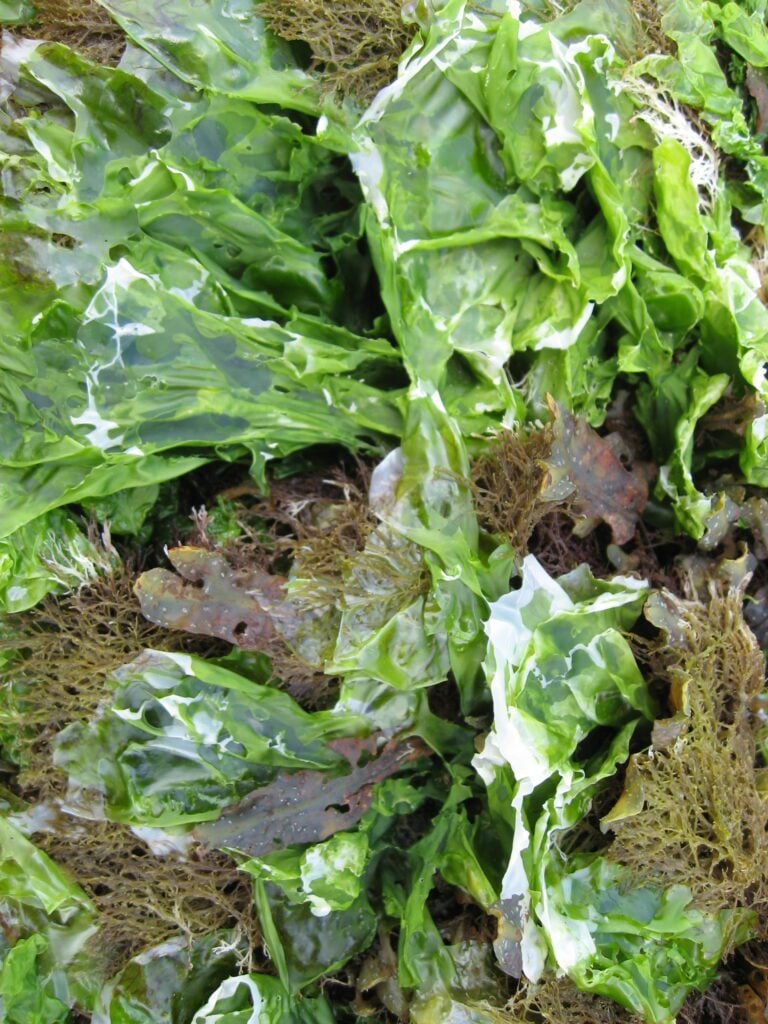
Sea Lettuce is a common seaweed, found attached to rocks and other surfaces using a small holdfast or living in rockpools if it has become detatched. The detatched fronds continue to grow and can create large floating colonies. The ruffled fronds are unique – bright green and translucent, being only two cells thick. It is this ruffling that gives it the name Sea Lettuce – as it looks a bit like a lettuce leaf!
Key Facts
- Sea Lettuce lives up to its name: it looks like green, floppy lettuce leaves which are often tatty in appearance but are quite tough.
- Sea Lettuce is sometimes eaten as ‘Green laver’ but ‘Purple laver’ (Porphyra umbilicalis) is much preferred. Both are used to make laver bread – a Welsh speciality – and are also used to complement rice in Japanese and Korean cooking.
- Length: up to 20cm Frond width: up to 30cm
Status
Common
Seasonality
All year round