Take action
Become a member
Memberships builds our community and gives us a predictable income, which lets us plan and sustain longer projects that can have a greater impact. The more members we have, the more we can do to protect the Sussex countryside and coast.
Make a donation
Membership builds our community and gives us a predictable income, which lets us plan and sustain longer projects that can have a greater impact. The more members we have, the more we can do to protect the Sussex countryside and coast.
Overview
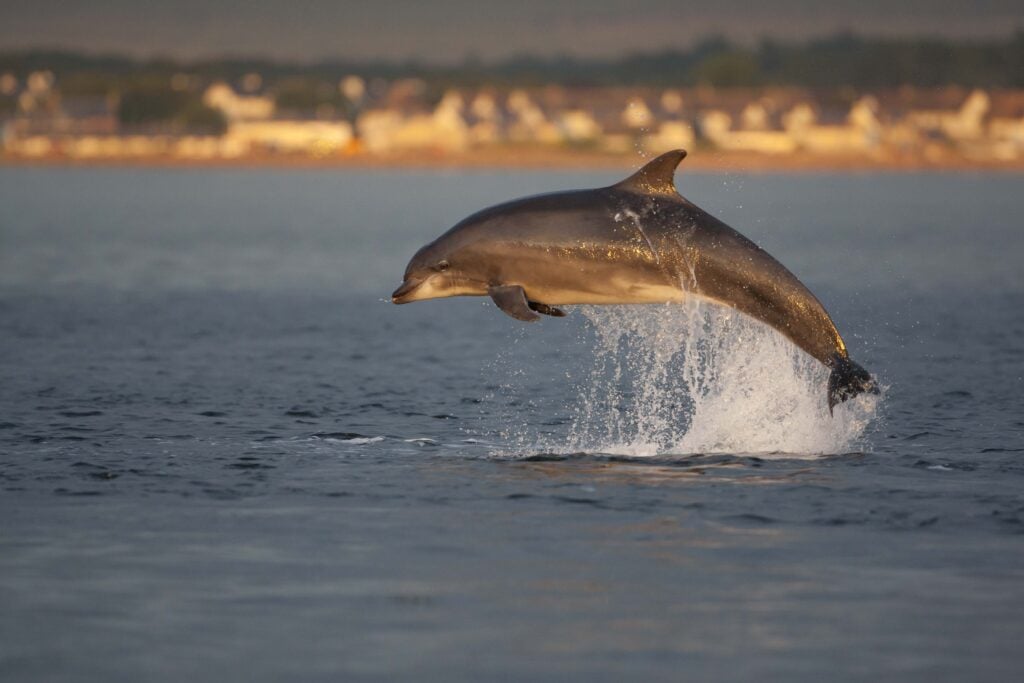
Bottlenose Dolphins are the most familiar of our dolphins and most likely seen from British shores. These dolphins are the biggest Bottlenose Dolphins in the world – their size helps them cope with our chilly waters.
Bottlenose Dolphins are very social animals and can often be seen in small groups of up to 15 individuals. They love to jump out of the water and will happily approach boats to bowride (surfing in the waves created by the boat). They feed on fish, often working as a team to hunt.
Key Facts
- A chunky, fairly plain grey dolphin, darker above and paler below. Their beak is short and stubby and their dorsal fin is large, sickle-shaped and often marked with notches and scratches. Bottlenose Dolphins are often sighted close to shore alone or in small groups. Look out for boisterous splashing and breaching – and don’t be surprised if they approach your boat to check you out!
- Individual Bottlenose Dolphins can be recognised from the unique pattern of nicks and notches on their dorsal fin – a bit like a fingerprint! Dolphins can then be tracked over their lifetime using only photos of their fins.
- Length: up to 4m Weight: 500kg Average Lifespan: 45-50 years
Status
Protected in the UK under the Wildlife and Countryside Act, 1981, listed under CITES Appendix II and classified as a Priority Species under the UK Post-2010 Biodiversity Framework. Also protected under the Conservation (Natural Habitats, etc.) Regulations (Northern Ireland) 1995
Seasonality
All year round