
Slow Grown
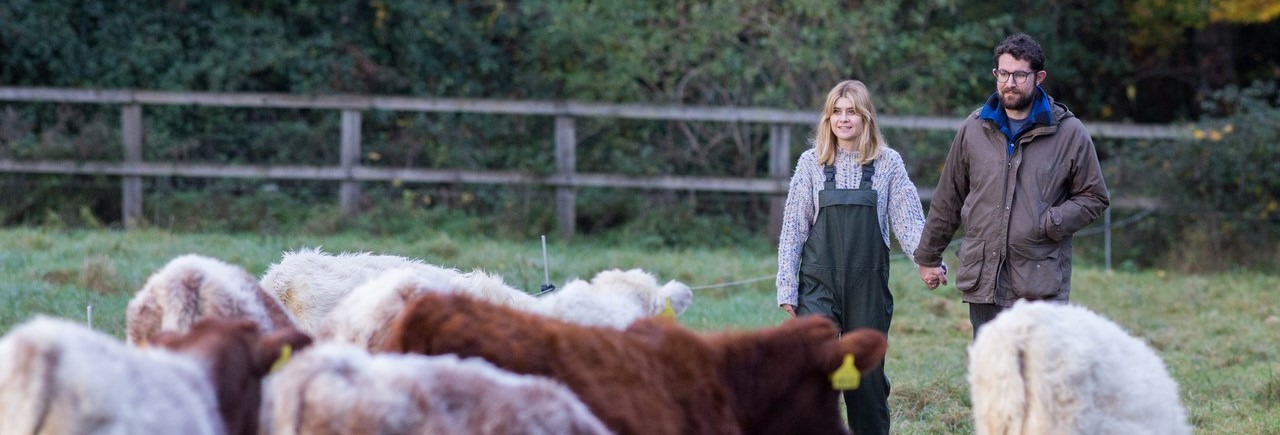
In November 2021 we welcomed the beginnings of our regenerative dairy herd at Hoyle Farm near Midhurst, where we run a joint venture with the landowners. We are Katie and Brett at Slow Grown Farm, and this will be our first year in production. We’ll turn our 100% grass-fed milk into artisanal cheese, and our woodland whey-fed pigs will become aged and cured charcuterie such as salami and pancetta.
We’ve planned our whole farming enterprise from the ground up on the basis that it will regenerate the depleted soils of the farm whilst also increasing wildlife and plant diversity, creating nutrient dense food for the local community (and beyond), and providing a good life for our animals where they can express their natural behaviors.
Cows can actually sequester carbon in the soil if their grazing is managed correctly, a far cry from the disastrous effects we are told ruminants have on our planet. To be able to play a small part in mitigating climate change, all whilst producing delicious food that connects people with nature… why wouldn’t we farm this way!

What grazing strategy do you use?
In the growing season we mob-graze our cows, with an aim of grazing 50% of the plants on pasture and trampling the other 50%. We achieve the trample by giving our cows small paddocks and moving them at least once a day. Trampled plants break down and this decaying organic matter is how soil is built.
Our grazing is holistically planned which means a lot of observation and planning to make sure the plants aren’t grazed again too soon before their root mass is re-established. By grazing this way, we expect our fields to become more and more productive in the years ahead, so rather than using artificial fertiliser, we can use the cows as the tool for productivity.
How have you incorporated rewilding into your farm?
One of the largest fields at the farm is an established wildflower meadow that the landowners implemented about seven years ago when they bought the land. Last summer we trialed using the cows on half the meadow to tightly graze down the wildflower instead of mowing and baling with a tractor, and we’re excited to compare the results this year! Along the edge of the meadow we established a wildlife corridor that wasn’t grazed or mowed, providing habitat for overwintering wildlife.
There are a number of areas around the farm that we have chosen to leave wild and ungrazed, creating a series of corridors that connect to nine acres of ancient woodland to which we don’t allow the livestock to have access. As nature functions as a whole in a complex system, the more strength we give to wildlife, the more resilient our farm will be.

Tell us about your cows
We knew the breeds we chose would be really important in the success of our regenerative farm. We wanted cows who were hardy enough to live outside all year round to avoid the problems associated with housing cows – instead, our cows have woodland for shelter and mature hedges for windbreaks. Our cows also have to be efficient at converting grass into milk and meat, meaning we don’t have to grow or buy in supplement concentrate feed and our cheese will taste all the better for it! Good maternal instincts but a docile nature were other traits we were looking for; unlike most dairies we want our cows to keep their calves on them until they are weaned, meaning we’ll share the milk with the calf. We settled on two native rare breeds; Northern Dairy Shorthorn and Red Poll. Our expectations on how much milk these girls will give us is low, but the quality will be high and the cows will not be pushed beyond what is sustainable for their health.
What does the future look like at Slow Grown?
To track our impact on the land we’ve had a baseline study carried out on the grassland and soil, and this spring an ecologist will be recording a baseline of species across the farm. Since the cows arrived on the land we’ve certainly noticed an increase in birds; we’ll walk into the field to see the cows and often a flock will rise up from around them. We don’t routinely worm, so the cow pats are full of dung beetles and other invertebrates.
Find out more at https://www.facebook.com/SlowG...
