
Silvopasture
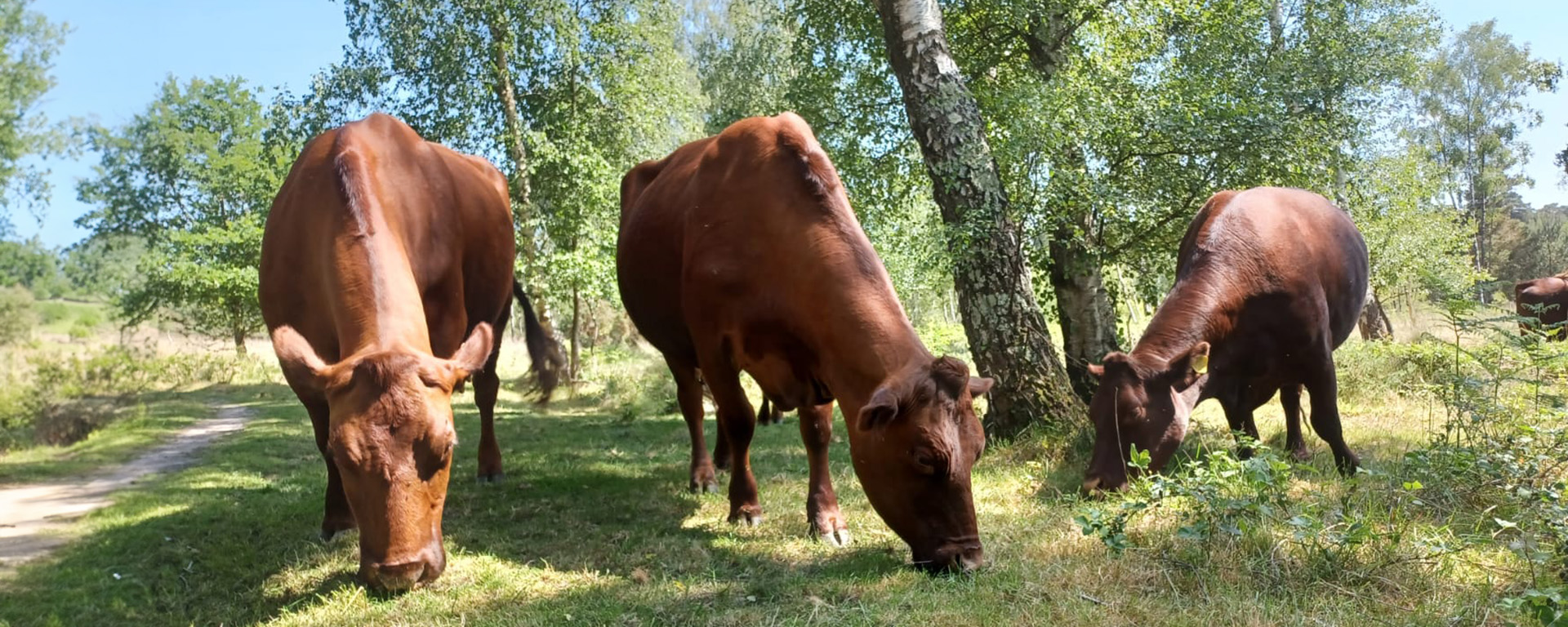
Silvopasture is an ancient practice that integrates trees and pasture into a single system for raising livestock, meaning all three components are managed equally. Research suggests silvopasture far outpaces any grassland technique for counteracting the methane emissions of livestock and sequestering carbon (sourced from Agricology) leading to healthier biomes and soils. There are multiple benefits to silvopasture implementation aside from the mitigation of livestock emissions, including financial gain, water quality and flood mitigation, increase of livestock health and well-being, decreasing the need for “outside inputs” and creating a habitat for many beneficial organisms.
There are various approaches when it comes to planting the trees of your choice within your pasture, which will depend on cost and personal preference. The trees may be timber or fuelwood trees, or a fruit or nut crop. Nitrogen-fixing trees can also be used to supply nitrogen for the forage crop. Trees are grown as standards or as pollards. As a note, all forms of planting will require some form of weed management.
Even / regular spacing
Allowing space for machinery, reduced impact on grazing and yield, shade for livestock throughout the pasture and some provision of in-field wildlife habitat. The drawback to this method is predominantly cost, as the trees will require individual protection from grazing, as well as a limited benefit to wildlife and therefore does little to increase biodiversity.
Cluster planting
Where 75% of the pasture is left open and the trees are planted together in “groups”, this allows for block weed control measures, cheaper protection against stock, the shade effect is more localised and high-value trees are protected by buffer trees if required, the planting also creates a much more aesthetic landscape and better wildlife habitats as well as providing somewhere to keep dry cows and young stock. The potential downsides to this approach are the potential loss of Basic Payment Scheme ( BPS ) payments whilst the silvopasture establishes, and the grass surrounding the trees, which will not be able to be grazed until they can withstand livestock rubbing.
Row planting or 'Living Barns'
Trees can be planted more closely, if desired, and livestock protection is, again, much cheaper than even spacing plantations, this also allows for easier machinery access, and grazing. Living barns are similar to what is known as a shelterbelt, where livestock can access the planted trees as soon as the protective shrub layer has established. These living barns contain taller trees in the centre that reduce exposure to the elements and lower trees and shrubs that offer additional nutrition and allow for livestock self-medication. If the field is used for lambing, research suggests that shelter belts can substantially reduce lamb mortality due to the increased protection from the elements when sheep are lambing. Additionally, living barns can increase the grazing season, as livestock do not need to leave the field to get the shelter they need for the more extreme weather during the winter months and creating a microclimate for the pasture which boosts productivity. Again, the possible negatives can include BPS payments being lost in the shelter areas, grass growth restriction near the shelter line and the loss of grazing (20%) during the establishment period.
Agroforestry grants
The Woodland Trust is part of a Defra test for agroforestry within the Environmental Land Management scheme (ELM), examining payment incentives and advice farmers would need to take up agroforestry at scale.
The trust operates a small-scale bespoke scheme, Trees for your Farm, funded by Sainsbury’s and the PUR Project, which enables farmers to pilot agroforestry schemes. Should you want to know more, or feel this is something you would want to implement on your farm, please head to our Landowner Enquiry page where your request will come through to one of our advisors.
Agroforestry in ELM
Currently, there is a Defra funded project led by the Organic Research Centre, which will provide information to government on English Farmers’ payment and advice and guidance preferences for delivering agroforestry (the planting of trees and hedgerows in and around farmers’ fields). The project will feed into the design of the new post-Brexit system for incentivising the delivery of public goods by farmers: Environmental Land Management (sourced from Organic Research Centre). The idea is that this project will lead to understanding farmer and market behaviour, identifying barriers and eventually leading to further financial support for farmers. “Feedback from Defra suggests agroforestry should be part of the ELM scheme,” says Mrs Chesshire, encouraging farmers to think about agroforestry and how it can fit with their wider farm plans.
If you are a farmer already practicing agro-forestry, or you are interested in hearing more about this project, please head to www.organicresearchcentre.com to find out how you can get involved.
Useful Links
There is plenty of advice available from FWAG, The Woodland Trust, pilot farmers, webinars and publications such as the Soil Association’s Agroforestry Handbook to help farmers
For more information on planting designs see the Innovative Farmers website.
An educational and research organisation, into all aspects of agroforestry Agroforestry Research Trust