
Padswood
When we took over the stewardship of 13 acres of East Sussex land situated near Sedlescombe / Battle in the High Weald AONB, we were very keen to work as closely within natural systems as possible. The land hadn’t been used for much in the previous thirty years, pioneer plants were encroaching on into the fields with plenty of oak, birch, alder and brambles.

Our site straddles a valley, the type of ridge and valley the whole of the High Weald is defined by. Which means much of the land gets very waterlogged, but we have one field that is dry year round.
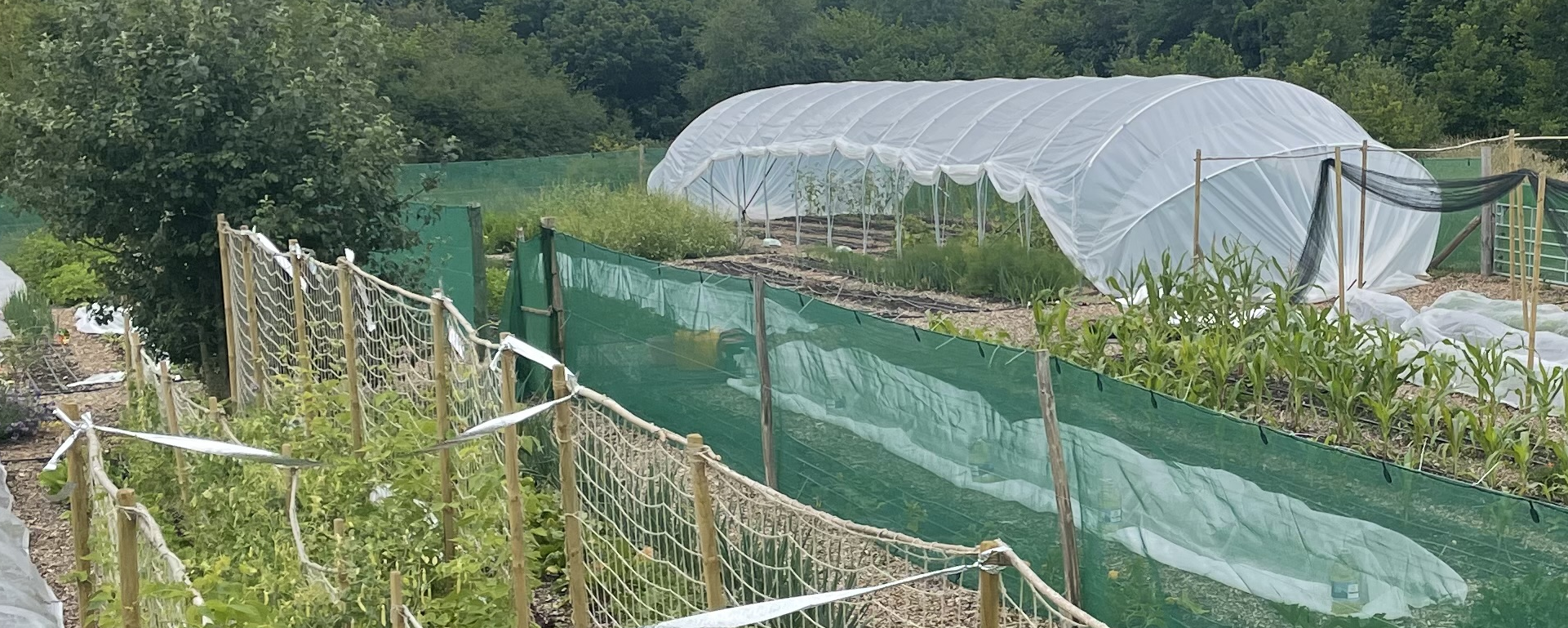
Wanting to supply the healthiest of food to our local community, we set up a market garden, supplying local farm shops and run a box scheme. Built following no dig principles, with raised beds of compost we created 80 beds and got busy planting. We use ‘beyond organic’ strategies, which means no fertilizers, herbicides or pesticides; we use interplanting, encourage beneficial species and include predator habitats, and factor in a percentage we don’t mind losing to the wildlife that we share the site with. We rely on soil health to produce plants in their prime, which means they are more resilient against ‘pests’ and disease – and are very tasty!
Knowing that the fields in the valley hold a great deal of water at certain times of year and have evolved into a unique ecosystem, we’ve gone against modern farming practices that would likely involved drastic interventions to drain the area. Instead, we prefer a gentle approach, where leaky dams created by fallen trees are left in place. We rotate areas of habitat for wildlife, planting and managing hedges to encourage biodiversity. We coppice some of the many varieties of trees on the site, such as hazel and alder to help with tree health and offer a variety of habitats.
