
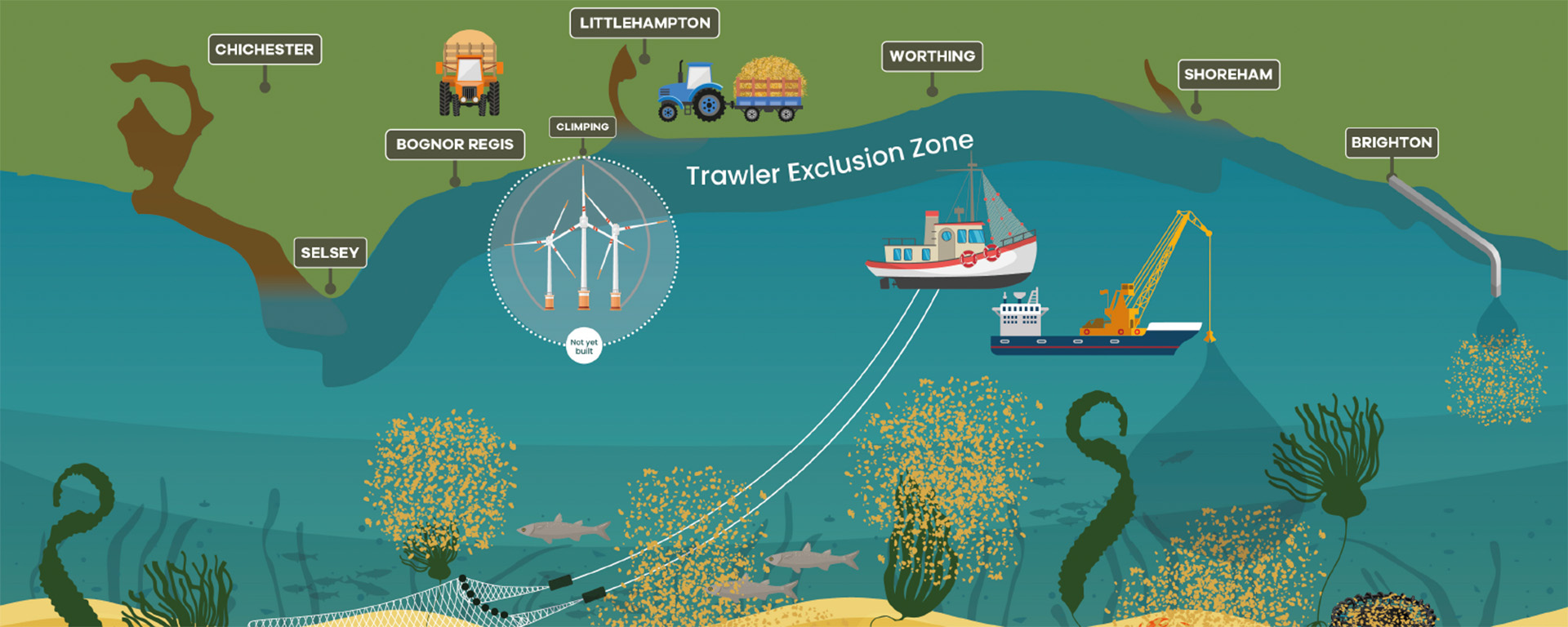
Sedimentation

The Sussex Kelp Restoration Partnership are working to identify and minimise damaging impacts on existing and potential kelp habitat
The Nearshore Trawling Byelaw 2019 removed one of the damaging impacts on kelp habitats, but other factors may hinder the natural recovery of historic kelp beds. Sediment from land run-off and dumping of dredged spoil is one of these factors and the Sussex Kelp Restoration Project partners are investigating the sources and impacts of sediment to inform future action.
In September 2021, a Sussex Sediment Sources and Impacts Workshop brought together over 40 stakeholders from government agencies, NGOs, universities, community groups and local authorities to share research, project learnings and concerns about the impacts of sediment on kelp and local fisheries.
A report summarising the outcomes from the workshop can be downloaded here and you can watch the full workshop here:
Sussex Kelp Sediment Sources and Impacts Workshop
Sussex Sediment Sea User Survey
In February 2022, Sussex Kelp Restoration Project partners ran a survey of Sussex sea users to gather observations of the changes in sediment along our coast and its impacts. 129 people responded providing vital information about the types of sediment, where it could be coming from and the impacts on wildlife, fisheries and recreational activities. This will help the Sussex Kelp Restoration Project identify priority areas for further investigation and action.
The full report can be downloaded here