
Types of learning in nature
By Charlotte Owen
With wildlife, as with humans, there are different ways of learning, gaining knowledge and developing skills
Learned behaviour
This has to be taught, observed, copied or otherwise experienced. This can be as simple as learning which plants to eat and which to avoid by watching what others eat, or by remembering which berries made you feel sick. Some animals, especially primates, are capable of more complex cognitive learning to, for example, solve problems, use tools, understand cause and effect, communicate, or create mental maps.
Then there are various types of learning...
Latent learning
This is subconscious (latent means hidden) and it occurs when an animal gathers new information about something just by experiencing it, and stores that information away ready to act upon it when it’s needed. For example, a rat will learn to navigate through a maze by spending time exploring it, so that when food is added it can then find the food more rapidly than a rat that hasn’t previously explored the maze. The same principle applies to any animal exploring a new environment, or observing something happening.
Imitation
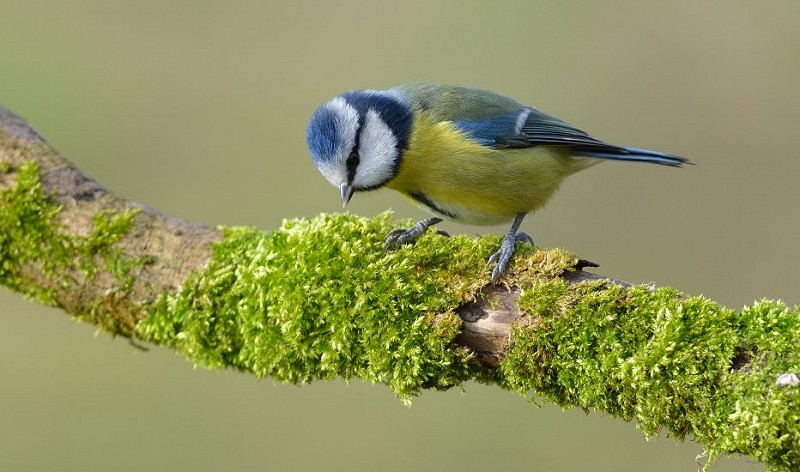
This is learning how to do something by observing and copying the actions of another individual who is successfully performing that behaviour. It’s a form of social learning, whereby an individual can pass on a skill to the wider population, or even the species as a whole. A famous example is provided by Blue Tits learning how to pierce the foil tops on milk bottles left outside front doors, to access the cream beneath. They had previously been able to access this valuable high-energy treat very easily, as milk bottles were originally delivered lidless. The introduction of foil caps initially thwarted them but the new behaviour of pecking through the foil spread rapidly throughout the entire UK Blue Tit population, thanks to their sociable nature – Blue Tits were readily able to observe, copy and benefit from the new behaviour. Interestingly, Robins had also been known to drink from open milk bottles, but while some individuals did work out how to peck the foil, they didn’t pass on this skill to other Robins in the same way because their highly territorial nature removed the opportunity for others to observe and learn from their actions.
How do birds learn to sing?
Young songbirds have to learn how to sing. They learn by listening to and imitating the songs of adult birds in their environment. Juveniles are predisposed to recognise and learn the ‘right’ song of their own species.
Behavioural studies of White-crowned Sparrows discovered that fledglings had such a strong innate preference for the song of their own species that they learned how to sing by listening to recordings of White-Crowned Sparrow song played in reverse.
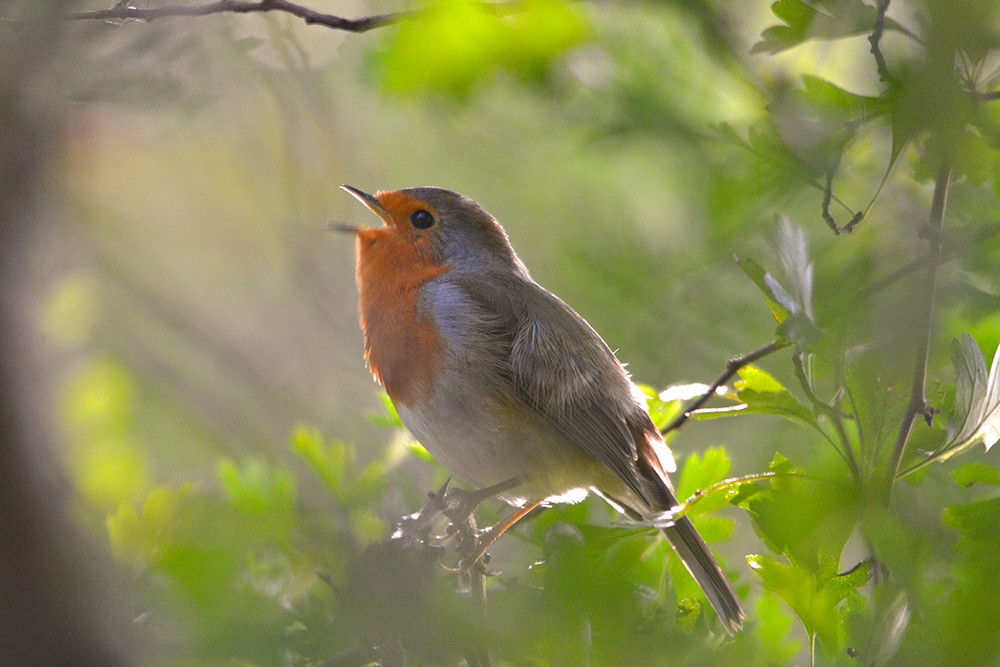
Once a young bird has listened to and memorised the song of its own species, it must then put in some practice to learn how to sing it. Most young birds start to produce a variable, exploratory ‘subsong’ and over time, they will sing to themselves to perfect their song, striving to match the one they learned as closely as possible and ultimately settling on their own permanent version, which they will sing for the rest of their lives.
Because of the way birds learn how to sing, there can be subtle variations in song between individuals and some songbird populations even have regional dialects.
More about birdsong here
Play
This can be a valuable form of learning – fox cubs learn how to pounce and tackle and improve coordination through play with their siblings. They may also ‘hunt’ various objects looted from gardens and eventually start applying their skills to insects, small mammals and other moving targets to hone their hunting abilities.
Imprinting
This is a rapid learning process that occurs very early on in life, which creates a strong bond of attachment e.g. between newborn and its mother. For example, ducklings will imprint on their parents soon after hatching, learning who to follow around. This helps them to survive and learn the essential skills necessary to be a successful duck. However a hatchling may imprint on the first moving object it encounters, so hand-reared birds will readily imprint on a human caretaker.
Comments
Fascinating! Especially the milk top explanation( including the difference between tits and robins). I wonder if the birds will remember how to do it now that some people again have milk delivered in foil topped bottles
08 Sep 2022 11:16:00