In with the new
By Mark Newton and Rosie Hutchings
Lederman Trainees
It’s a good thing we both had a restful Christmas break, because the start of 2022 has seen us both getting stuck into some serious hands-on land management work with Sussex Wildlife Trust.
Rosie
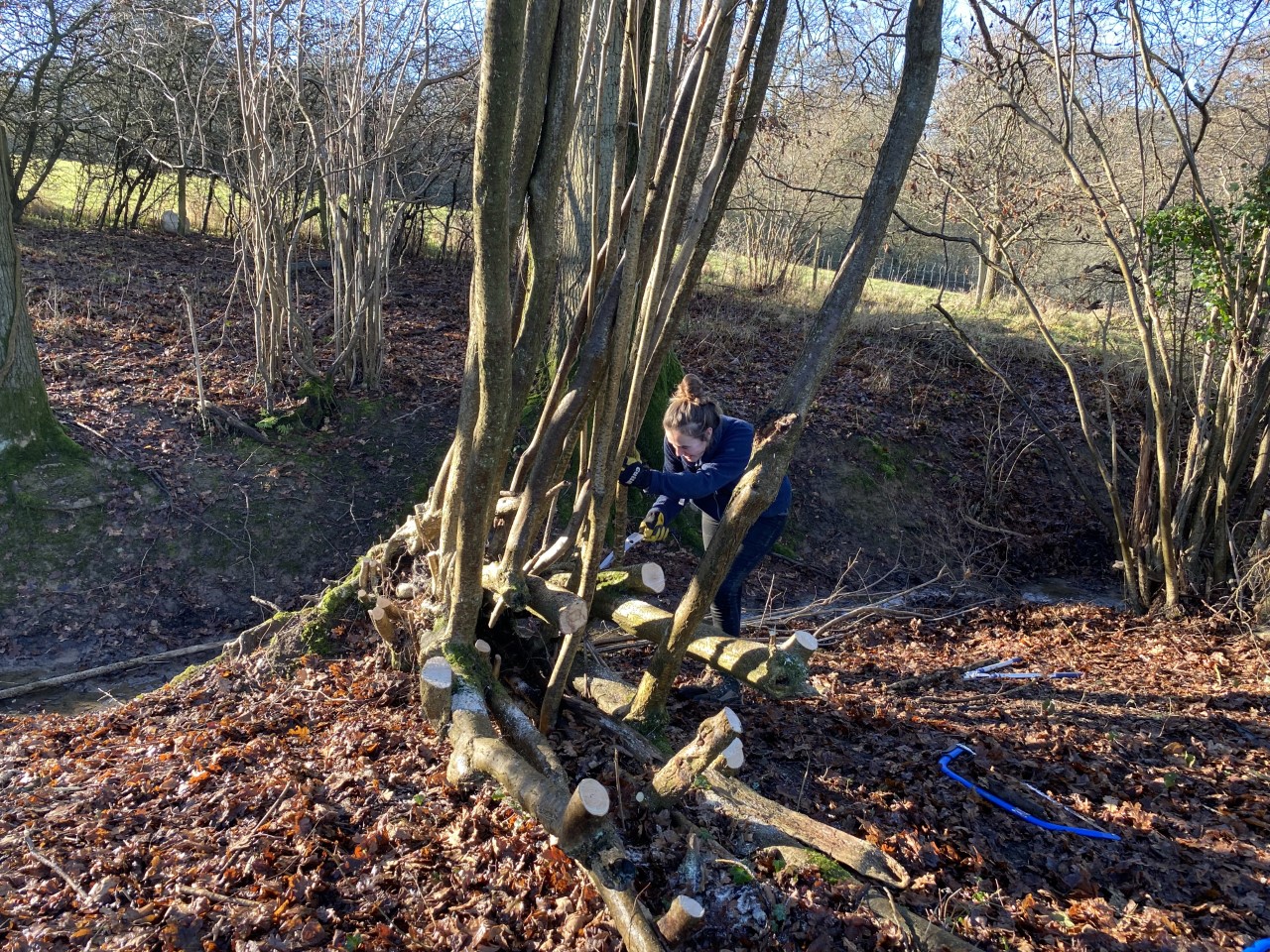
The past few weeks, we have continued coppicing Hazel here at Leysdown. We’re gathering lots of great material which we will later use to carry out some hedge-laying around the estate. Some of the product will be used as stakes (thicker branches placed along a hedgerow at regular intervals) and binders (thin branches to be woven between the stakes), while the brash (small branches and foliage) will be used to protect the coppice stools from hungry deer. Any Hazel that isn’t suitable as materials will end up as firewood at the cottage to keep us warm over winter.
Mark
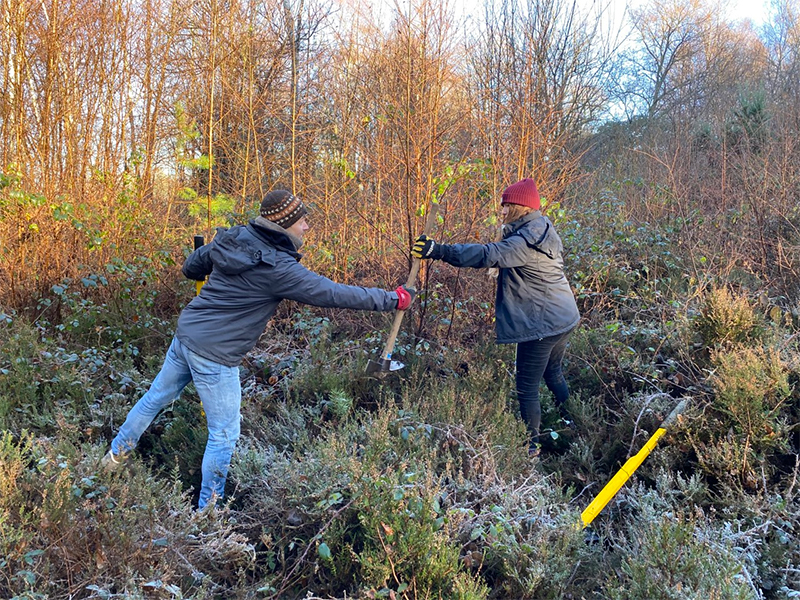
On the first Thursday of the year, I joined Gatwick Greenspace Officer Tom Simpson and a group of Gatwick Airport employees who volunteer to manage the area of nature-rich land close to their workplace. Our task was to thin out the Birch trees with mattocks and saws so that an already flourishing meadow can expand. It was great seeing such enthusiasm for nature conservation from people who hail from a very different sector of work.
The following week, Rosie and I worked with Tom to remove more trees (and got to use tree-poppers, a new tool for us), this time as part of heathland management at Tilgate Park. Uprooting trees seems to be a contradiction in terms of nature conservation but it’s actually a vital part of improving biodiversity. By clearing the undergrowth and disturbing the earth, we are simulating the actions of the huge herds of wild herbivores that humans have eradicated from the landscape. Without this human intervention, habitats would lack the variety needed for a multitude of species to thrive.
Rosie
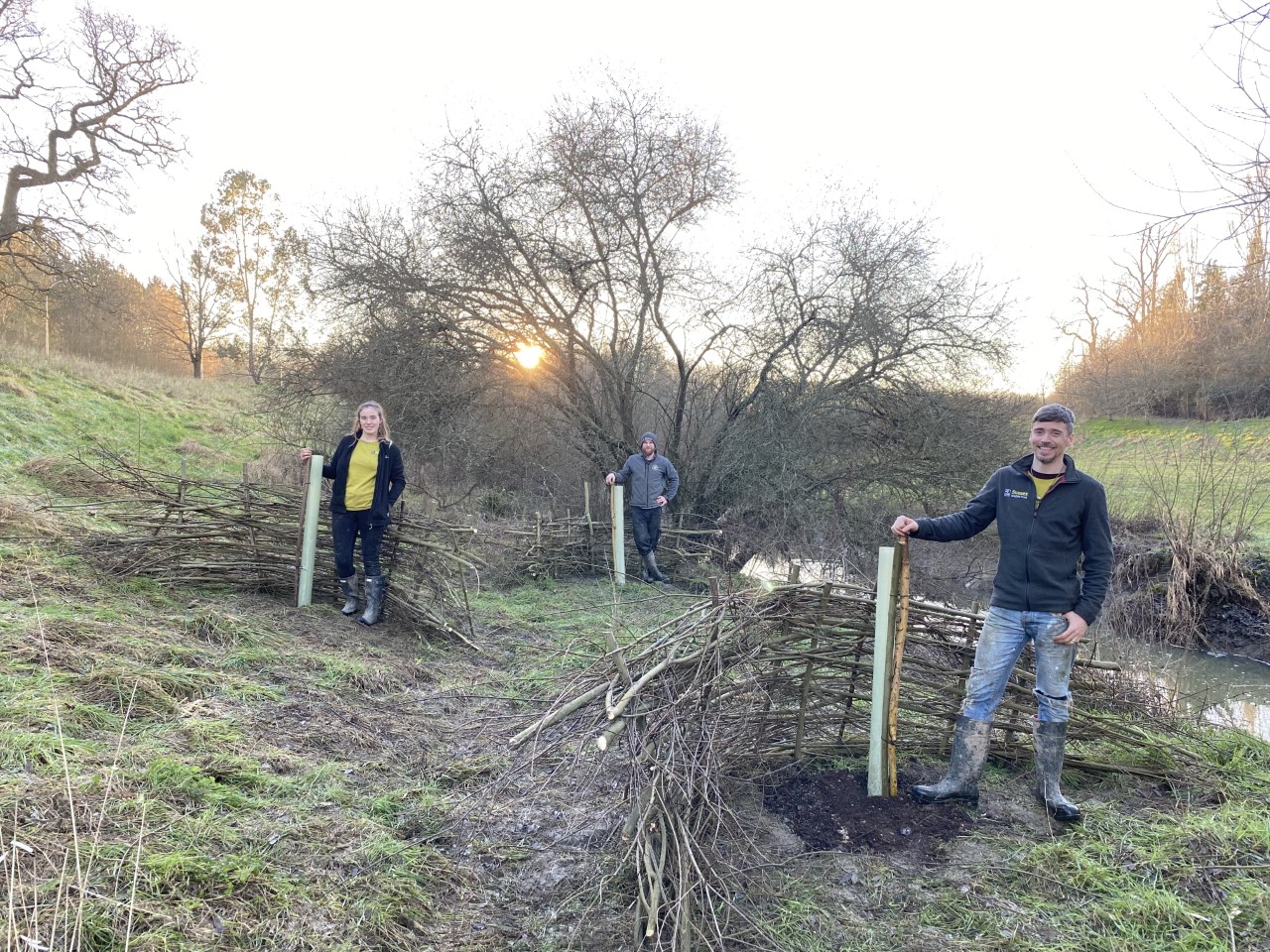
After working at Tilgate in the morning, we spent the afternoon planting three, disease-resistant European White Elms with Tom at Povey Cross. These trees thrive in wet conditions, so they were planted on the flood bank along the River Mole. However, as they are young, we created willow chevrons to act as a form of protection against the water. These help to divert the flood water around the young trees and give them a stronger chance of survival. I really enjoyed planting the Elm and I look forward to revisiting in future years to see how they are doing.
It’s great to be discovering more about the local reserves and green spaces as we go on and we’re looking forward to exploring more habitats across Sussex.