
Highlights of 2024 for the Wilder Horsham District project
Senior Land Advisor, Steve Tillman, Land Advisor, and Louisa Jones, Project Support Officer, chat about highlights of the Wilder Horsham District project over the past year.
Louisa: Rich, 2024 has been an important year for Wilder Horsham District, what have been the highlights?
Rich: The unique partnership between Sussex Wildlife Trust and Horsham District Council is key to the project. The Council initially funded the project for five years but, this year, they have decided to extend it for a further three years, until the end of 2028.
Steve: Yes, that’s fantastic news and an endorsement of how well the partnership is working. It will really allow us to build on the network of landowners and habitats we’ve worked with so far. There are some really exciting and ambitious schemes in the pipeline.
Louisa: I’m pretty new in post, but I’m really happy to hear that there’s support from District Councillors across the political spectrum, which also reflects how important the natural world is to people living in the area. Let’s look at what the project has achieved on the ground. What would you like to celebrate from this year?
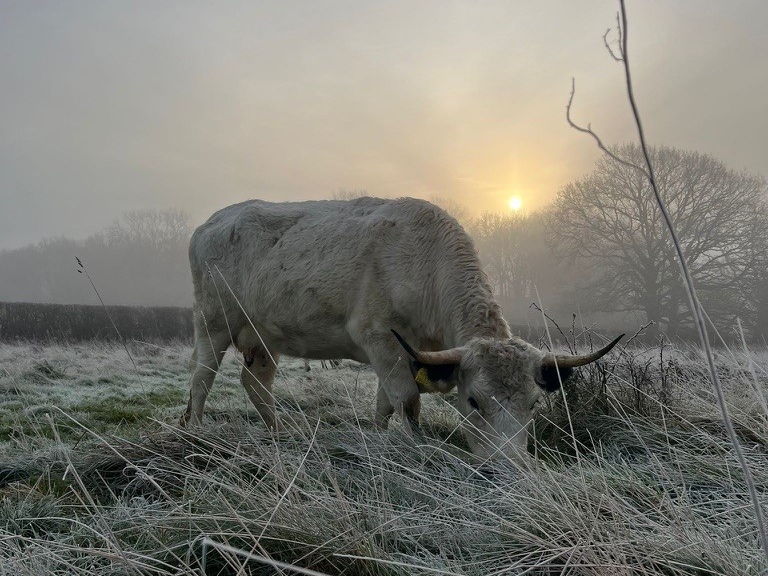
Rich: A big part of our collaborating with landowners to restore or replicate the natural processes that have been lost. One of these is naturalistic grazing. Long ago healthy grassland, scrub, heath and even woodland habitats were maintained by the action of large wild herbivores, such as the extinct Aurochs. Traditional farming replicated this to an extent, but modern methods have moved away from the small mobile herds of hardy animals required. However, some landowners are putting conservation as a priority with a present day spin on the old methods. This year both Mayes Park and Gaywood Farm, have taken the bull (or rather cow) by the horns and introduced small herds of traditional cattle, replicating wild grazing. This is just one example of how farmers are embracing the benefits nature brings to their business: we’re excited to see the results!
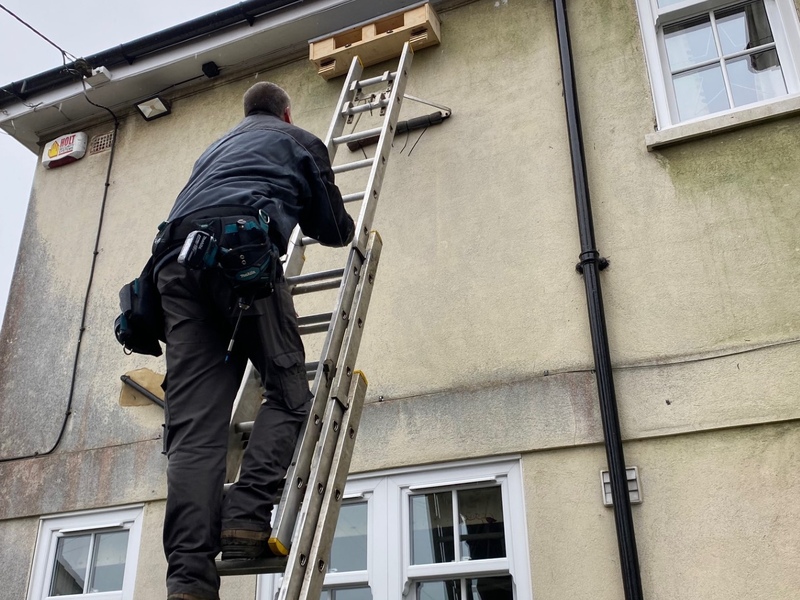
Louisa: There is the community side of the project, as well. We’ve worked with Sussex Wildlife Trust’s Storrington & Arun Valley Regional Group and initiatives in Shipley and Partridge Green to fund nest boxes for Swifts, House Martins and Swallows, all endangered species.
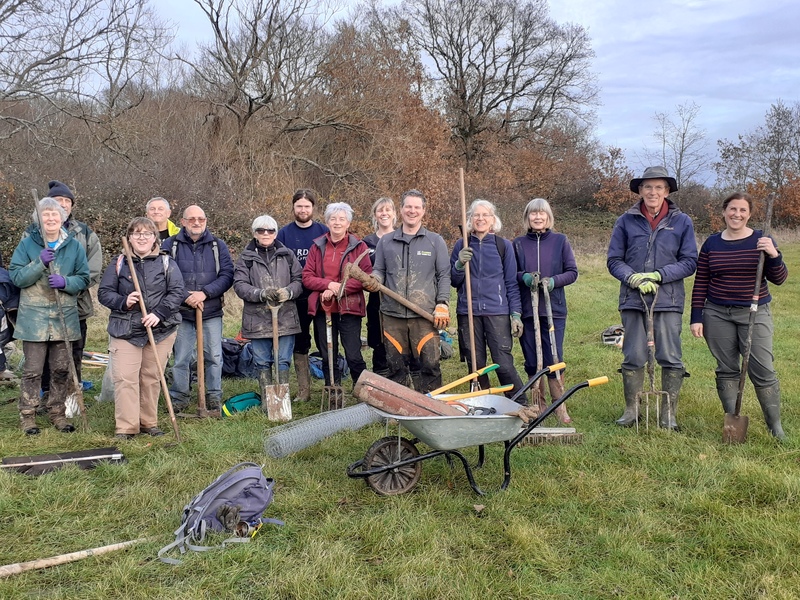
Steve: Don’t forget that our committed work party volunteers, including children from Hilltop Primary School, have generated a huge amount of conservation value all over the district. We’ve also extended our reach by working in partnership with the Adur River Recovery Project, Knepp Wildland Foundation’s Scrubland Superheroes [main image] and the National Trust. It’s especially satisfying to watch connections grow between landowners independently of the project, which means that Wilder Horsham District’s legacy will live on even if/when the project ends.