
Flowery Grassland by Numbers
Now is a good time to experience grassland, unless you suffer from hayfever. The grass flowers are fully formed and sway attractively in the wind and if managed sympathetically the grassland can be full of flowers and the insects that go with them. Here at Rye Harbour nature reserve we have made considerable progress at juggling the grazing and the cutting and now have a good selection of flower rich grassland. I would suggest spending an hour or two at the inland section of the reserve, at Castle Water. Start at point 15 on the map (click here) .

This grassland is our only site for marbled white butterflies (above) and they love the thistle flowers, but need the grass, so we cut back some of the brambles in the winter. Walk to point 14 and you will see huge marshmallow plants (below) where last year, after 10 years of management, we recorded our first very rare marshmallow moth.

On the way to 13 look out for wild angelica, a very large umbellifer that should be covered in insects (such as the soldier beetles below).

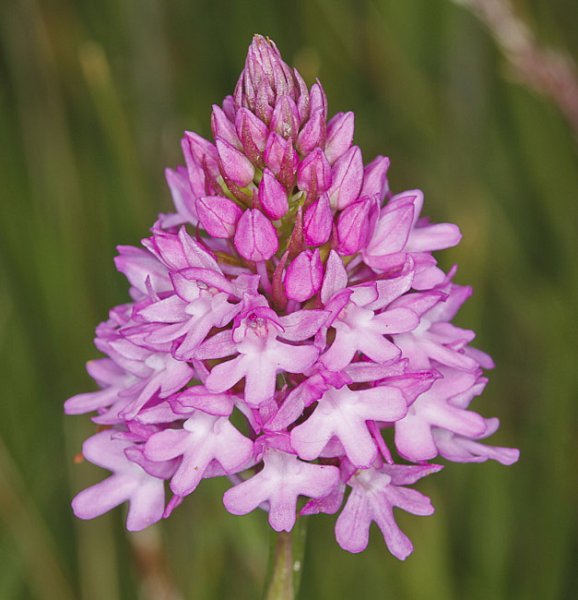
Spend most time between 13 and 12 where we have had no sheep grazing since mid-April. There is a profusion of clovers - much needed by bumblebees - including strawberry, red and white, and hundreds of pyramidal orchids and in the damper section thousands of adders tongue ferns (below).

Along the pit margin there is abundant water mint and marsh pennywort (large leaf below), but sadly the ever increasing New Zealand pigmyweed (small white flower below) is overtaking them a bit more each year.

So when you have had enough of the flowers, you should walk to 11 and sit in the Halpin hide to work out what all the brown ducks might be (they are moulting, so have lost all their colour) and spot the returning waders such as common and green sandpipers. You've come this far you might as well continue the circuit and go back via the beach, or you could search for the flowers you missed on the way back to 15!