
Creating a space for wildlife in an urban garden
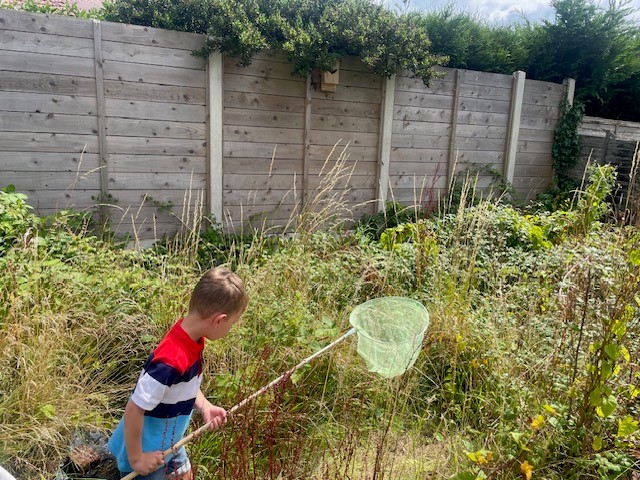
Five year old Lucas used to come to Nature Tots with his mum Steph, and the family have subsequently become Trust members
Steph got in touch to share some photos of wildlife they'd been enjoying spotting in their garden. We asked her to tell us a bit more about it and also asked Lucas a few questions for us as well:
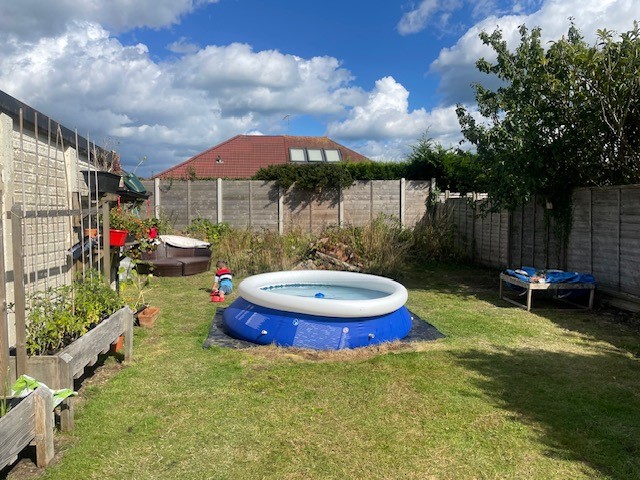
'After buying our house a few years ago, the garden became somewhat neglected and overgrown. We live in a residential part of a small coastal town in West Sussex.
Once Covid hit, my husband, son Lucas and I obviously wanted to be able to use it more and get outside as much as possible, it’s around this time I’d say Lucas really got into nature, he’d not long turned two. He enjoyed reading books about bugs and then finding them in the garden. Bug hunts would become a regular activity. It’s still one of his favourite things to do.
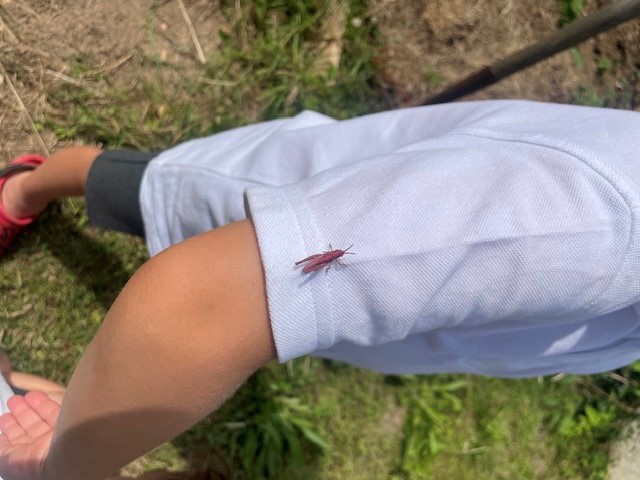
One day when my husband was mowing the lawn, my son had asked him to leave the back bit long 'for the bugs'. So we just let the back bit grow wild. It’s a very humble area, about 8ft in depth and 30ft in width. But since letting it naturally grow with the seasons we’ve had an abundance of wildlife. Most recently pink Grasshoppers [the unusual colour is caused by a genetic mutation known as erythrism, which affects the production of pigment – either a lack of the usual pigment or an over-production of an alternative pigment, resulting in various shades of pink and red rather than the usual green and brown. The gene responsible is recessive, so it works in a similar way to albinism. Being bright pink, they are much more vulnerable to predation so many don’t make it to adulthood, or don’t last very long if they do].
'This year we have seen the most variety of wildlife including dragonflies, Stag Beetles, Ladybirds, Cockchafer bugs, spiders, butterflies and moths, pink as well as green Common Green Grasshoppers, various bees (including a swarm that luckily was only there for 24 hours) wasps, mice, Frogs, Hedgehogs, different species of birds and bats too. We’ve even had Fox cubs come visit with their mother.
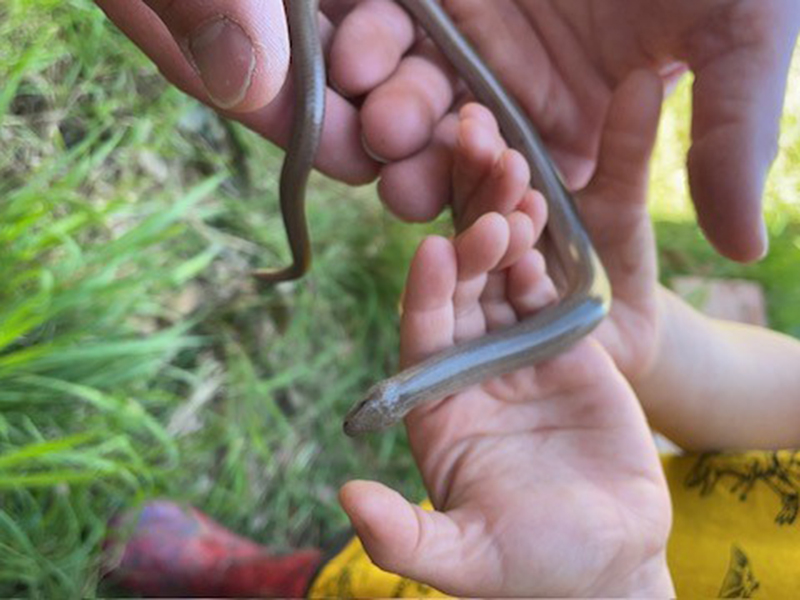
We’ve put down a black sheet to attract Slow Worms, which has worked well, and it’s one of the first thing Lucas checks when he’s gets in from school. We also have random bug hotels, log piles and a homemade pond we saw on Blue Peter.
We are big David Attenborough fans and have learnt a lot through watching and reading his books and the importance of biodiversity and Lucas enjoyed learning lots about nature when he attended Nature Tots with Katie Parker at Woods Mill.'
Lucas Q&A
Tell us about your wildlife garden – what you did and what you’ve seen
We left the back part wild for the Slow Worms and Grasshoppers for camouflage from the predators, we also put down a black mat to attract them (Slow Worms).
What have been your favourite things that have happened?
My favourite thing about our garden is finding the Frog and Slow Worms and all the species we see.
What have you learnt?
Grasshoppers can fly and can be pink! I’ve learnt that Slow Worms can bite as I got bitten on the knuckle [this is very rare - they can normally be handled safely].
What’s your favourite time of day for wildlife?
My favourite time of the day is straight after school, I come home and run through the house and check my Slow Worm mat. It’s always hot at the back of the garden where it’s overgrown.
What would you say to anyone else thinking of doing this in their garden?
I would say well done to anyone who does this to their garden, it doesn’t have to a big part of it. It helps wildlife, bees will pollinate and it creates biodiversity.