
A hop, skip and a jump for Leap Year
Charlotte Owen
WildCall Officer
With this being a Leap Year, we thought we'd take a look at a few creatures that leap!
Spiders
Jumping spiders are among the tiniest of our 650 native spider species, at just a few millimetres long. Their vision is exceptional and far superior to most spiders, which can only distinguish light from dark, so they are active hunters with no need of a web. Their visual acuity allows them to track down and pounce on their targets with deadly accuracy, leaping up to 14 times their own body length in the process. Favourite prey includes pesky greenfly and mosquitoes, so they provide a valuable natural pest control service.
Brown Hare
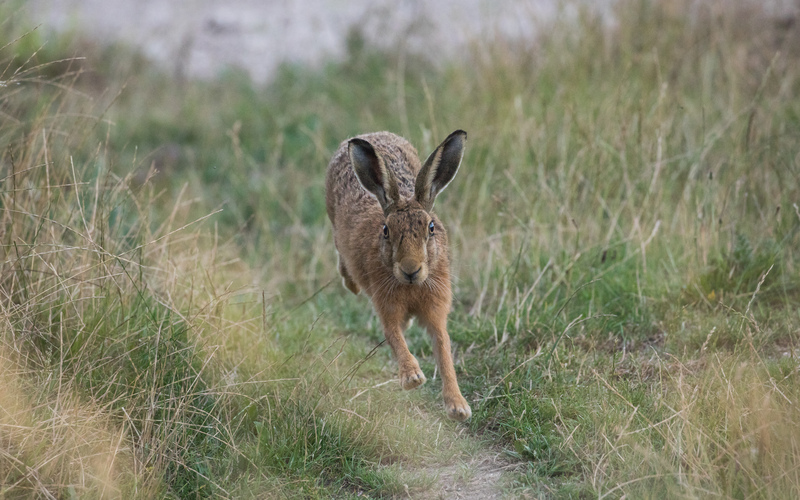
The Brown Hare is the speediest of our land mammals, reaching speeds of up to 45 mph. Hares don’t burrow so they need to be fast to escape hungry predators. Their ability to zig-zag unpredictably while sprinting makes them even more elusive, and few predators can keep up. Leaping sideways may also help to disrupt their scent trail, so they can’t be tracked down either. But Hares are best known for their boxing behaviour during the breeding season, leaping into the air and standing on their hind legs while batting at their opponent with their front paws. This is most often a female Hare fighting off unwelcome advances, either because she’s not yet ready to mate or she’s simply not impressed with the male’s athletic abilities.
Wood Mouse
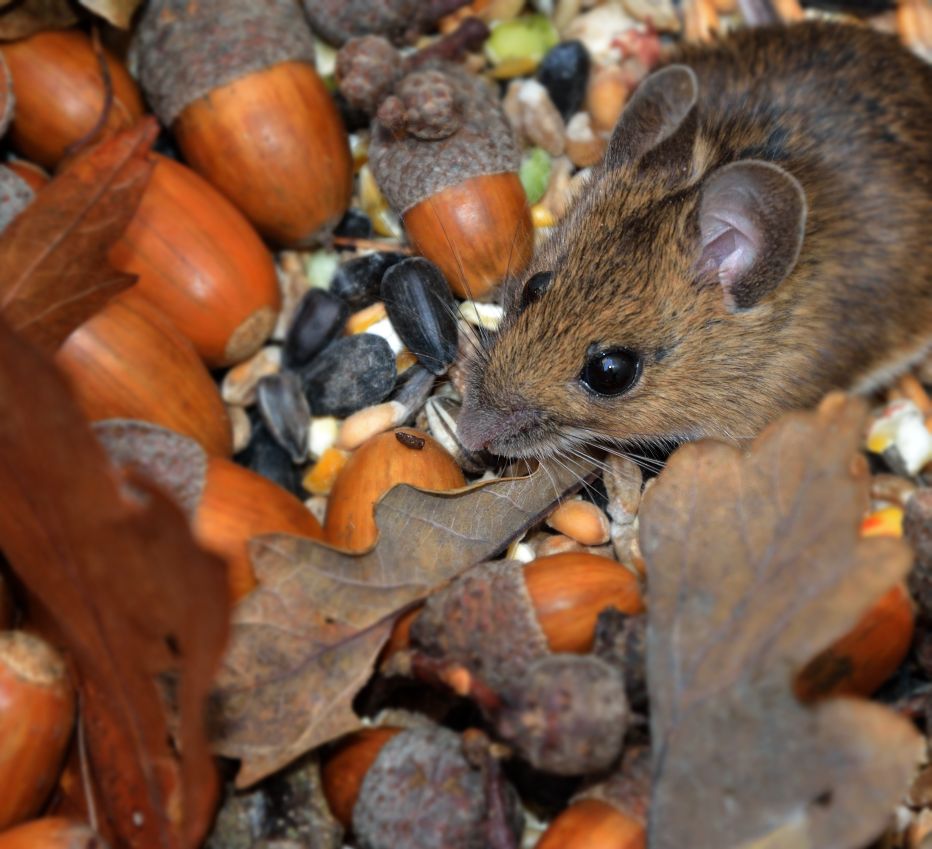
The Wood Mouse is a real gymnast with the speed and agility to climb, leap and scurry over almost any obstacle. They’re naturally bouncy little creatures with large, powerful hind feet – like a Kangaroo – and their long tails provide balance while airborne. At the slightest hint of danger, they’ll escape with an impressive long-distance leap of up to ten feet (three metres) and retreat to the safety of their burrow. This is where they will spend most of the daylight hours, although braver individuals can sometimes be spotted snacking at bird feeders.
Roe Deer
Roe Deer can run at up to 37 mph, and this impressive speed allows them to cover a huge horizontal distance (5m or 16 feet) in a single bound. Perhaps more impressively, they can also jump vertically and will easily leap a six-foot fence.
Frog
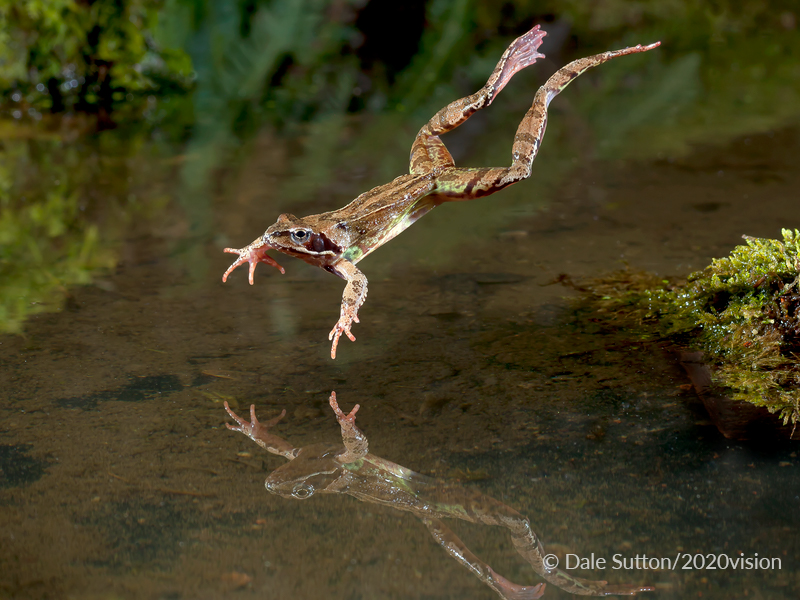
Most frogs can jump 10 to 20 times their body length thanks to incredibly powerful thigh muscles, coupled with stretchy tendons that store energy like a spring. When this energy is released, the frog is launched skywards and it’s a very effective way to escape from danger.
Birds – why do some hop rather than walk?
Hopping is more common in smaller birds but for many it’s the most efficient way of moving, especially for birds with very short legs. They can cover a much greater distance in a single hop than they can in a single stride, so it’s both quicker and more energy-efficient to hop.
Dolphins
Dolphins leap out of the water by swimming rapidly towards the surface, powered by their muscular tails. They will usually need a ‘run-up’ and will swim deeper to gain the distance they need to build up sufficient speed to leap out of the water in a behaviour known as breaching. Wild Bottlenose Dolphins can leap about 15 feet (4.5 metres) – higher than a double decker bus! Breaching is often a form of play, but it could serve several purposes including communication, navigation, and courtship.
Flea
The most impressive jumpers in the animal kingdom are the fleas. They can leap 50 times their own body length at a speed of 1.9 metres per second. Their hind legs are powered by an internal spring, a pad of elastic protein called resilin. When their leg muscles contract to prepare for a leap, energy is stored in the resilin pad and rapidly released, catapulting the flea into the air.
According to Guinness World Records, a Common Flea in 1910 performed a long-jump of 33 cm (13 inches) and a high-jump of 19.7 cm (7.75 inches). More recently, the use of a slow-motion camera and a scale model of the Empire State Building confirmed that a flea can leap to a height of about 15cm – not quite enough to leap over the building entirely but still enormously impressive for a creature just a few millimetres long.
For grasshoppers and crickets – read this blog by Ranger Matt Rich
Comments
Interesting and brief
29 Feb 2024 12:05:00
What a lovely informative blog and beautiful pictures, thank you
29 Feb 2024 13:00:00
Very interesting and informative article, with beautiful pictures. Thanks a lot.
29 Feb 2024 21:31:00
Jackdaws hop. This why is they are not electrocuted when on rail tracks as they hop from 3rd rail to another or the ground.
01 Mar 2024 09:37:00
Thanks for the lovely pictures of the animals and the incredible details of what these amazing animals can do.
01 Mar 2024 09:53:00
Very entertaining article – thank you!
01 Mar 2024 15:19:00
A fascinating reminder that nature is truly remarkable.! Thank you.
01 Mar 2024 21:05:00
I shared this information with my little grandsons, they really enjoyed it!
Thank you for compiling this lovely blog !
Leap year all the time for these creatures : )
06 Mar 2024 21:56:00