
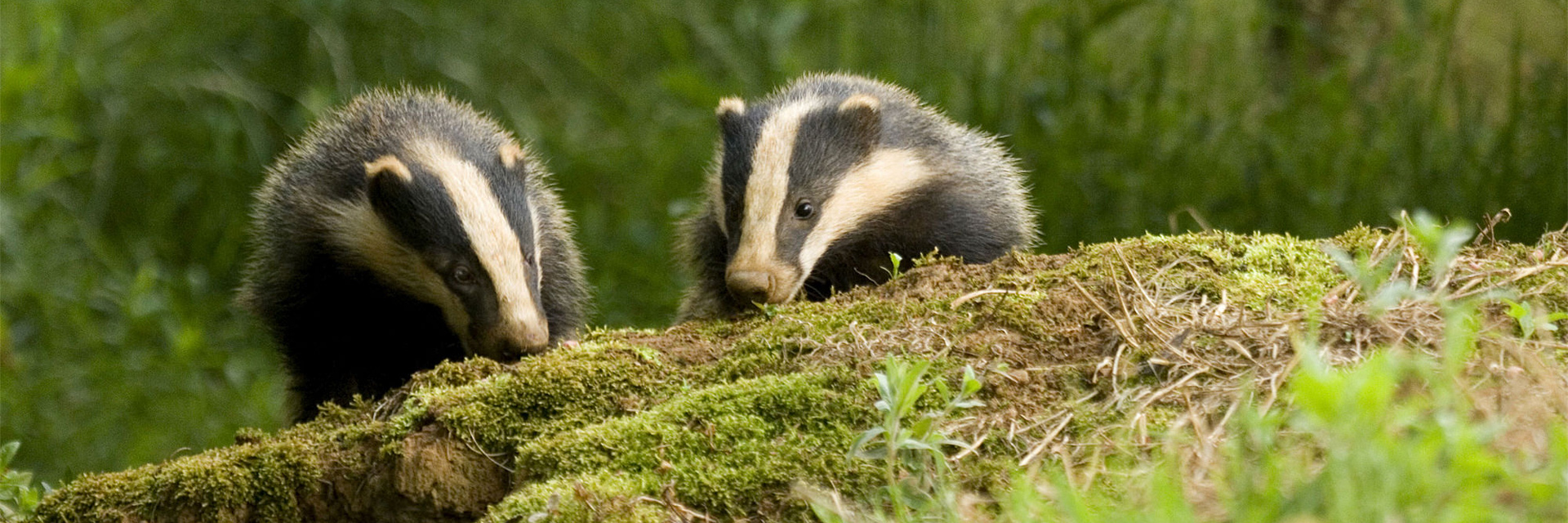
What does the Sussex Wildlife Trust think?
We are very conscious of the hardship that bovine TB causes in the farming community and the urgent need to find effective mechanisms to control the disease. However, we believe that a Badger cull is not the answer.
The Godfray Review makes it very clear that cattle are most likely to acquire bovine TB from other cattle, and that Badgers are not a reservoir for the disease [1,2]. Therefore culling Badgers is not the answer. Several scientific studies have demonstrated that culling increases the prevalence of bovine TB in Badger populations [3,4] and results in it spreading to other areas due to the perturbation effect [5,6,7]. Vaccination has the potential to reduce bovine TB infection prevalence in Badger populations [8], and hence bovine TB risks to cattle, without these harmful effects associated with culling [9,10]. However, the fundamental problem is a cattle issue, not a wildlife issue. Unless the UK Government supports farmers to dramatically improve farm biosecurity and cattle movement control, bovine TB will not be controlled or eradicated.
We want the Government to:
- Halt the badger cull now
- Invest in and promote a strategy for Badger vaccination
- Invest more time and resource in supporting improved farm biosecurity and movement controls
- Accelerate development of more effective tests for bovine TB in cattle and put serious investment into a bovine TB cattle vaccine
- Release all data related to the efficacy of the cull so that it can be independently assessed
Find out more about what needs to happen
What are we doing?
Nationally, The Wildlife Trusts have supported campaigns to stop any further culling and push for a bovine TB strategy that focuses on vaccination and biosecurity.
Sussex Wildlife Trust implemented a programme of Badger vaccination (2015-2021) on two of our nature reserves in East Sussex (Malling Down and Southerham Farm) as this area is in a bovine TB hotspot.
Research has shown that vaccination programmes have the best chance of gaining a high level of resistance within Badger social groups if continued annually for at least five years. Additional measures should also be undertaken alongside Badger vaccination, such as improving biosecurity. Badger vaccination is at the forefront of the plan, supported by better management of our own livestock. This required substantial investment, so thank you to all who supported this work by donating to our Sussex Badger Appeal. We’ll never allow Badger culling on our nature reserves but vaccination may help control the spread of the disease, and that’s vital if we’re to continue to manage our nature reserves effectively.
Find out about our vaccination activity in 2015
References
[1] Donnelly, CA & Nouvellet, P., 2013. The Contribution of Badgers to Confirmed Tuberculosis in Cattle in High-Incidence Areas in England.PLoS Currents: Outbreaks.
[2] Brooks-Pollock, E. and Wood, J.L., 2015. Eliminating bovine tuberculosis in cattle and badgers: insight from a dynamic model. Proc. R. Soc. B, 282
[3] Woodroffe, R et al., 2006. Culling and cattle controls influence tuberculosis risk for badgers.Proceedings of the National Academy of Sciences of the United States of America 103, 14713-14717.
[4] Woodroffe, R et al., 2009. Bovine tuberculosis in cattle and badgers in localized culling areas.Journal of Wildlife Diseases 45, 128-143.
[5] Donnelly, CA et al., 2006. Reduce uncertainty in UK badger culling. Nature, 439: 843-846.
[6] Donnelly, CA et al., 2003. Impact of localized badger culling on tuberculosis incidence in British cattle. Nature, 426: 834-837.
[7] Jenkins, HE et al., 2007. Effects of culling on spatial associations of mycobacterium bovis infections in badgers and cattle. Journal of Applied Ecology, 44, 897-908.
[8] Carter, SP et al., 2012. BCG Vaccination Reduces Risk of Tuberculosis Infection in Vaccinated Badgers and Unvaccinated Badger Cubs. PLOS One, 7: e49833.
[9] Woodroffe, R et al., 2016. Ranging behaviour of badgers Meles meles vaccinated with Bacillus Calmette Guerin. Journal of Applied Ecology, 54: 718-725.
[10] Lesellier, S et al., 2006. The safety and immunogenicity of Bacillus Calmette-Guérin (BCG) vaccine in European badgers (Meles meles). Veterinary Immunology and Immunopathology, 112: 24-37.