
Wildlife inclusion - we speak to Şeniz Mustafa
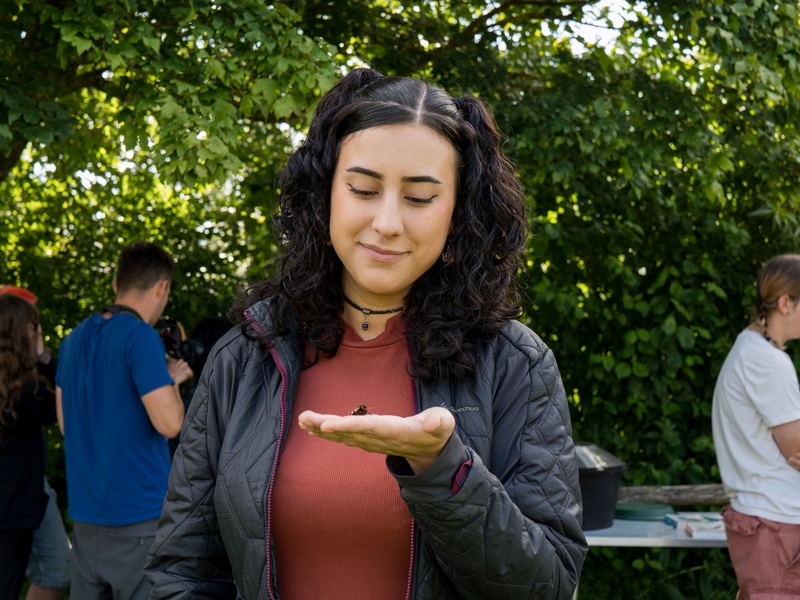
“I think young people can feel more hopeful about the future by working together and being inspired to bring about change.”
Şeniz Mustafa grew up in Bromley. She was always interested in evolution and a strong connection with animals, which turned into an interest in ecology. She ended up doing a masters in Ecology and Conservation at Brighton University. During this time, Şeniz volunteered for us at the Secrets of the Heath festival, as well as for others, at Cuckmere Haven and the Knepp Estate (one of her dissertations was on the White Storks there). She brought members of the university’s Ecological Society to our youth-led nature reserve, The Deneway, to build a hibernaculum (where reptiles can seek refuge) and try pond dipping. She was also interviewed for a film called Conservation, The Next Generation with then Trust Youth Action Officer, Mya Bambrick, and Youth Ranger, Amy King.
Şeniz is now involved in wildlife engagement for a number of organisations and is a huge advocate for inclusion.
What do you enjoy most about engaging people with wildlife?
I love talking with people! And I think a lot of people miss things. Everyone needs more opportunities to help notice nature around them, helping them to ‘unlock levels’. For example, a group I took out at Seven Sisters hadn’t noticed the sound of Skylarks until I pointed it out. Next time, they will know and notice. I also encourage groups out on a butterfly walk to look up, which people tend not to do. They then realise they might see something amazing, such as Purple Emperors.
Tell us more on your thoughts about inclusion:
People and nature are so important. It’s my view that everyone should have access, not just those with privilege.
My interest in inclusion comes from the part of me that understands what it’s like to be marginalised, as a person of a global majority background, where my grandparents were immigrants, and being neurodivergent. I’d describe myself as having a strong sense of right and wrong. I feel people SHOULD be included, and I recognise when people aren’t.
Barriers to inclusion include economic ones - ecology work rarely gets paid – so much of it is voluntary, and asking people to do stuff for free is not fair for those who aren’t in an economic position to be able to do it.
Attitudes can be an issue as well. In terms of jobs in the conservation sector, those in positions to hire may be more likely to choose those who look and think like they do. This leads to a lack of diversity and representation, which means there are people who also don’t see others who look like them in the industry.
People with privilege have more opportunities in their lives and are more likely to get better qualifications - so others get left behind. Those in a privileged position don’t always do enough towards including those who aren’t.
It’s great to see more inclusive measures taken by some organisations - for example, Butterfly Conservation's previous work with Sustainably Muslim. I’m pleased to hear that Deneway’s Wild Future project is funding paid traineeships.
What do you think about Deneway’s Wild Future project?
It’s great and we need more of this sort of thing. In my experience, people don’t talk to their neighbours or link up very much, and young people need more of a sense of community.
The Ecological Society at uni was good, but I don’t see many other similar opportunities. It’s so important to be friendly, to connect with other people who care about nature, to help each other with goals and work in nature restoration.
I think young people can feel more hopeful about the future by working together and being inspired to bring about change.
Follow Şeniz on Insta @senizdoesnature