
Wild orchids
By Patrick Roper
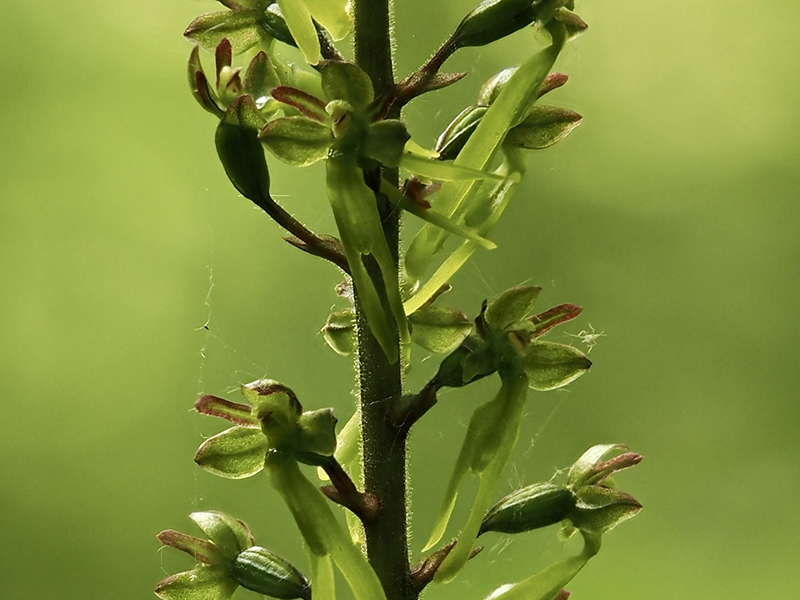
When walking through our local fields and woods in spring and summer, I always hope to have an encounter with one or more wild orchids. Within about a kilometre of our house in Sedlescombe, East Sussex, I regularly come across Early Purple Orchids, Shakespeare’s Long Purples; Green-winged Orchids persist in the nearby churchyard where the grass is hard to mow among the graves. And every year, because I know where they will be, I wonder at the reappearance of Common-spotted Orchids, Twayblades (pictured) and Broad-leaved and Purple Helleborines.
Orchids are strange, rather mysterious plants, often erratic in their appearance and dependent on symbiosis with underground fungi – mycorrhiza - as well as often having complicated pollination strategies with their insect visitors. They are not, however, the foodplants of many insects though the sharp-eyed might spot winding leaf mines on the larger-leaved orchids. These are made by the larvae of a smoky-winged Psilid fly: Chyliza vittata, a relative of that well-known pest the Carrot Fly. The larvae of Chyliza eventually make their way into the tubers of the plant to pupate.
The tubers of Early Purple Orchids and other species were once harvested, dried and ground into a flour-like substance to make into a hot drink called ‘saloop’ or ‘salep’. It was popular in the 18th and 19th centuries and often preferred to the then expensive tea. Its use can, of course, have a devastating effect on populations of orchids.
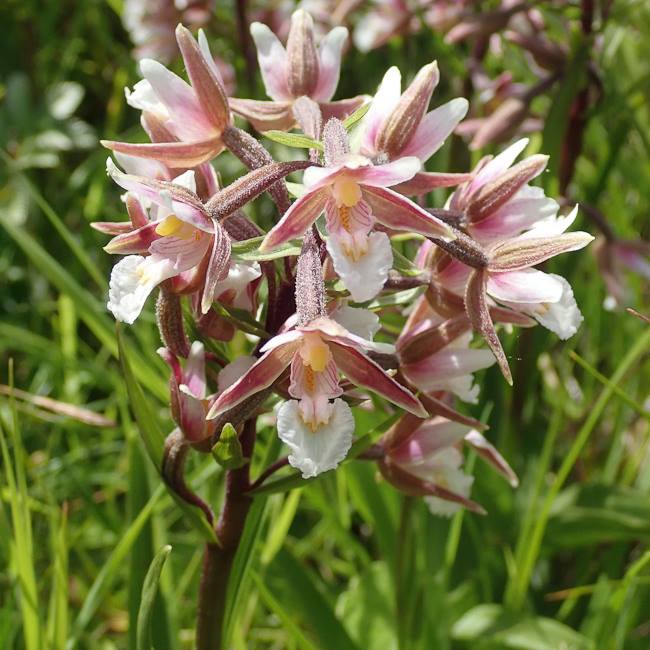
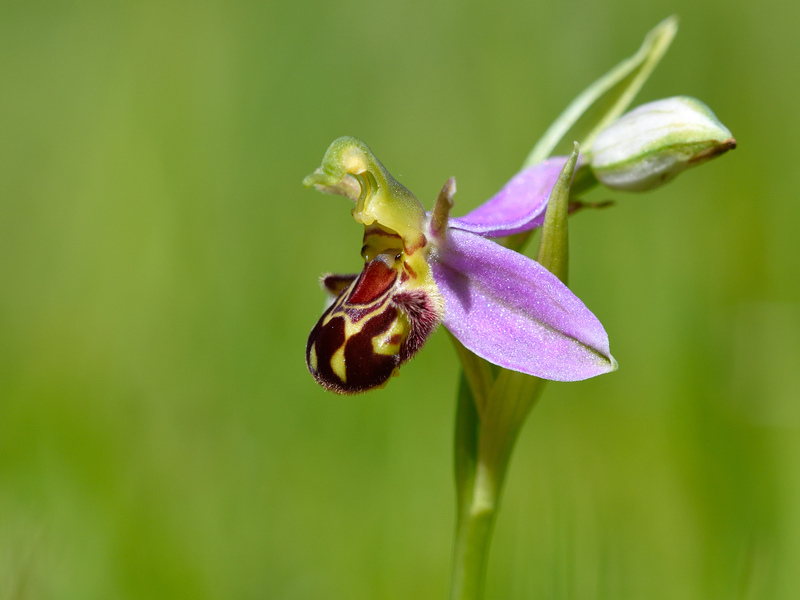
As well as my old friends among the commoner species, I have some treasured memories of discovering, or more often being shown, the Lizard Orchids and Marsh Helleborines in the Rye area, the Bird’s-nest Orchids in Brede High Woods, the Bee and Fly Orchids in unexpected places with their wonderfully constructed insect-mimicking flowers.
And long ago there was day spent with friends on the South Downs when we were shown a colony of Green Man Orchids high on a sunny chalk slope, or my teenage delight when a pale glimmer in a Wealden wood came into focus as a solitary, balletic flowering spike of Greater Butterfly Orchid.
Patrick is an ecologist, biodiversity researcher, recorder and naturalist
Comments
Perhaps the wildlife trust could put on an orchid spotting day for members? That would be wonderful.
02 Jun 2022 13:24:00
We have a heavily wooded garden on the south facing slope of the downs where we would like to grow some common spotted orchids.
Please can you tell me if there is a local grower in the Brighton/Worthing area who could supply us with some legally sourced stock.
Thank you.
Kind regards,
Howard
02 Jun 2022 15:21:00
Sussex Wildlife Trust:
Thank you for your question, try contacting wildflowerlawnsandmeadows.com for local seeds and wildflowers
I grew up and lived close to the North Downs. The spurs and coombes of Box Hill were rich in many varieties of native orchids. Juniper Hall ran a variety of courses and walks under the supervision of John Sankey.
Now, I have moved to a semi rural area, close to the South Downs, near Chichester and Bognor Regis. I have swapped Surrey for Sussex Wildlife Trust. I have yet to discover good, orchid sites, local to me. I have seen common spotted and pyramidals, in bloom on local roundabouts! Do you have any suggestions of orchid rich habitats? I remain very concerned by the sheer volume of pasture land being stripped of top soil and greenfield sites being replaced by intensive housing estates.
03 Jun 2022 08:02:00
There have been many orchids in Brede this year. early purple spikes and now mauve ones. Also, This is the second year that a Bee Orchid has flowered on my neighbours lawn in BREDE. Near Rye.
05 Jun 2022 21:32:00
I own a field in Fairlight, last year we found 25 bee orchids but this year none sadly and wonder why.
08 Jun 2022 10:17:00
We farm and after leaving field corners unfertilized and mown diferent patches each year, orchids have returned naturally. We now have a wonderful display, early purple, common spotted,marsh orchids? and i think possibly hybrids as there seems to be every combination of colour, flower form and leaf in between. I would love a real expert to visit.
Nr. Midhurst
09 Jun 2022 20:28:00
Do you run Orchid walks ?
25 Jun 2022 18:51:00
Sussex Wildlife Trust:
The season is almost over, so best check back next year. Here are where we list all of our courses https://sussexwildlifetrust.or...