
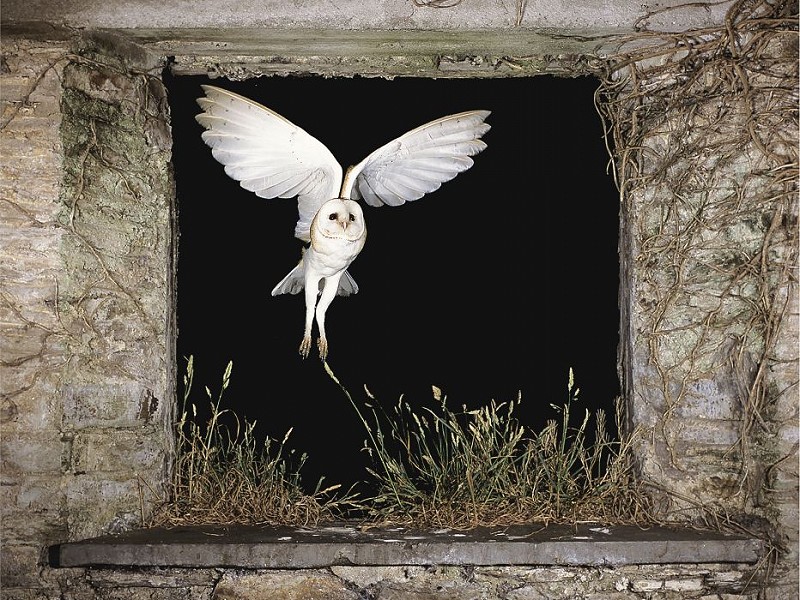
Where did barn owls live before we built barns?
By Fran Southgate
Senior Wetlands Advisor
I am often bemused by the answers we find to reversing the declines in our wildlife. Declines in our bird populations is a classic example. Our ‘go to’ solutions are things like erecting barn owl boxes, creating skylark plots in the middle of fields, and farming arable land for lapwings. Mostly, the bird species we know now were around long before humans farmed corn for the corn bunting, or named a bird as a farmland bird. We often pigeonhole our wildlife (pardon the pun!) and then forget that we have put them into the pigeonhole. We may have named the corncrake by what we see as its favoured habitat, but it may actually prefer something entirely different, given the choice.
In our human-centric way, we create human solutions to wildlife problems – problems which are generally caused by humans in the first place. These solutions become embedded in our policy and management, and so by proxy become the only solution. Something along the lines of “I know chaps, let’s build a barn, put a barn owl box in it, and then the barn owls will all be ok won’t they”? – job done !? ... Or perhaps not.
We need a bit of a conservation brain retrofit. Something whereby we take the human out of the equation, and give the decision about where they want to live back to the birds. In our extremely degraded ecosystems of this era, this is a very difficult thing to do. We have little idea of what truly natural and healthy (bird) habitat looks like, and many of the natural grazers, browsers and processes which would once have created that habitat are no longer around. We are trying our best, but our birds behave so differently from how they did in the past, that it’s easy to assume that the habitats they choose to live in now, are those that they always chose to live in – not the marginalized environments that exist since humans altered the landscape to the extent that they did.
Many bird species that we know, have been around since the woolly rhinoceros roamed the plains of Britain, (before the name Britain was invented). They probably have no idea what we’re getting at when we create ‘bird refuges’ for them in urban buildings. I’m sure, given the choice, swallows and swifts would prefer to nest in natural habitat rather than in a swift brick, if only there was enough of their natural habitat left for them to do so. We can’t go back to the aurochs, but we can be a bit more imaginative about wilder landscape solutions to our wildlife crises.
We are starting to realise how much modern wildlife conservation is fire fighting and guesswork – some of it good, but some of it far too prescriptive. Too often, we take what we see in the current landscape and extrapolate that this must be the best habitat for our wildlife. We forget to ask where species would prefer to live if pristine or at least ‘very good’ habitat was available to them.
Most birds would thrive in an insect, fish and seed rich environment, with a mosaic of species rich natural grassland, scrub, open grown trees, wetland, woodland and healthy sea shore – with a lot less disturbance from humans and dogs, and a lot less pollution of land, air and water. More natural processes would have occurred in that landscape – beavers creating wetlands and ‘beaver meadows’, a wider range of grazing animals browsing out scrub and grassland, natural cliff collapse on the coast, lots of standing and fallen deadwood, and wild boar rootling the ground. To a large extent it’s common sense – wilder, more natural, less human.
Perhaps this is the kind of natural environment we could start to re-imagine for them. Work at the Knepp Wilding estate has shown that the turtle doves didn’t know where humans thought they were supposed to live – instead they are thriving in a scrubby meadow grassland mosaic, with intermittent wetland patches. This may still not be their ideal habitat, but it’s a lot closer to what they need than much of the habitat we’ve been trying to create for them up till now. It’s a step in the right direction, and from there, we can hopefully discover the next step.
What we can’t deny is that many of our (bird) species are still in crisis. Particularly around more urbanized areas, anything we can do to help them, including putting up barn owl boxes, can prevent complete population collapse. It takes hundreds of years to re-grow an ancient oak where a barn owl would probably choose to live, but only a few hours to erect a barn owl box. We have no idea how long it might take to restore healthy invertebrate populations – I’m not sure we even know what that looks like.
But whilst we try and prevent imminent population collapses, it would be useful if we can retrain our brains to see current (bird) conservation measures as an emergency fix, rather than a long term solution. If we are really serious about conservation, then we need to make a concerted effort to re-discover the natural habitats that these species used before humans got involved - where they can thrive without the need for human intervention and the daft names that we’ve given them.
Comments
Absolutely brilliant!
24 May 2019 20:07:00