
What's that black and white butterfly?
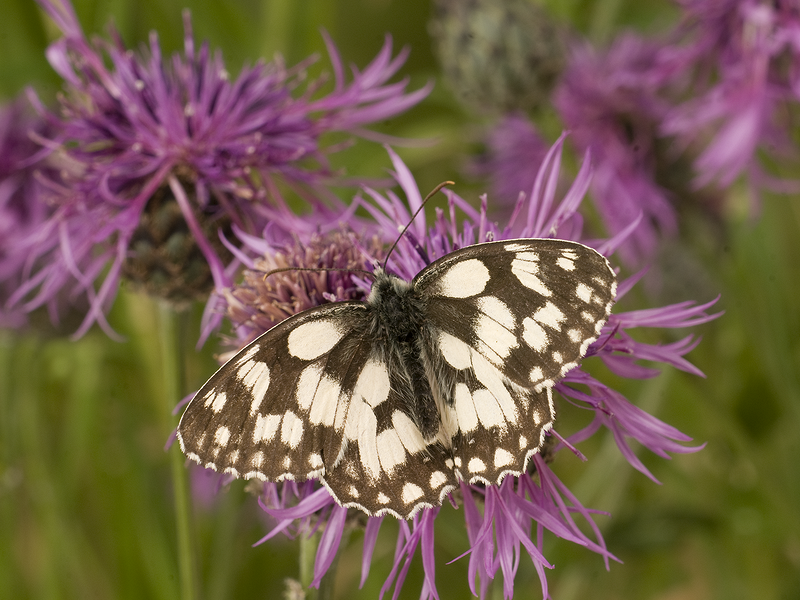
Some of our most beautiful butterflies are the least colourful. Shying away from the garish yellow of the Brimstone and the exuberant red of the Peacock, the whites have chosen a sleek, minimalist look.
Among the commonest is the ubiquitous 'cabbage white' – a title applied interchangeably to the closely related, yet subtly different, Large White and Small White. Size is often the best way to tell them apart and the Large White is a much stronger flyer. Its bright white wings are tipped with black and, in the female, finished with two dark spots, whereas the Small White’s markings are paler.
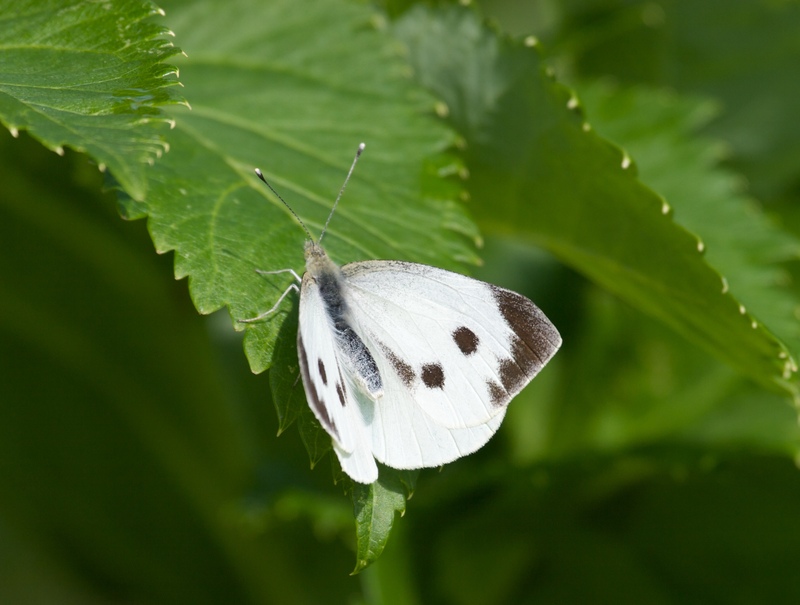
Their hungry caterpillars do indeed feast on cabbages – and sprouts, broccoli, radishes and rocket - earning them a terrible reputation among gardeners and allotment-holders. Of course, the butterflies existed long before we cultivated their beloved brassicas, and they will also lay their eggs on Garlic Mustard, Wild Mignonette and Sea Kale along the coast.
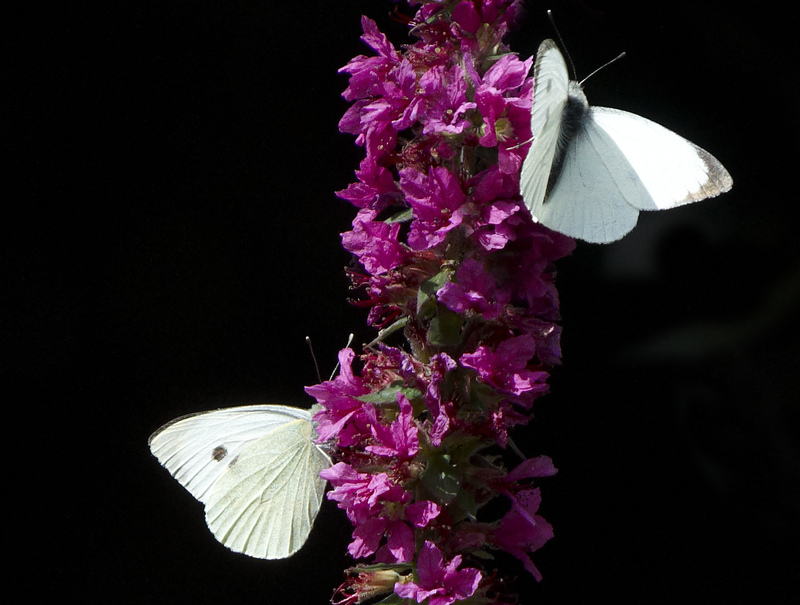
Often lumped in with them, but completely innocent of the cabbage whites' crimes, is the Green-veined White.

This really is a subtly beautiful butterfly, with delicate dark lines tracing its white forewings and distinctive green veins on the undersides. These are best displayed while at rest, although the green colour is an optical illusion created by black scales atop a creamy yellow background. This species prefers damp meadows and woodland rides where females seek out Cuckooflower, Hedge mustard and Watercress.
Not every white butterfly is so subtle, and the unmistakeable Marbled White sports a flamboyant chequerboard pattern.
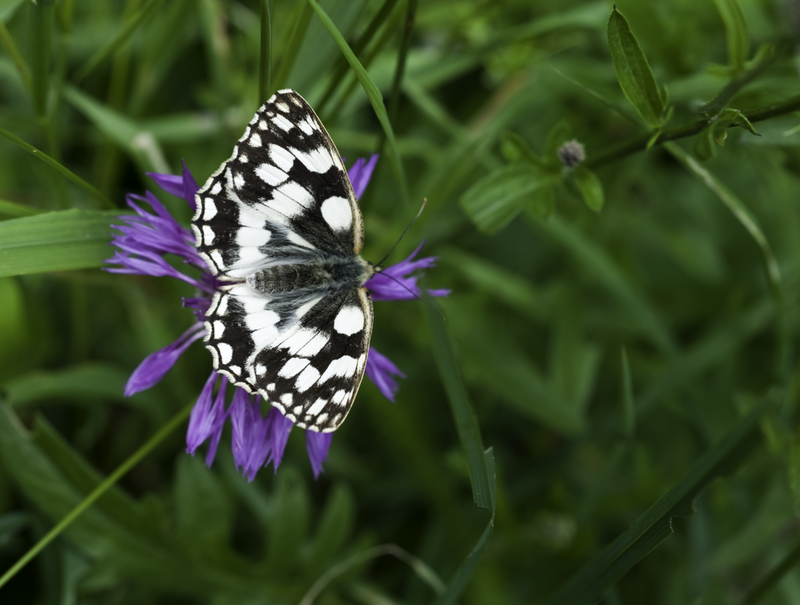
Somewhat surprisingly, it belongs to the ‘browns’ rather than the ‘whites’ and is related to the Gatekeeper, Ringlet and Meadow Brown. It shares their love of flowery grassland and has a preference for purple, from thistles and knapweeds to Field Scabious and Wild Marjoram.
But the grandest of all must be the White Admiral, whose black velvet wings are boldly striped with white. This high-flying woodland butterfly glides gracefully around the canopy, occasionally swooping down to nectar on Bramble blossom or lay eggs on Honeysuckle. When settled, it offers a glimpse of the spectacular orange and white underwings that truly set this aristocrat apart.

When to see
Marbled White and White Admiral butterflies are typically on the wing through most of July in Sussex, but this year reports of White Admirals in particular have dropped off early, likely due to the summer's heatwaves.
Large, Small, and Green-veined Whites have much longer flight periods, and should be seen into the autumn.
Comments
Many thanks, as always. I have yet to see the White Admiral but the others are quite common this year in various preferred environments.
16 Jul 2026 10:24:00
Thank you for interesting info and lovely photos. Apart from the White Admiral, think I’ve seen the others in Surrey and Sussex this year.
16 Jul 2026 10:46:00
on Monday 13th July, I spotted a Jersey Tiger in our garden. Not strictly black and white – it had vivid red underneath!
I took a photo and looked it up as I haven’t seen one before.
16 Jul 2026 11:02:00
I did see a White Admiral on the Isle of Wight on 1st July this year and also an abundance of Marbled Whites, I have also seen the Marbled white in Sussex where I live in the last few weeks
16 Jul 2026 11:08:00
I check butterflies (and birds) for the BTO weekly garden watch. There have been marbled whites in large numbers in the field next to me, and a few in my garden, for at least three weeks now. Yet BTO have twice said on my report that it would be unusual to see these butterflies as early as this.
Are they right, or is this field just unusual?
16 Jul 2026 11:12:00
Sussex Wildlife Trust:
Over the last ten years, the average time for the first sighting in Sussex has been mid-June. But as with several other species the first was exceptionally early this year, on 30 May.
See: Sussex Butterfly Conservation : First Sightings
Brilliant! Thank you.
16 Jul 2026 11:17:00
Were getting a lot of Brown and Red small butterfly Don’t know name.
Lots of ladybird Why Elmer
16 Jul 2026 11:20:00
There seems to be more marbled whites in the garden this year than normal, but only seen one white admiral so far. Lots and lots of Gatekeepers as normal!!
16 Jul 2026 12:15:00
Just a question from a novice butterfly ‘spotter’. What are the best books too look up the details of the myriad of different types of butterfly, or moths?
16 Jul 2026 14:49:00
Sussex Wildlife Trust:
Hi Paul,
For butterflies, the Pocket Guide to the Butterflies of Great Britain and Ireland by Richard Lewington is excellent
For moths, there are a lot more to pick apart, but the Waring guide is excellent:
Field Guide to the Moths of Great Britain and Ireland - UKMoths review
Butterflies seem more plentiful around my garden this year. I have not been sufficiently watchful over my cabbages,
16 Jul 2026 15:44:00
On Sunday 12th,Bexhill in a friend’s qarden,we saw a Jersey Tiger Moth,which is black and white!
16 Jul 2026 18:24:00
I love butterfly’s
16 Jul 2026 18:24:00
Thanks for the lovely photos and useful information.
This year more butter flies are seen in my garden and I have seen Marbled white, but no luck as yet with white Admiral.
16 Jul 2026 22:33:00
Hi.
I live in Hastings East Sussex and saw a White Admiral in my back garden this morning. I have not seen one before. It was very beautiful.
19 Jul 2026 15:15:00
Clear, interesting and well illustrated. Will look out for Marbled White and White Admiral in particular as I have not knowlingly seen them.
27 Jul 2026 10:16:00
Clear, interesting and well illustrated. Will look out for Marbled White and White Admiral in particular as I have not knowlingly seen them.
27 Jul 2026 10:17:00