
Waders R Us
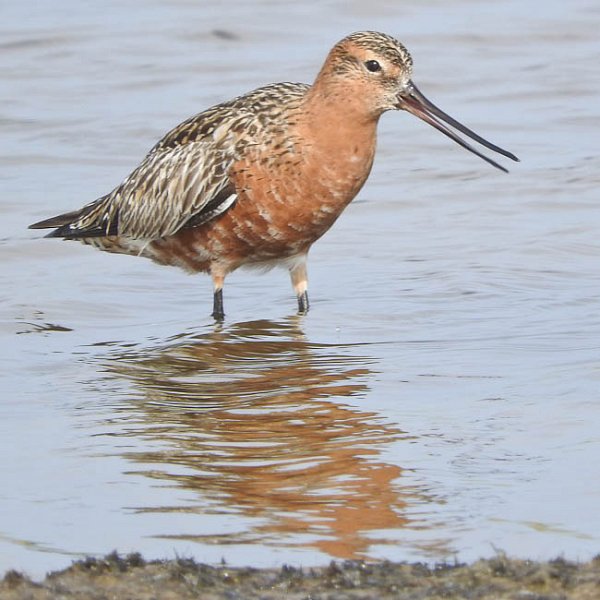
May is a great month for watching waders (or shorebirds as Americans call them) at Rye Harbour Nature Reserve and so far this month we have seen 25 species!
Our six breeding species are well into their breeding season, with Lapwing and Ringed Plover already having chicks and it will not be many days before we see the first Redshank and Avocet, followed by Little Ringed Plover and Oystercatcher. Photo below is of three Lapwing chicks.

But then there are many other species that are on their way to the far north, where days are much longer, there is a greater flush of food and fewer predators. Some of these species are in stunning summer plumage and the Grey Plover appears black and white, Turnstone get their tortoiseshell colouring and white heads, Dunlin (below) go golden with black bellies, grey Knot become red Knot, silvery Sanderling become chestnut, the grey Spotted Redshank become black and the normally brown godwits can become bright chestnut. The Bar-tailed Godwit (photo at top) must surely win the prize of SUPERBIRD. It has the longest known non-stop flight of any bird and also the longest journey without pausing to feed by any animal! The one above was finding lots of invertebrates in our muddy saline lagoon yesterday (the males are smaller and brightly coloured in their breeding plumage).

So waders should remind us that "our" wildlife does not just belong to Sussex, many species depend upon many places on their annual migrations. We need international co-operation to conserve this network of sites and this is just what the Ramsar Convention on Wetlands is doing and why it was important that Rye Harbour Nature Reserve became a Ramsar site recently. Click here for the previous blog.