
Volunteers reminisce part 3. Setting up SxBRC, Seasearch, Shoresearch and more

In the third of a series of three blogs about volunteering for the Trust to celebrate Volunteer Week, we hear from Gerald Legg about his many decades of volunteering in multiple roles. These include being a Council Member, helping out on reserves, assisting with the set up the Sussex Biodiversity Record Centre, as well as being involved with developing both Shoresearch and Seasearch.
In 1974 I became Keeper of Natural Sciences at the Booth Museum of Natural History in Brighton, which had strong ties with Sussex Wildlife Trust. Eventually I was invited to become a member of the Trust’s Council.
In these years the Trust had no vehicles and as I had a Land Rover I was often asked to assist on the reserves as I could take heavy equipment and people to difficult-to-reach places.
Amberley Wild Brooks was the first reserve acquired by the Trust in 1963. In 1983 the Trust won a battle protecting the area from being drained and was able to implement an extensive management plant. The area needed a lot of work doing, notably the removal of invading and over-grown willows. Myself and the Land Rover were called upon to take winches, ropes, spades, etc.
The most significant aspect of my association with the Trust was being part of setting up of the Sussex Biodiversity Records Centre in the late 1990s. At one point it was going to be set up at the Booth Museum, but after much work it was decided to locate it to Woods Mill, under, but independent of, Sussex Wildlife Trust.
I collaborated with the production of several publications in association with the Trust. No computers then - the maps and text were all printed, cut, and pasted into layouts for publication.
The Sussex Sublittoral Survey and the Seven Sisters Sublittoral Survey were forerunners of Seasearch, organised countrywide by the Marine Conservation Society. Sussex was one of the first counties to test this now extensive, important recording programme, which has contributed to the establishment of Sussex’s Marine Conservation Areas. A working group was formed. Then, in 2013, the Trust took on a part-timer to take over the administration, whilst data work continued at the Booth Museum. I was responsible for this work and continue to assist to this present day. From these humble beginnings, Living Seas was born.
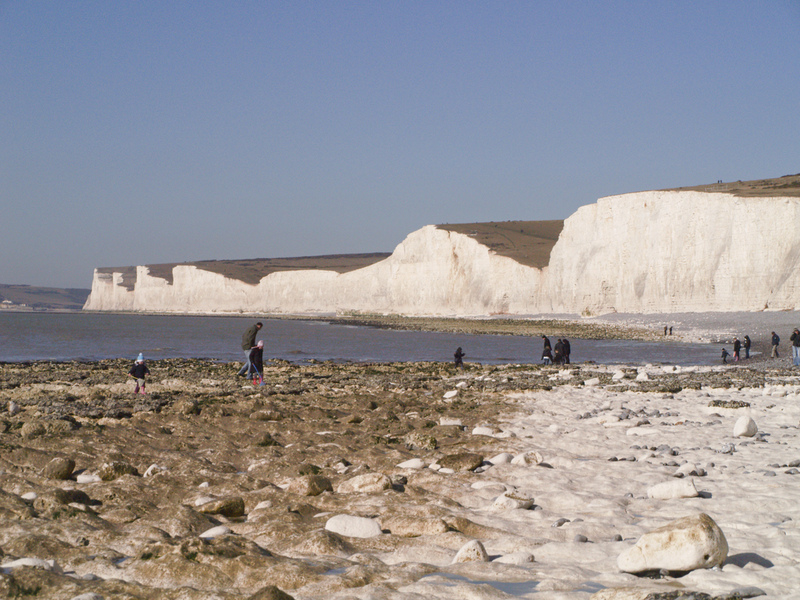
Having a strong interest in the marine world I also became involved as a recorder both under the sea and on the shore.
Shoresearch also had humble beginnings with the Trust. It now is a thriving recording part of the Trust’s Living Seas.
Our volunteers are incredible and we cannot do all the work in Sussex that we do to support wildlife without them. Find out more about how to volunteer with us here.
Comments
Very interesting. I had not fully appreciated how embedded Gerald has been and still is in the set-up of all the things the SWT does on the marine side. Great work.
03 Jun 2024 10:53:00