
Volunteer impact on our reserves
Written by Glenn Norris, Senior Ecologist, December 2022
One of my main roles at the Trust is detecting the change in habitats on the reserves over time. The habitats our reserves provide such excellent homes to are dynamic, constantly changing to varying degrees with each passing year depending on the weather, the presence of grazing animals, and just as importantly, the unrelenting labour of volunteers.
It’s no secret that volunteers provide the missing natural processes within our landscape; mowing equals sheep and cows grazing, trimming back scrub replicates goats and deer browsing, clearing vegetation from ponds imitates Water Buffalo. Our Selwyns Wood volunteers have recently auditioned as East Sussex Beavers by creating a series of leaky dams along their ghyll stream.
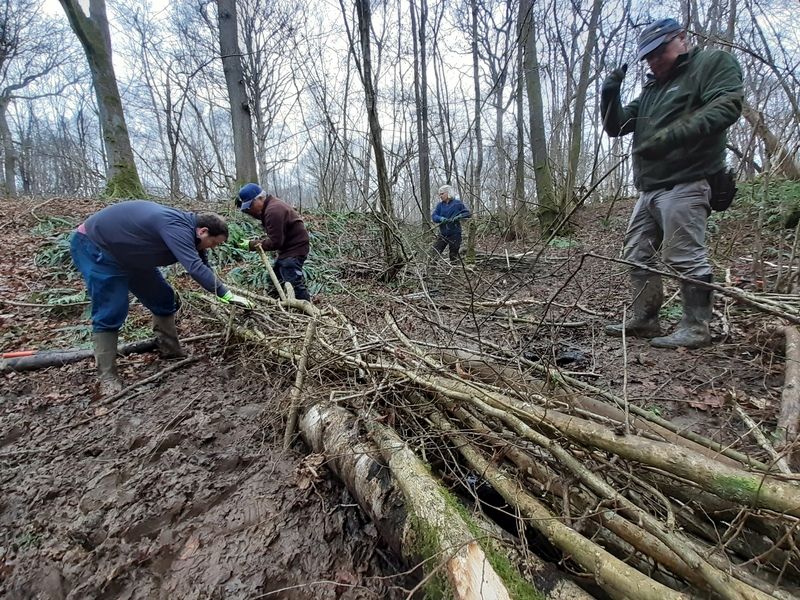
In the short time they’ve been present, water has been held back for longer making the woodland more resilient to drought, but also by catching silt they are helping prevent soil erosion and providing an exemplary breeding site for a whole host of invertebrate species that love wet mud. Should help the Marsh Tits that live there at any rate.
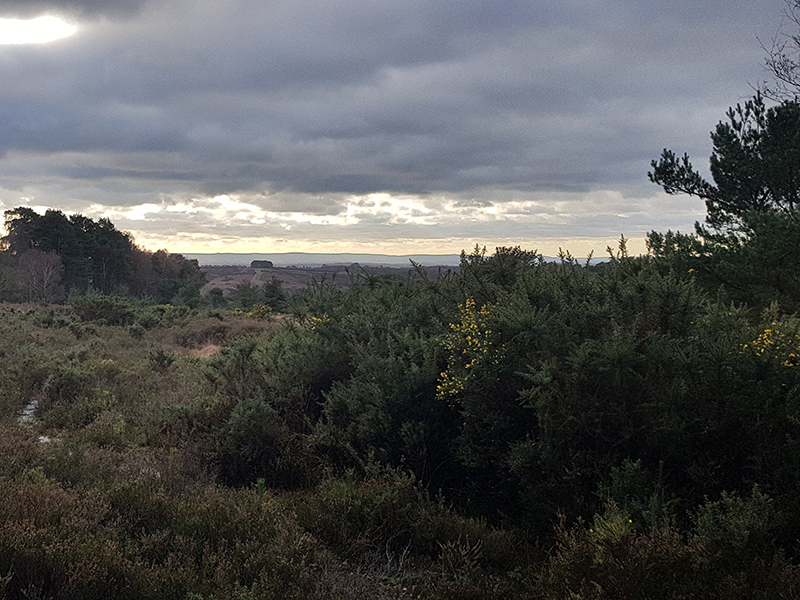
Heathlands thrive on disturbance and there are few volunteer teams as ‘disturbing’ as the ones that inhabit Old Lodge. I updated the habitat map for the reserve this summer and in the last 10 years the volunteers have been chasing stands of gorse around the reserve ensuring there is still plenty to support our thriving population of Dartford Warbler but removing enough to keep the Woodlarks happy. Vitally, the reserve is constantly changing allowing different species time to shine before it’s changed again and other species benefit, just as it would when the balance of natural processes would have done the work instead of us.