
Very Hungry Caterpillars
By Charlotte Owen
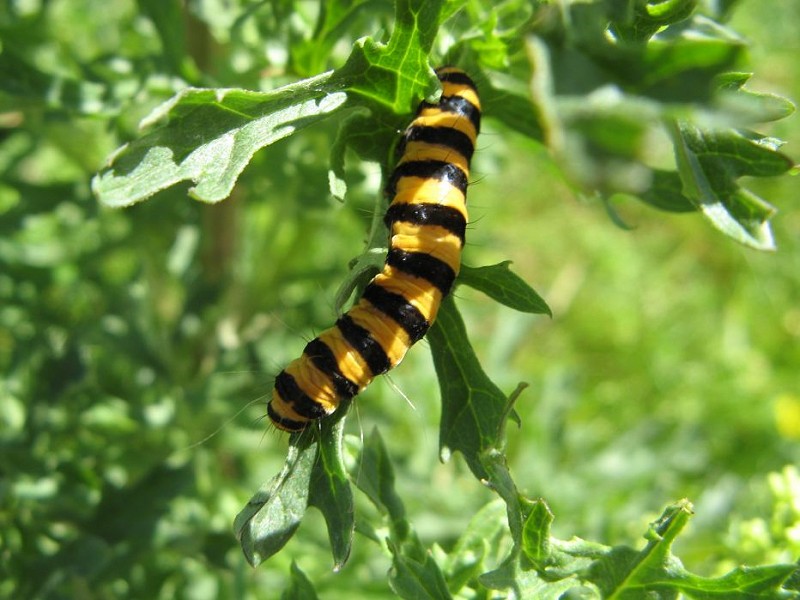
Caterpillars come in a huge variety of colours, shapes and sizes but there’s one thing that these Lepidopteran larvae all have in common: they’re very hungry. From the moment they hatch, their sole purpose is to eat and grow. Most caterpillars actually start eating before they have even emerged from their egg, chewing their way free and then gobbling up the eggshell for good measure. Having made short work of the starter, they move straight on to the main course and tuck in to the leaf they are standing on – which is why butterflies and moths take so much care to lay their eggs on particular plants. Some caterpillars are such fussy eaters that they rely on a single host species, whereas others have a more varied diet. Either way, their tiny bodies are perfectly adapted to turn foliage into fuel, and they don’t stay tiny for long.

Puss Moth Caterpillar © Paul Marten
Caterpillars literally eat until they burst, shedding their skin several times as they grow ever bigger. Their appearance can change quite dramatically between each moult, with transformations in colour, pattern, hairiness and even shape as well as size. These distinct growth phases are known as instars and a first instar caterpillar often looks nothing like a fully-grown fifth instar. This can make identification tricky but many caterpillars are so expertly camouflaged that the main challenge is finding them in the first place.

Brown Hairstreak © Victoria Hume
Camouflage is an important strategy because caterpillars are very vulnerable to predation. They make a perfect protein-packed snack and thousands will fall prey to hungry birds busy rearing their families, but for every caterpillar that is eaten, another goes unseen. A clever combination of colour, pattern and behaviour helps them to blend in with a leaf, impersonate a twig or even become a bird dropping. The more brightly-coloured caterpillars are usually toxic and they avoid being eaten by brazenly advertising the fact that they taste terrible, and some are so hairy they’re impossible to swallow. Whichever strategy they employ, it’s still a race to grow as quickly as possible to increase the odds of surviving long enough to pupate, and one day emerge as a glorious adult.
Comments
Found a large caterpillar walking down the side of a house I was working on. Think it is some sort of Hawk moth. Need to know what it eats please??
10 Aug 2023 18:48:00
Sussex Wildlife Trust:
HI Mark, if you can get a photo please send it to [email protected] and we should be able to advise