
The winter thrushes are on the move
By Charlotte Owen
WildCall Officer
The clocks are changing (25th October), the seasons are shifting and the birds are on the move. Just as the first Swallows are a sure sign of summer, an influx of Redwings and Fieldfares heralds the onset of frost and snow – perhaps not here just yet but certainly in their Scandinavian homeland, where temperatures are already starting to plummet. Not keen on shivering through icy blizzards, these surprisingly delicate winter thrushes seek out winter sun – or at least less winter cold – in our milder climate, which also provides plentiful winter berries and other wild fruits to entice hungry travellers.
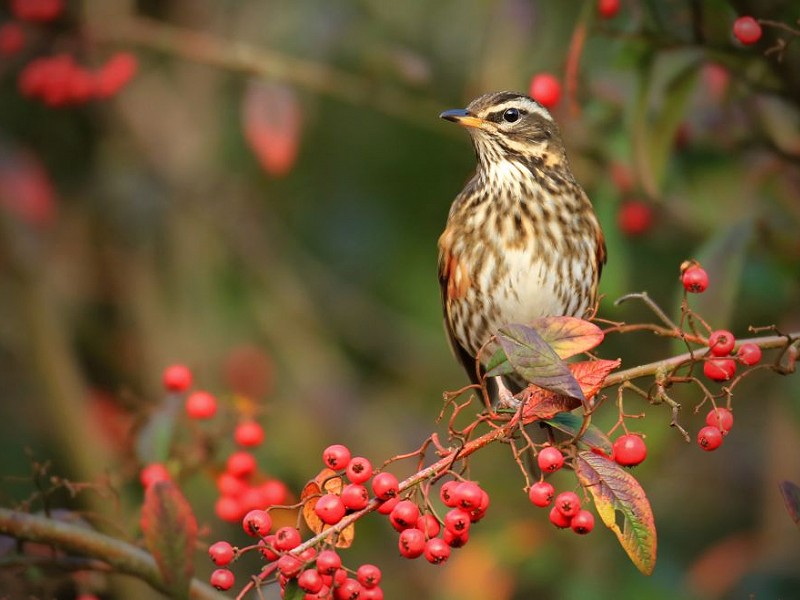
The Redwing is the smallest of our thrush species, named for the rusty red patches under each wing. These aren’t always obvious unless the bird happens to be flying and it can be easier to look out for the distinctive cream-coloured stripe, or supercilium, above each eye. Redwings migrate overnight and you can often hear the high-pitched “tseep-tseep” contact calls of these nocturnal nomads as they pass overhead in the dark. On particularly clear, quiet nights, fishermen used to listen out for the rushing sound of rustling wings made by migrating flocks, which they dubbed the “herring spear” as a good omen of full nets by morning, as presumably the herring were on the move at the same time as the redwings.
The Fieldfare is larger with a slate grey head and much paler stripes above the eyes. The name means traveller-through-fields and that’s exactly what these birds do, often alongside redwings in large, mixed flocks. The Fieldfare has a more upright posture than the redwing when seen on the ground and a harsher “chack-chack” flight call. The same sound is uttered more softly when groups are gathered in trees, constantly chattering. Both species love to swarm along hawthorn hedgerows to gulp down the haws, which seem to be their first preference in the berry buffet alongside Rowan, Yew, Dog Rose and Holly. As these start to dwindle, they’ll probe the ground for earthworms and other soil-dwelling invertebrates, pausing often to scan for danger, and when the ground is frozen they will venture into gardens for windfall apples and berry-laden shrubs.