
The Wild Places of Worthing
By Thomas Simpson
People and Wildlife Officer
Did you know that one of the most bountiful and important wildlife habitats in the country isn’t a nature reserve or a national park but the plots of land on our very own back doorsteps?
There are 23 million gardens in the UK, covering an estimated area of around 433,000 hectares, about a fifth of the size of Wales. The mosaic habitat formed by adjacent gardens is a vital part of our urban ecosystems and home to thousands of species in our towns and cities.
In celebration of Britain’s eclectic and diverse range of garden habitats, we recently held the Wild about Worthing Wildlife Gardening Competition, which gave me an opportunity to get up-close and personal with some of the wonderful gardens in our area. All of them were inspiring but we’ve narrowed it down to our top three:
First place

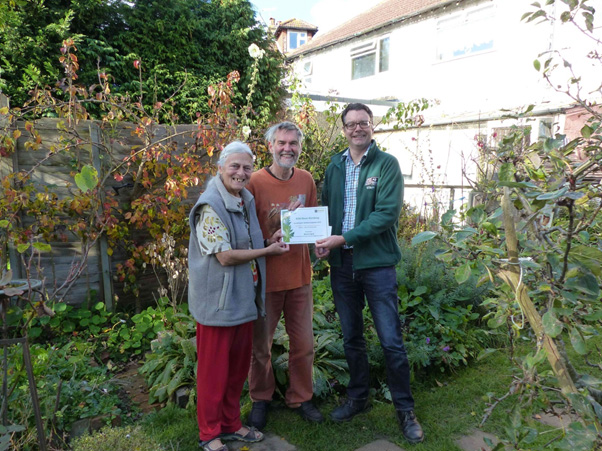
Our overall winners, Merry Curd and Richard Battson of Downlands Avenue have combined many elements of wildlife gardening to create their own self-sustaining sanctuary in the centre of town. The garden offers a huge variety of food for insects, birds and mammals, including fruiting trees and shrubs, climbing perennials and self-seeding annuals. There are areas of rough and cut grass, a bramble hedge and trees such as silver birches and apples. Nectar and seed are abundant with plants such as teasel, borage, evening primrose, purple toadflax and betony.
Merry and Richard’s garden is by no means expansive, making what they have achieved even more impressive. Every inch has been set aside to enhance the habitat for wildlife while retaining its aesthetic appeal. Water is provided by two small ponds and a wet meadow fed by collected rain water and these areas are constantly inhabited by frogs and newts.
To help increase the diversity of plants within a limited space, Merry and Richard have introduced Hugelkulture into their garden. In German, Hugelkulture roughly means “mound culture”. The technique is to pile rotting wood and brash and cover it with soil to form a raised bed which slowly releases water and nutrients from the buried material; it’s essentially in-situ composting.
Second place

Nathalie Hadjifoutou claimed second prize with her garden in Broadwater, east Worthing. Nathalie’s garden is a perfect example of how our personal plots can be relaxing havens for ourselves and for wildlife.
Careful planning and planting provides fruit and nectar for much of the year. Along with formal borders, this has created a tranquil, wildlife-rich patch, suitable for both man and beast. It’s hard to believe that when Nathalie took on her garden in 2013 it was dominated by a 300m2 lawn and patio. Nathalie knew that making dramatic changes will often perturb wildlife and so took a little-and-often approach making gradual changes and minimising the impact.
Third place

In third place was Linda Head in north-west Worthing. Linda has taken a low-intervention approach to her garden and set aside her very own “wild corner.” This area of low-growing shrubs and fruit trees is backed by large birches to provide cover for anything from mice, voles and shrews to hedgehogs. Birds are also drawn in by the seeds and soft fruits supplemented by an array of feeders. All the hard work is paying off in the form of the garden’s evening visitors.
“At night I can listen and often see the two hedgehogs who visit, singly or sometimes together,” Linda said.
Brilliant to see this hedgehog filmed in a #Worthing garden #Autumnwatch pic.twitter.com/8oMfDecPDf
— Wild about Worthing (@wildworthing) November 5, 2015
We have seen a variety of wonderful gardens and would like to say a big thank you to everyone who entered the competition and is continuing to do their bit for wildlife in Worthing.
If you are interested in making your own wildlife garden you can find out how on our website; Or join the enthusiastic group who meet at Cortis Avenue Wildlife Garden on Wednesday mornings. If you would like to find out more from our competition winners please get in contact and we would be happy to relay your messages.
