
The sights, scents and sounds of summer
By Laura Brooks
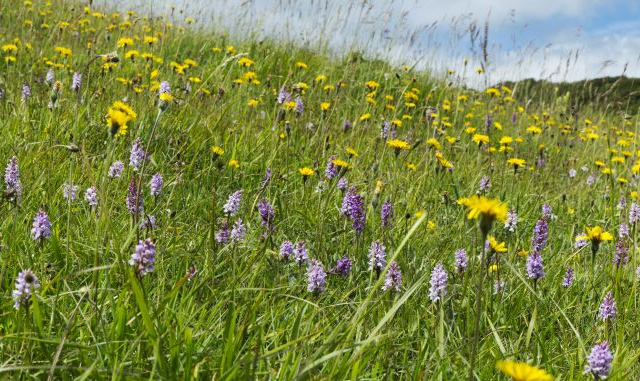
What could be more charming than a wild flower meadow in summer? A floral feast for the senses, with colourful petals swaying in the breeze and the buzz of insects busily collecting their precious pollen. Among the bees, butterflies, beetles and hoverflies feeding on nectar and gathering pollen you might be lucky enough to spot a red-tailed bumblebee or a marbled white butterfly.
Large open flowers such as the cheerful oxeye daisy often seen dotted along the road verges and fields of Sussex are particularly attractive to pollinating insects, providing an easy landing pad and delicious easy-access larder. Although they may appear to be flitting in a haphazard way from flower to flower, this insect army is doing the world a great service. Not only are they collecting food for themselves, but they also carry pollen from one flower to another; essential for the plant’s reproduction. In turn our wild flower meadows provide feeding or breeding areas for birds, hedgehogs, frogs, dragonflies, bats, and moths, helping to maintain healthy and diverse ecosystems.
Sadly, pollinator numbers are declining for a variety of reasons including loss of habitat, so wild flower meadows, and indeed wild flowers anywhere from grass verges to our gardens are vital to help maintain their numbers. Wild flower habitats vary enormously from marshy pasture and chalk grassland to traditional hay meadow – but they all do best in lightly managed or natural locations.
Although many fields and pastures where wildflowers once grew have vanished, there are still places where they can be enjoyed. Here in Sussex you will notice wild flower meadows peppered across the landscape. Many of Sussex Wildlife Trust’s nature reserves offer the chance to enjoy a variety of wild flower sites, rich in wildlife, which have been managed in a traditional way, avoiding chemical fertilisers.
July is a good time to look out for a colourful display of poppies, ragged robin or cornflowers, and the abundance of insect life they support. So why not visit your favourite local patch or one of Sussex Wildlife Trust’s meadow reserves to enjoy a summer spectacle: www.sussexwildlifetrust.org.uk/visit