
The nomadic Short-eared Owl
By Charlotte Owen
WildCall Officer
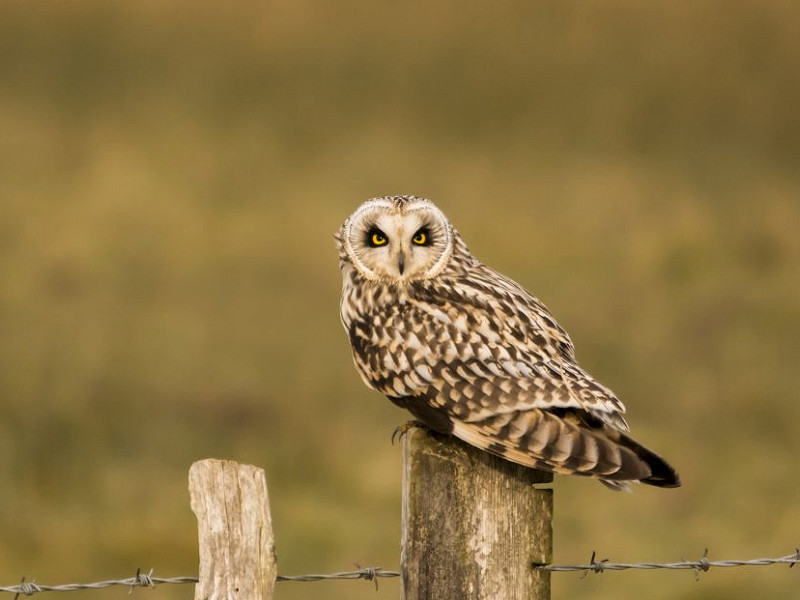
The short-eared owl migrates here from the snow and ice of Finland, Scandinavia and parts of Russia. Its nomadic nature sets it apart from our resident owls, who don’t wander far, and the ‘shorty’ bucks a few other owl trends too. As you might expect, it is a fearsome nocturnal predator but there is no respite for its small mammal prey as these birds will happily hunt in daylight too, timing their mid-afternoon flights to take advantage of the field vole rush hour. Between meals they will roost on the ground, hidden within a grassy tussock, and come spring when they have made the return journey to their northern breeding territories they will nest on the ground too, only taking to the trees when inconvenienced by heavy snowfall.
The ‘ears’ are actually short tufts of feathers that can be raised or lowered depending on the owl’s mood. Since they are often flattened against the bird’s head, disappearing into the dense facial plumage, it’s the eyes that are the most distinctive feature; a piercing yellow gaze accentuated by heavy black makeup that creates a severe and frowning face. It’s impossible to slip by a short-eared owl unnoticed but they will tolerate a careful observer as long as a respectful distance is maintained.
Comments
We have a owl box in our garden how do I register it
24 Jan 2024 08:09:00
Sussex Wildlife Trust:
We are not aware of a need to register an owl box