
The Natural Capital of Floodplains
By Fran Southgate
Living Landscape Advisor
We know that nature has a value over and above the economic price that our economy puts on it, and that often the true value of nature and all the services that our environment provides for us isn’t taken into account before it is destroyed. But it is still difficult to explain to people how to understand the real value of a healthy environment.
We call it ‘Natural Capital’ or the natural assets that our environment either directly or indirectly provides as benefits for humans and wildlife. Plants and animals, freshwater, soil, air and oceans all contribute to natural capital – things like bees which pollinate our crops are counted as natural capital and natural service providers, or plants which store carbon and regulate our climate for us.
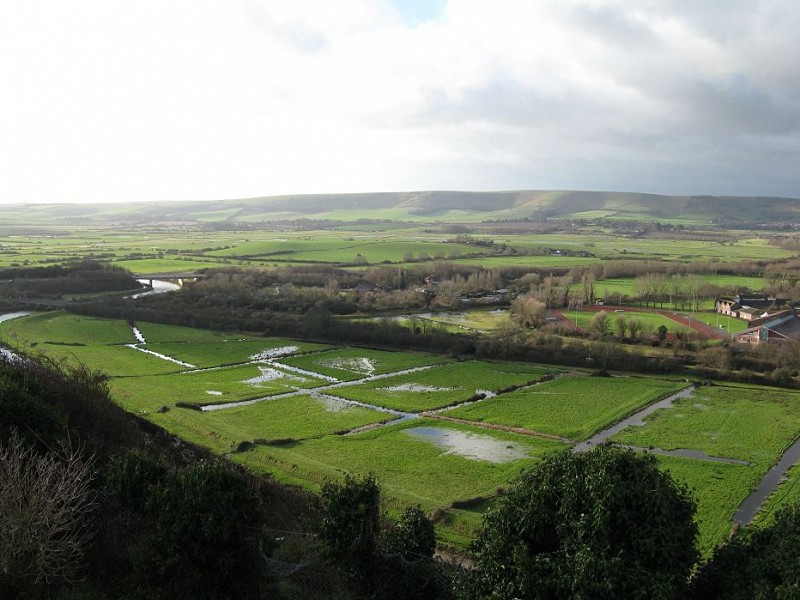
In Sussex we work with partners to provide Natural Capital and multiple benefits to people and wildlife through Natural Flood Management in the Sussex Flow Initiative project. One of the natural capital assets that we work to protect and enhance through the Sussex Flow Initiative is the floodplain. These large areas of land next to rivers which occasionally flood are capable of supporting a wide range of natural habitats, storing and slowing down vast amounts of flood water, absorbing sediment and pollution, supporting agriculture, storing carbon and much more. Floodplains cover over ı.6 million hectares in England and Wales. Unfortunately, due to land drainage, urbanisation and other human influence, at least 42% of floodplains are no longer connected to their river system.
Recently, the Valuing Nature Programme undertook a review of the Natural Capital benefits that our floodplains provide for us. Their key findings were that floodplains are important natural capital assets which deliver a wide range of benefits to people. Common sense tells us that we know this already, but it is heartening to have the scientific evidence to back up our knowledge.
The Natural Capital of Floodplains report found that the complex and dynamic interface between land and water based ecosystems in floodplains supports a wealth of natural resources which aren’t available from other parts of our countryside. In particular, the review found that :-
- Semi-natural floodplain habitats are a vital component of the UK’s natural capital.
- They provide a wider range of goods and services than intensively cultivated land
- The lack of natural habitats in functioning floodplains reduces our resilience to floods and drought, reduces the abundance of pollinating insects and natural pest control agents, and reduces the potential for carbon sequestration and water quality improvements.
- Despite only occupying 5% of the land area of the UK, targeted investment in restoring natural capital in floodplains would yield massive savings and gains for society as a whole
The report is a fascinating insight into the changes that we could make to try and recognise and retain the natural capital in our floodplains. It makes a range of recommendations including :-
- Reconnection of rivers with their floodplains to allow them to flood and drain naturally;
- A shift of land use in floodplains from intensive agricultural production to semi-natural habitats that can help to slow, store and filter water;
- Grassland management that promotes carbon and nutrient capture, and biodiversity supporting pollinating insects and biological control agents of pests and diseases.
The two diagrams below are taken from the Valuing floodplains report. They give you a snapshot of the range and types of natural services that our floodplains can provide when they are natural, compared to urbanised or heavily managed. It’s interesting to see how food production accounts for a tiny fraction of the natural services that floodplain land provides, and yet it is often the land use which is prioritised to the exclusion of all the other natural capital benefits which could be provided in tandem. It’s a really interesting read and we recommend taking a closer look at the report here.
And do keep an eye out for us this winter for more information on how Sussex Flow Initiative is helping to restore the natural capital of Sussex floodplains.
Figure 1: Schematic diagram showing how natural capital assets in English floodplains are translated by providing services into benefits.

Figure 2b: Costed benefits of nature reserve capitalised over 30 years
