The lowdown on leaky dams

As our climate changes, creating landscapes and habitats that are climate resilient is crucial. With wetter winters and drier summers on the rise, what can be done? Cue the leaky dam!
You may have heard the term, but what exactly are they and how do they work?
What is a leaky dam?
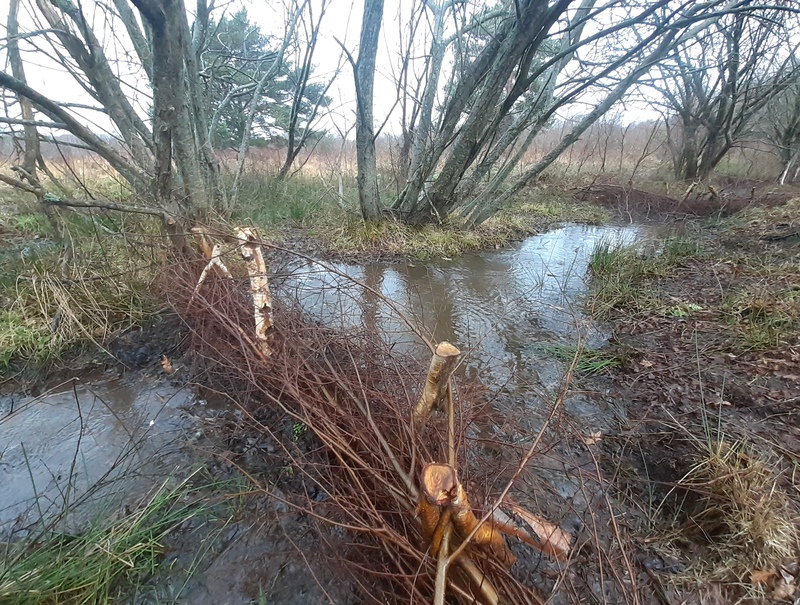
Leaky dams are a form of Natural Flood Management (NFM) and mimic the activities of Beavers. They act as hydro-dead hedges, natural woody materials placed in water channels like streams and ditches. Their impact varies by season, being less leaky in autumn when more leaves build up, and more leaky when the leaves are washed away.
What do they do?
Leaky dams can change the course of water, and therefore the landscape, by backing up water and pushing it into a wider habitat. This creates pools and ponds in the same way that Beavers do. They also act as screens, filtering out leaf litter, sediment and rubbish from the flowing water.
Why are they good?
For many reasons. And not just for wildlife but for us as well. Benefits include:
- Reducing flood risk after heavy rainfall of areas downstream
- Retaining water in areas longer, helping counteract the impact of dry summers
- Creating diverse habitats to benefit and support a range of wildlife
- Providing food and habitat through added wood and decaying matter, benefiting species like craneflies and dragonflies
- Offering nesting sites for birds
How are they made?
Bundles of brash are woven between thicker wooden posts, often made of old tree trunks. The dam is then pinned using stakes in a triangle shape, securing it and ensuring stability even during high water.
Don’t forget! You need permission from the landowner and consent depending on the type of watercourse where you plan to build the leaky dam.
If you would like more information on Natural Flood Management (NFM) and creating your own leaky dam, you can find this on our website.