
The Emperor's new clothes
By Richard Cobden
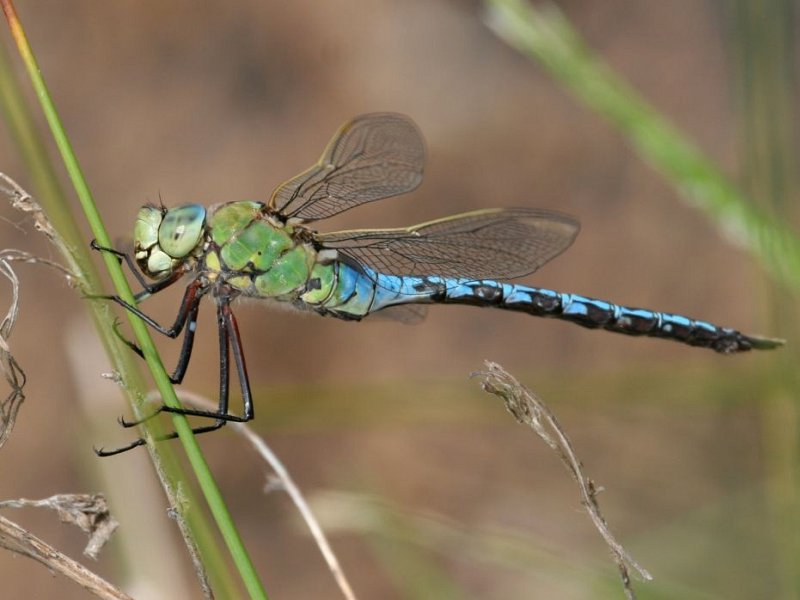
Glimpsed on a golden summer’s afternoon as they dart across the water, these jewel-like beauties have a magical quality about them. A spectacular sight with a wingspan of 10cm, the Emperor is Britain’s largest dragonfly. They are powerful flyers with a top speed of 30kph, and are found widely throughout Sussex from late May to early September, flying over still waters such as ponds, lakes and canals.
They are one of the easier dragonflies to identify, as both sexes have a vivid apple-green thorax. In the males this contrasts with a bright blue abdomen, while the female is green. They have excellent vision; with prominent blue eyes containing thousands of tiny lenses which help them to home in on their flying insect prey, find a potential mate, and spot predators.
The males set up territories which they defend fiercely against other males, putting on a show as they fly rapidly back and forth a few metres above the water, rarely coming to rest.
After mating, the female lays her eggs in floating vegetation and most of the young's life is spent under water in the murky depths of a pond. It takes up to two years for the dragonfly to develop from a hatched egg to a mature larva, known as a nymph, shedding its skin several times as it grows. A voracious predator, it is capable of eating small fish up to two or three times its own size.
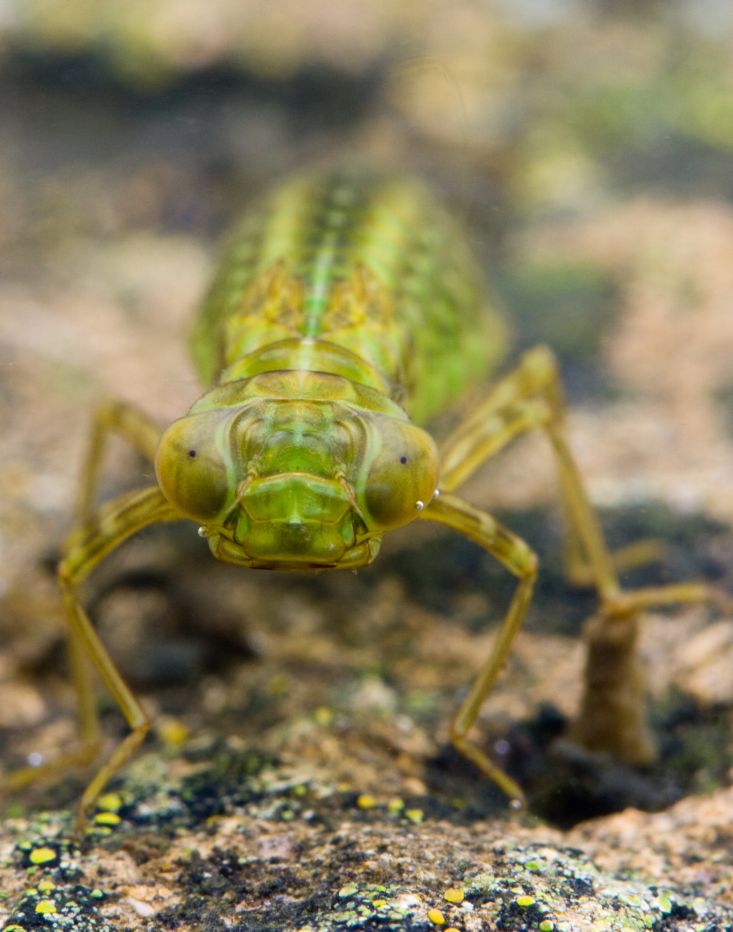
Emperor nymph © Dave Kilbey
When mature the nymph searches out a suitable rush or reed to climb under cover of darkness and once clear of the water it will anchor itself by digging its claws into the stem. Now it has reached the point of no return and has switched from using its gills to breathing air. It begins the struggle to shed its skin for the last time and with a final burst heaves itself out and unfurls its wings. Before they become iridescent flying machines, the wings must fill with fluid to stiffen them as they dry in the sun and the whole lifecycle begins again.