
Tawny owlets - branching out
By Charlotte Owen
WildCall Officer
Tawny owls can be tricky to spot. They are strictly nocturnal and, under the cover of darkness, the only sign of their presence you’re likely to detect is the distinctive ‘twit twoo’ call as two birds talk to each other.It gets even trickier during the daylight hours, when the owls head to bed in the treetops and tuck themselves up against the trunk. Their plumage provides the perfect camouflage and unless you know where to look, you’ll walk right past them.
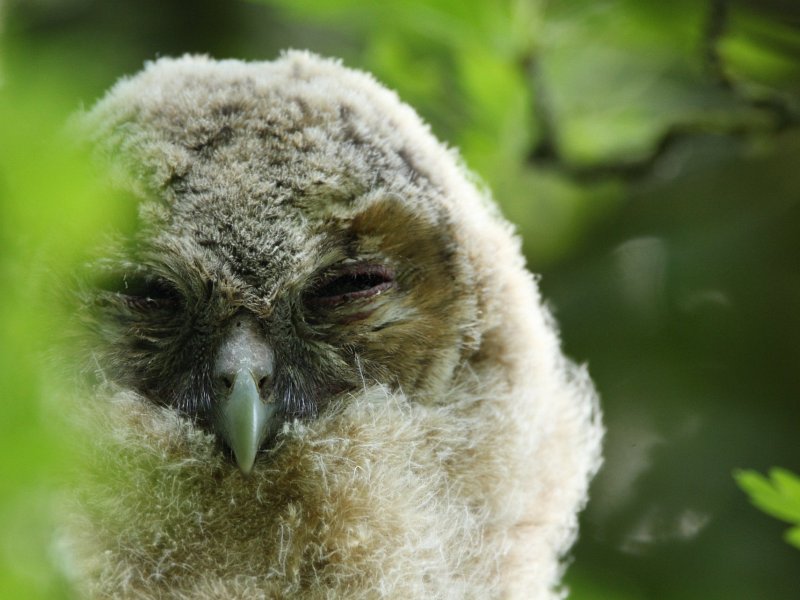
But at this time of year, the odds are slightly improved because tawny owl chicks – or owlets – are now emerging from their tree-hole nest. They are pale and fluffy at first and they leave the nest long before they can fly, spending a week or two climbing, jumping and fluttering around the treetops at night.This is known as ‘branching’ and while they may be quite cautious at first, they soon become adventurous enough to lose their footing on occasion and will sometimes fall to the ground. They are surprisingly good at climbing back up again so if you spot a fluffy tawny owlet at the base of a tree, don’t worry – there’s usually no need to intervene. It’s quite normal for them to spend some time on the ground and tawny owl parents are extremely attentive, so won’t be far away.
Throughout their nocturnal adventures, the owlets make regular contact calls so that their parents know where they are, and will also make loud and persistent demands to be fed – which is why they are often known as ‘squeakers’. When things get a bit boisterous and there’s too much pushing and shoving among the siblings they will also make an annoyed ‘yickering’ sound. It doesn’t take long for one of the parents to step in and enforce some calm before things escalate too far and all three chicks end up taking a tumble.Tawny owl parents will be busy looking after their unruly owlets for the next few months, bringing them regular meals and driving off potential predators until the juveniles are ready to disperse and find a territory of their own, typically between August and November.