Tackling the suspected avian botulism outbreak
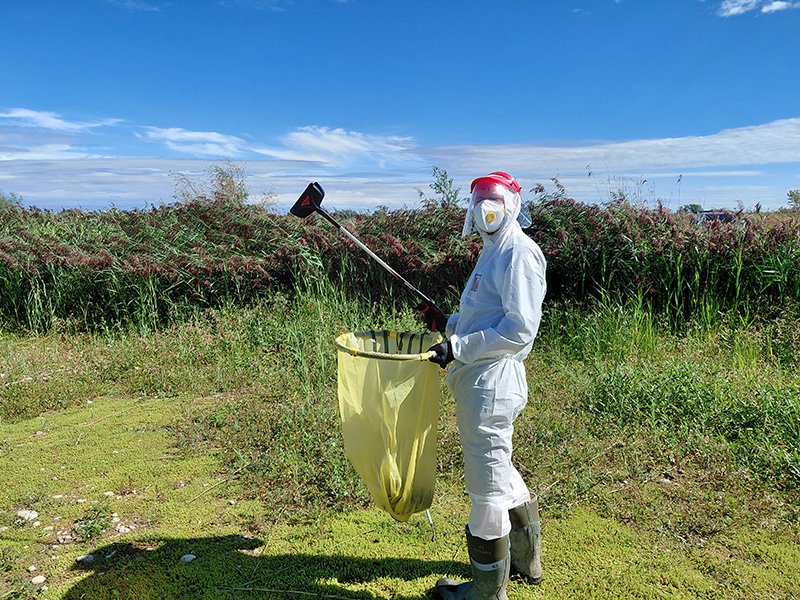
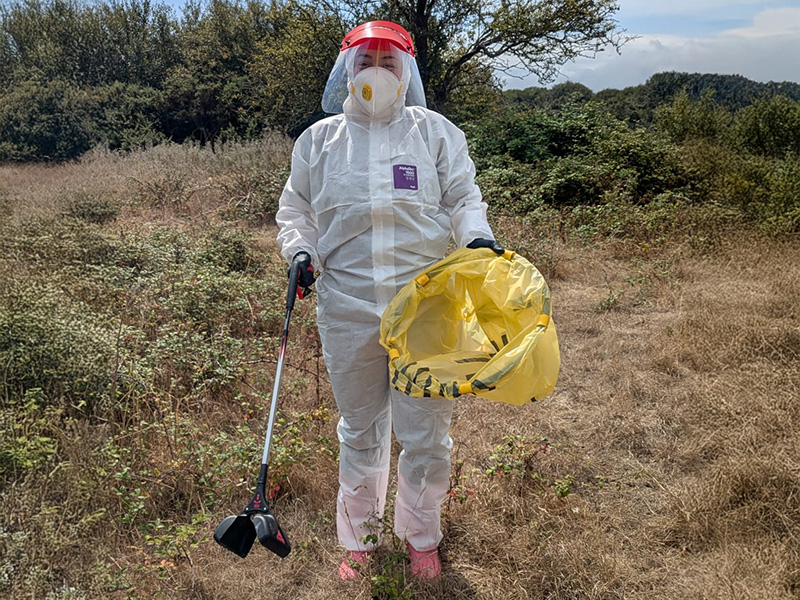
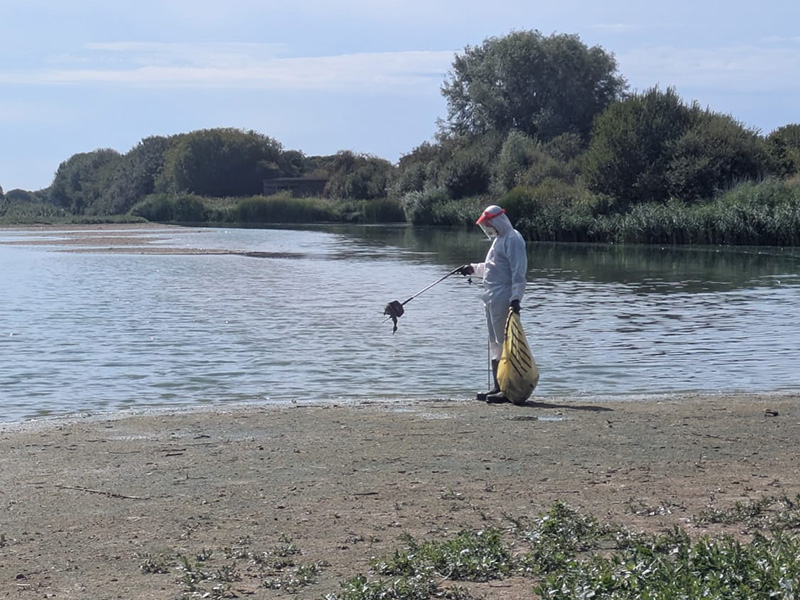
Following the recent suspected avian botulism outbreak, our teams have begun the task of removing affected birds from Rye Harbour nature reserve. Staff and volunteers from the Trust's Land Management team, dressed in protective clothing, began collecting dead birds from around Castle Water at Rye Harbour. All dead birds were recorded with location and species information. The northern part of Castle Water was covered, with over 200 birds removed. Species included ducks, swans and other water birds. Further surveys and collections will take place next week.
Removing dead birds promptly is essential, because they can become a source of botulism toxin. Maggots feeding on them can build up the toxin and then be eaten by healthy birds, causing more illness and deaths. Quickly removing and safely disposing of them reduces the spread of toxin through the food chain and will help bring the outbreak under control.
Samples have been supplied to the Animal and Plant Health Agency (APHA) for testing, to confirm whether avian botulism is the cause of this outbreak. We will share the results once they are known.
Avian botulism is caused by a toxin that can be produced by a naturally occurring bacterium in warmer weather. It poses a very low risk to people, but dogs can become seriously ill if they eat an infected bird or drink from contaminated water.
Our thanks to visitors for their support and co-operation during this outbreak. Castle Water remains closed to visitors. The remainder of the nature reserve and Discovery Centre are open as usual; please follow on-site signage.
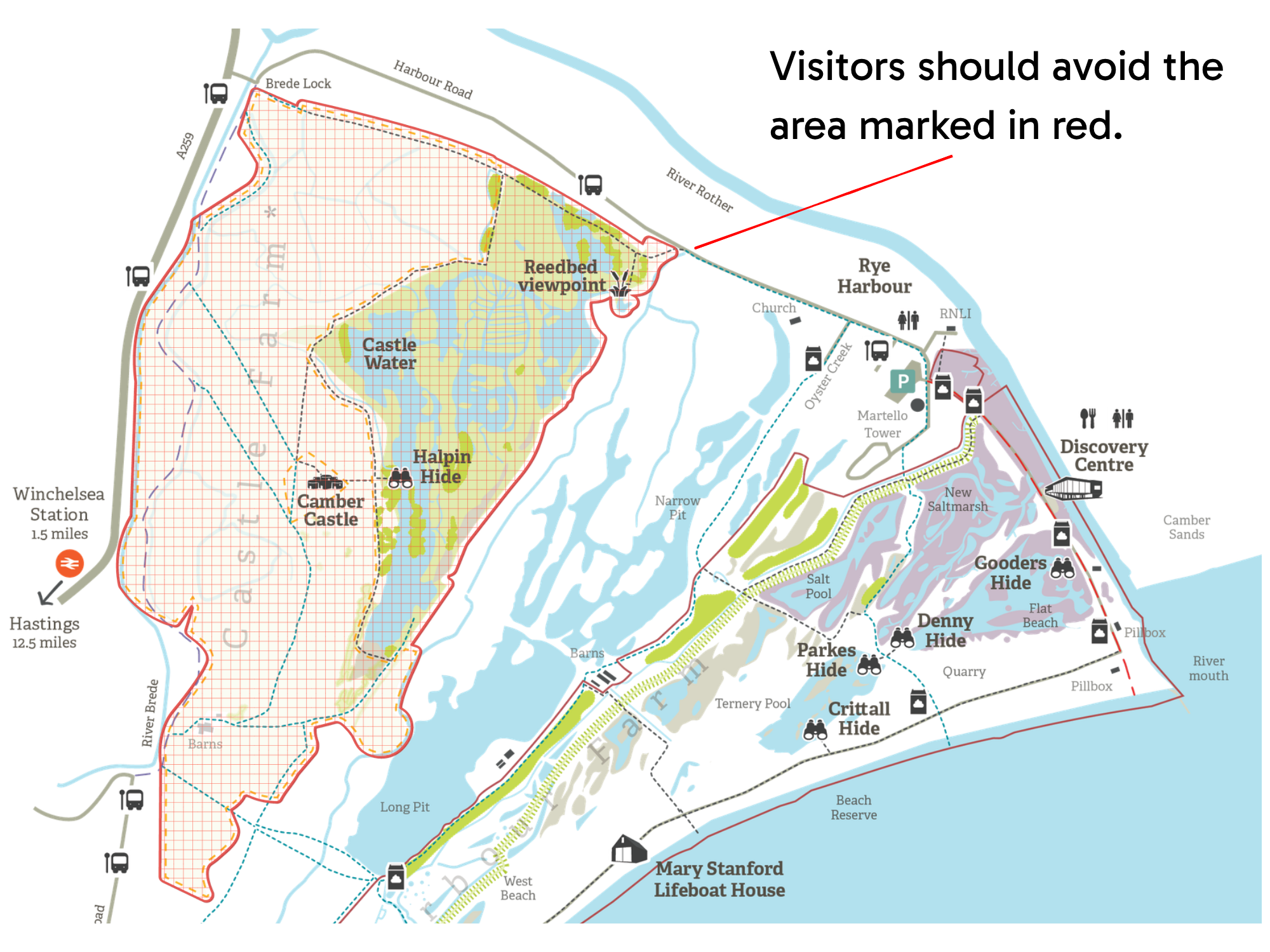
Please continue to help us to protect the wildlife at Rye Harbour:
- Keep dogs on a lead at all times
- Do not allow dogs to enter the water
- Avoid contact with water
- Never touch sick, injured or dead animals
- Report dead birds to the DEFRA helpline: 0345 933 5577