
Tackling the four Bs
Kevin Lerwill
Gatwick Greenspace Partnership Project Officer
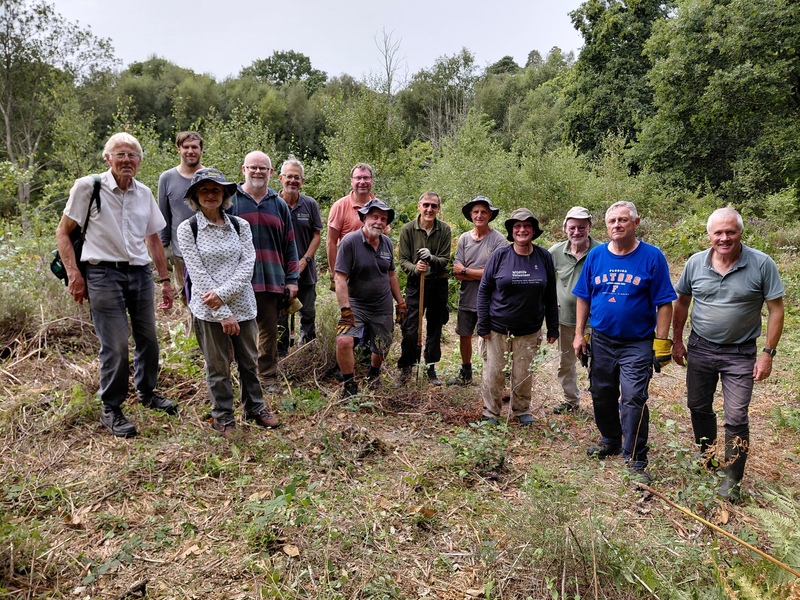
Our volunteers spend a big chunk of their time each year tackling one of the 'four Bs' (Balsam, Birch, Bracken and Brambles), and summer saw us returning to the third of these (Bracken) at Buchan Country Park.
Buchan Country Park is owned and managed by West Sussex County Council and consists of 170 acres of countryside near Crawley. It has three main lakes, mature woodland and areas of internationally rare Heathland and has won the Green Flag Award, which recognises the best green spaces in the UK, for the past 15 consecutive years.
Buchan Country Park is an excellent place for walking and watching wildlife and there are also a number of wildlife inspired sculptures dotted around the park, which families can have fun looking for.
The task is simple enough; cut or pull as many of the Bracken fronds as possible on the heathland areas and pile them up away from the heather. This quickly uncovers all the grasses, heather shrubs, small tree seedlings and other plants that are otherwise hidden beneath the taller Bracken, instantly giving them extra light and space in which to grow.
This has other benefits, such as exposing patches of bare ground, which are important for basking reptiles (such as the Grass Snake, which left this old skin behind) and insects such as Beetles and ground nesting bees and wasps. The increase in plant diversity then attracts a range of pollinating insects and larger plant eating animals, such as Roe Deer and Rabbits.

By removing the Bracken in late summer, it also reduces the amount of leaf litter and nutrients going back into the soil each year, which is important if you want to improve the area for native plants that prefer nutrient poor soils, especially the slow growing heathers.
Lowland heath is only found in North West Europe and is recognised as being an internationally rare habitat (it is estimated that we have lost around 80% since the Second World War) so annual management like this is vital if we are to keep those that are left.