
Swimming in Sewage
By Laura Brook
Conservation Officer
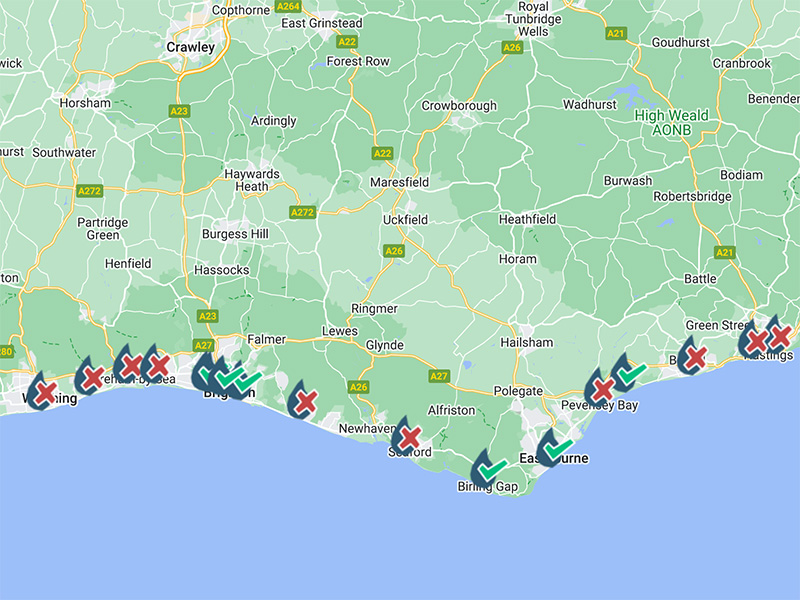
Whether it’s the countless powerful images on social media of outfalls pumping into our coastal waters, or your own experience walking or swimming along waterways and beaches in Sussex, the recent widespread dumping of raw sewage has rightly been met with outrage across the UK.
The cause of the most recent ‘sewage overflows’ was surface water flooding after heavy rain fell on a parched landscape baked so hard by a prolonged period of hot, dry weather that it functioned more like concrete than soil. With the ground unable to absorb such a large volume of water, it flowed so quickly down drains and into the sewers that the system simply couldn’t cope and was allowed to overflow, smothering our beaches in sewage.
Untreated sewage poses a clear hazard to the environment and human health. As yet the full impacts of these discharges, which are all too frequent, are not yet known but they serve as yet another example of how our water companies are failing both their social and legal responsibilities to wildlife and people.
None of the major rivers in Sussex are in ‘good ecological status’, primarily due to big problems with both water quality and quantity. This has knock-on impacts for our most important coastal and marine areas, affecting fisheries, recreation and our health. This failure of water companies is stripping away people’s rights to access nature, to go to the beach and swim in the sea, and is leading to a devastating narrative that our waters are not safe to enjoy, driving an even bigger disconnect with our natural environment.
Sewage discharges are a direct result of the way our sewage systems are designed and operated. Much of this infrastructure dates back to Edwardian times and many of our sewers combine black water (from toilets) and grey water (from road run off, dishwashers, sinks, agricultural land), which is pumped to the sewage treatment works before being discharged.
With climate change we are seeing heavier bouts of rain and our sewer systems are simply unable to cope with the volume of water hitting them. Sewage treatment works do have storage tanks but when these are full the only way (currently) to stop sewage backing up into our home and streets is to release it directly into our rivers and seas. We must not allow that to be acceptable in any format, we must not allow ourselves to be so disconnected from nature that it does not outrage us and demand action at every level to address this ever-increasing occurrence.
Water companies have a lot to answer for but are not solely blame. While there is no arguing that their many years of failing to invest in the sewage system are now coming home to roost, it is not just the failure of hard infrastructure. The lack of a truly integrated land-use planning system from our government has resulted in a failure to plan for the environmental capacity we as a society need to function healthily. For example, identifying and protecting where we need space for the landscape to absorb water to reduce runoff into our drainage systems, so that they are not overwhelmed. We need a planning system that stops concreting over greenspace and increasing the extent of impermeable surfaces that drive water straight into drains.
The Government have finally produced a Storm Overflows Discharge Reduction Plan, but frustratingly it falls well short of what we all need, as set out in this blog from Wildlife and Countryside Link.
Water companies must invest now in fixing the problem, but we cannot focus purely on engineering. We need to put nature first and invest in natural solutions that restore our degraded wetlands and allow our floodplains to function as they should. The government has a role in making this happen - we simply cannot rely on the segregated system we currently have.
The Sussex Wildlife Trust works to influence all the water companies in our area, demanding that they focus on nature-based solutions that work holistically to restore our wetlands and protect and enhance our most precious sites for wildlife. For example, we recently robustly responded to Southern Water’s consultation on their draft Drainage and Wastewater Management Plan.
We also push the Government on the proper regulation and enforcement that is needed to solve the problem, particularly with other NGOs, through partnerships such as Wildlife and Countryside Link and Green Alliance. We also provide our own evidence demonstrating the effectiveness of natural flood management projects through the Sussex Flow Initiative.
Sussex Wildlife Trust is horrified by the unacceptable damage being done to our precious freshwater and marine wildlife, and angry that yet again environmental standards are being allowed to slip. Nature must be a priority, now more than ever, and we will keep demanding meaningful action and genuine leadership from government to ensure that our natural environment is rightfully restored and respected, for wildlife and people.