
Sussex seabed habitats

For Marine Week 2025, Wilder Communities Officer (Coastal) Ella Garrud, tells us about our amazing Sussex seabed habitats
Chalk Reefs
Chalk reefs are a globally rare habitat, but we are very lucky to find them in Sussex. They stretch mostly from Brighton to Eastbourne and are home to an abundance of different creatures. Chalk is a relatively soft rock, which allows certain animals such as Piddocks (Pholas dactylus) and Boring Sponges (Cliona celata) to burrow into the chalk, creating holes and crevices. These holes can then become shelter for other animals, such as a Common Blenny (Lipophrys pholis), guarding eggs.
Find out more about chalk reefs here: Chalk reefs | Sussex Wildlife Trust
Find out more about some of the species found on chalk reefs here: Chalk reef creatures | Sussex Wildlife Trust
Kelp Forests
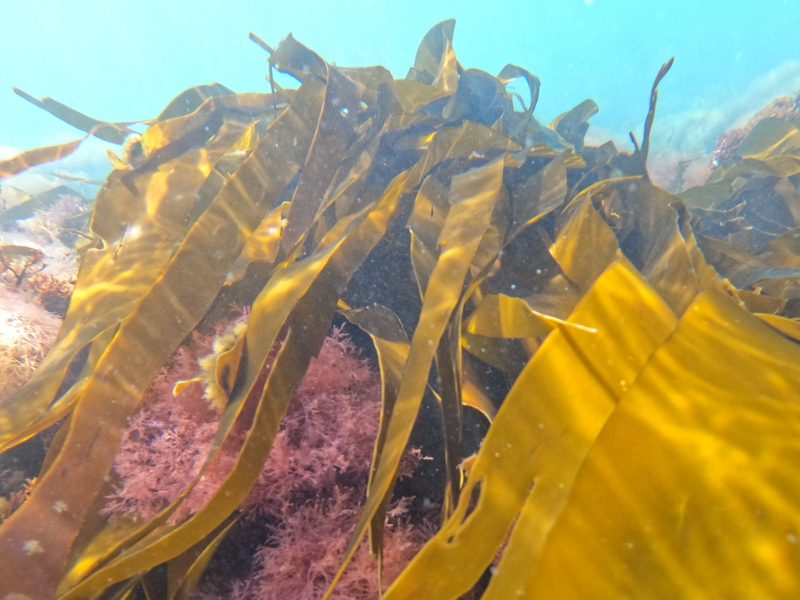
Kelp forests are one of the most biodiverse habitats in the ocean. Kelp, which is a group of relatively large, fast growing brown seaweed, is found all around the UK coast, with forests developing on rocky seabed. In Sussex, we have lost about 96% of our once dense kelp forests since the 1980s. This is in part due to bottom trawling.
In 2021, the Sussex Nearshore Trawling Byelaw was passed which excludes trawling from a large area of Sussex waters, and the Sussex Kelp Recovery Project was born. Read about what’s being done to recover Sussex kelp forests by the partnership project here:
Mussel Beds
Mussels are a species of bivalve mollusc (soft bodied animals with two shells that clamp together). Blue Mussels (Mytilus edulis), which are the most common species in the UK, can form dense mussel beds that cover large areas of the seafloor. Habitats like this, that are created by living creatures, are known as biogenic reefs. Mussel bed habitats create complex, 3D structures providing habitat for many other organisms, including algae, invertebrates and fish, they filter water and are an important food source for other animals.
Anecdotally, there has been an increase in mussel beds in Sussex since the Nearshore Trawling Byelaw has been in place, with some areas growing to the size of football pitches! As well as all the other benefits their presence creates, mussel beds bind the seabed together and provide a hard surface on which kelp can grow.

Ross Worms
Ross Worms (Sabellaria spinulosa) are another example of an animal that can create biogenic reefs. This species of worm builds small tubes from sand and shell fragments, and when many of them grow together, they create a Ross Worm reef. Like the Blue Mussel beds, they create a 3D habitat in which lots of other organisms can find a home – they have been found to contain twice as many species than nearby areas where the reefs are absent. At their largest, they can form reefs of up to 60cm high and can extend for several hectares.
These reefs are fragile and are sensitive to physical disturbance, such as from bottom trawling and dredging. Ross Worms are a designated feature of Beachy Head East Marine Conservation Zone and are also found in Sussex’s Highly Protected Marine Area (HPMA) Dolphin Head.

Mixed Sediments
Sometimes seabed habitats contain a mix of different sized sediments, from fine silt to large boulders and everything in between. These areas can create a complex mosaic of habitats that are important for certain species.
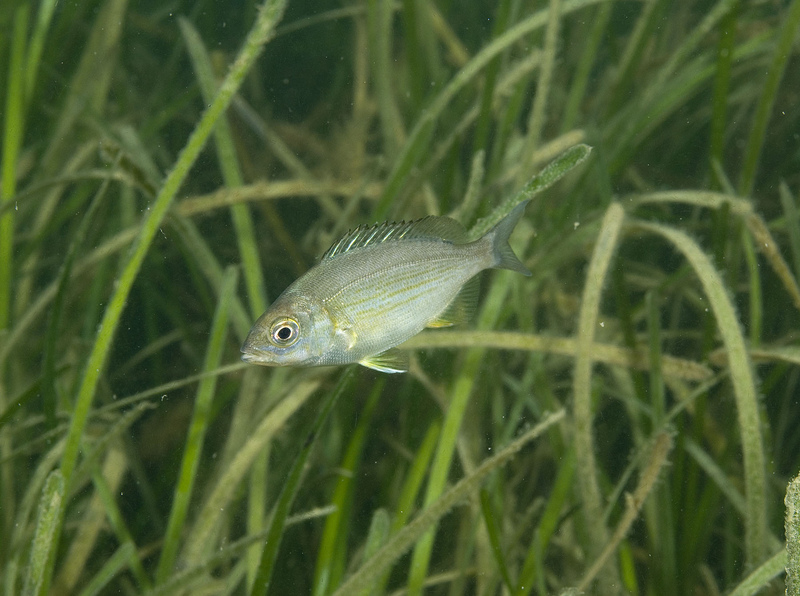
Black Seabream (Spondyliosoma cantharus) migrate to the Kingmere Marine Conservation Zone in spring to spawn. They use this rocky area that is covered by a layer of mixed sediment to build their nests. The male fish use their tails to create nests, which are known as luna pads, moving lose sediments to clear an area, where the females then lay their eggs. The males then guard the eggs until they hatch. The area is possibly one of the most important Black Seabream spawning sites in the UK, and is particularly vulnerable to bottom-towed fishing gear.
Mud and Silt
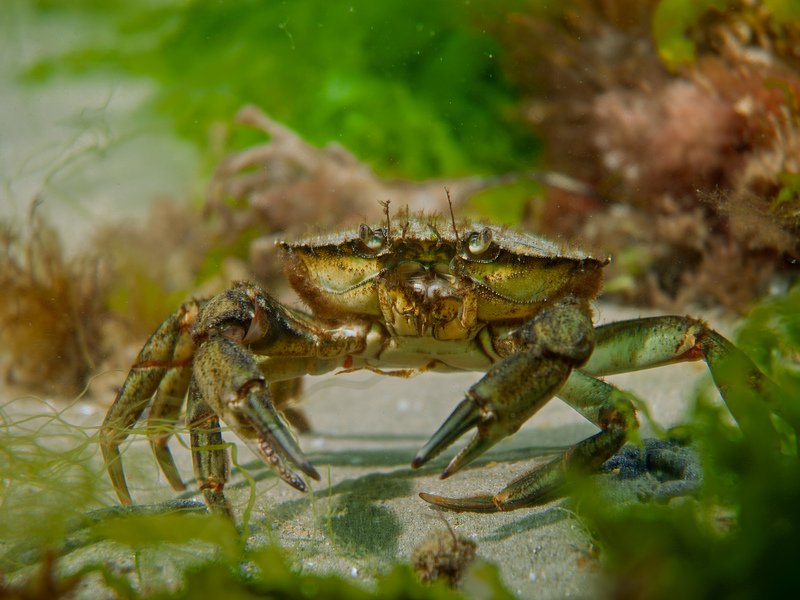
Mud and silt habitats may seem dull and empty at first glance, but mud and silt are very rich in nutrients and can support many species. Worms, bivalve molluscs, anemones, brittlestars, crabs and much more can be found living on and in mud. Mudflats exposed at low tide attract many wading birds, such as Ringed Plovers (Charadrius hiaticula) and Oyster Catchers (Haematopus ostralegus), which feed on the animals buried within.
Mud and silt have also been found to be very important carbon sinks. The Blue Carbon Mapping Project, completed by the Scottish Association for Marine Science (SAMS) on behalf of WWF, The Wildlife Trusts and the RSPB, revealed that 244 million tonnes of organic carbon are stored in just the top 10cm of UK seabed habitats, with 98% stored in seabed sediments such as mud and silt.
The Blue Carbon Mapping Project highlights how physical disturbances to the seabed, including from human activity such as bottom trawling, as well as moorings and offshore developments, pose threats to blue carbon stores. Disturbing seabed habitats can release large amounts of carbon into the atmosphere, worsening climate change.
Comments
Please could you give information on Boring Sponges to be found at Seaford. Thank you.
20 Dec 2025 09:57:00
Sussex Wildlife Trust:
from our Marine Officer, Sarah Ward:
The Boring Sponge, Cliona celata, is a large conspicuous sponge which can be found in two distinct forms, known as the 'massive' and 'boring' forms. The massive form is where you can see most of it's structure, forming a large yellow mass with visible openings across its surface. The boring form is less obvious, as the name suggests it bores into rock and only small yellow openings are visible. This form is often observered subtidally around Sussex, as the chalk reefs we have here are the ideal habitat (as their soft nature makes it easy to bore into). Although it is said to inhabit a range of coastal environments, in Sussex we do not find it intertidally, it has only been recorded subtidally.