
Sussex dialect words for nature
By author E.K.J. Wright
Sussex: a vibrant patchwork quilt of hedge-trimmed fields and rugged chalk downland, blessed with a rich diversity of rare wildflowers and protected species. It is unsurprising, therefore, that the Sussex dialect is equally abundant in words relating to the natural world.
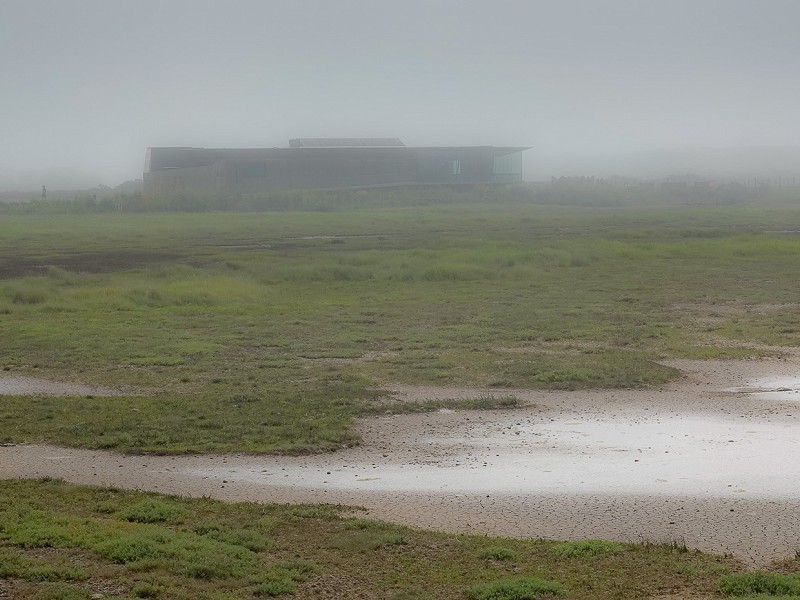
With its mild climate, regular rainfall and fertile terrain, agriculture has always been a key industry, farmers reliant on the weather for their livelihood. Large white clouds were termed ‘messengers’, presaging torrential rain, whilst ‘swallocky’ ones indicated a thunderstorm was on the way. A ‘sniggler’ was a slight frost, and driving rain was known as ‘scud’. And imagine a thick fog rising from the saltmarsh of Rye Harbour- that was a ‘reek’.
No less enchanting are the evocative names given to Sussex’s broad range of flora. We have ‘apple pie’ (hairy, or great, willow herb), ‘bread-and-cheese’ (hawthorn buds) and ‘butter-and-eggs’ (bird’s foot trefoil) to whet our appetite.

Scabious © Victoria Hume
Scabious was termed ‘grandmother’s pincushion’, ground ivy ‘lion’s mouth’ and willow blossom ‘cat’s tails’.
Sussex is home to 33 of Britain’s 50 orchid species - the magenta spires of the early purple variety were known as ‘dead men’s fingers’.
Stippling the county’s meadows, yarrow was described as ‘the devil’s plaything’, inhabitants believing that it should never be planted on a young man’s grave for fear of giving him nightmares.
Superstition continues upon turning to Sussex’s varied fauna. An ‘arder’ (adder) could never die until sunset and if cut, its pieces were said to retain their vitality until sundown.

Adder © Bob Eade
Through ‘flindermouse’ (bat), ‘futtice’ (weasel), ‘scutty’ (wren) and ‘grandfather’ (daddy long legs), the vernacular abounds with animal vocabulary. And J.K. Rowling wasn’t the first to use the word ‘dumbledore’, for it means bumblebee in the local lingo! Always mesmerised by a minibeast hunt, local children created a plethora of endearing rhymes to accompany their adventures. Ladybirds were known as ‘Bishop-barnaby’ and with the insect on their finger, the chant would be:
‘Bishop Bishop Barnabee,
Tell me when my wedding shall be,
If it be tomorrow day,
Ope your wings and fly away’

22 spot ladybird © Glenn Norris
Snails (‘snags’) were also graced with their own song:
‘Snag, snag, put out your horn,
And I will give you a barley corn’
My trio of invertebrates concludes with ‘shorn-bug’ (beetle), the expression ‘to eat shorn-bugs for dinner’ coined to evoke extreme poverty.
But this blog wouldn’t be complete without mentioning some of the 30 terms to describe mud, amongst them ‘slab’ (the thickest mud), ‘gawm’ (foul-smelling mud) and ‘January-butter’ (it was considered lucky to bring mud into the house in January).

Nature Tots exploring Sussex mud!
Finally, my parting gift to you is this: ‘print moonlight’- the charming image of a brilliant moon illuminating Sussex’s fascinating contours.

Moon on a summer solstice © Roger Wilmshurst
E.K.J. Wright is an author, linguist and countryside lover, based in East Sussex. Her latest novel How Do You Stop A Magpie Mobbing Your Mind?, is set in Sussex, and is about bereavement, recovery and the power of nature to heal. It will be published on 28th August 2021.
Follow her on Twitter for posts about the Sussex dialect @EKJWright1
Comments
I found the information very interesting, I hope the local names and rhymes do not die out, they are part of our history and culture. We shall not only lose the wildlife but by what they were called in various regions.
21 Aug 2021 14:01:00