
Spring bumblebees
By Charlotte Owen
WildCall Officer
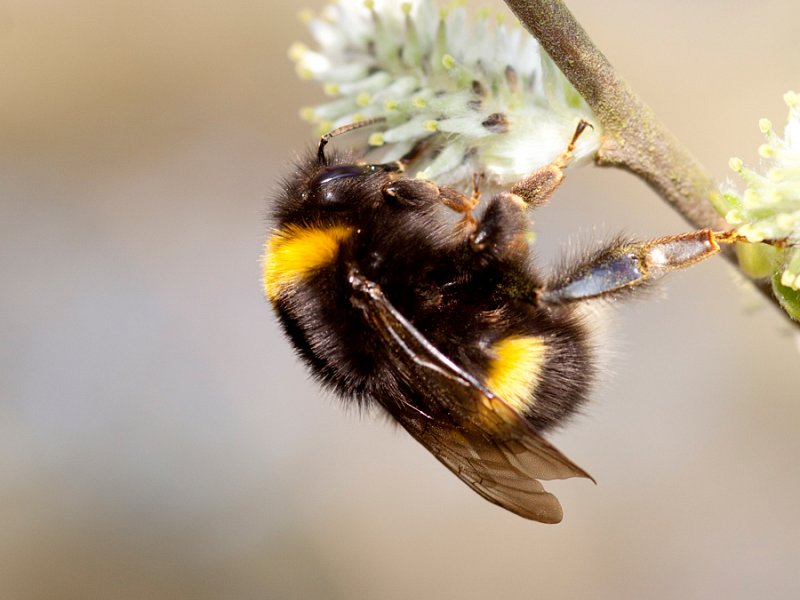
You might have heard a buzz in the air and caught a glimpse of insect royalty as queen bumblebees are starting to emerge from hibernation. They’ve been asleep for a long time and need to fill up on nectar to fuel their flight. They supplement this energy drink with a meal of pollen, which collects on their furry bodies each time they visit a flower and can make them look quite dusty. Periodically, they will comb the pollen out of their coats using their legs and mould it into cakes, which they store on their back legs. Sometimes bumblebees will deliberately wallow among the stamens of certain bowl-shaped flowers and vibrate their wings to release pollen, and this is called ‘buzz-foraging’.
Once she’s had a good meal, the queen bee turns her attention to finding a suitable nest site to begin a new colony. Some species nest in cavities underground, often taking over old rodent holes, while others choose to nest on the surface. The nest, which tends to be no bigger than half a grapefruit, is made from a waxy material produced by specialised glands on the abdomen. The whole structure is usually covered and protected inside a ball of finely-shredded grass, moss, animal fur or similar material. Once finished, the queen will start laying eggs and incubating them. She must feed this first brood single-handedly, so they don’t grow very big. As soon as they can fly, these tiny worker bees will take over rearing and feeding the young while the queen concentrates on egg-laying. The more worker bees there are, the more food is foraged and the bigger the individuals in the next brood get – so you’ll often see tiny bees and larger bees coming in and out of the same nest. When the colony is sufficiently well-staffed, the queen starts laying eggs that will develop into new queens, rather than workers. These royal larvae receive larger portions with extra pollen to provide the nutrients they’ll need for egg formation, which is why the queens are so much bigger than the rest of the bees in the colony. Bumblebee colonies last for a single year, and only the newly-mated queens survive to hibernate before the cycle starts again the following spring.
Bumblebees are excellent pollinators and you can attract them to your garden by planting mahonia, winter-flowering heathers, honeysuckles, red and white clover, field scabious and knapweed, and create attractive nesting sites by leaving long grass next to hedges.
If you would like to find out more about bumblebees, we are running a bumblebee ID Course in July.