Splashes of winter colour on Levin Down

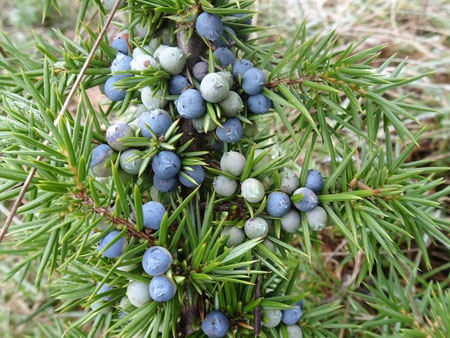
We don’t often associate this time of year with intense colour, but it is surprising how much there is on Levin in January. The luminescent yellow flowers of gorse are a common sight on the reserve now, and the sky-blue seed cones of the female junipers look particularly fresh after the recent rain (It is good to see the juniper colony doing so well on Levin. We have cleared much of the suffocating scrub from the mature trees, and there are plenty of young seedlings, unhindered by encroaching scrub and grazing rabbits).
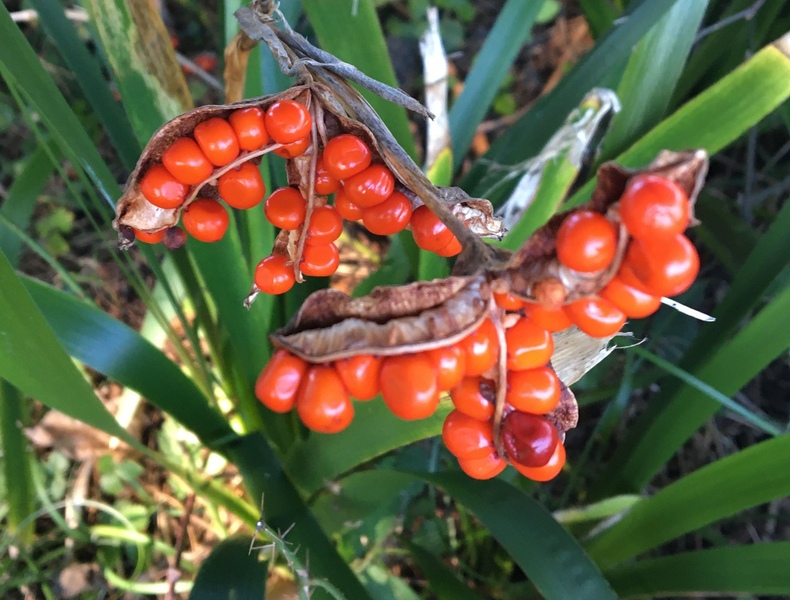
The scarlet, fleshy seeds of the Stinking Iris are not as numerous as they were earlier in the winter, but a few still catch the eye. Bursting from their open seedpods, they are usually found near the base of yew trees. The stinking iris is one of only two species of iris native to Britain, and the seeds of this exotic plant add more colour to a gloomy January day.
A moving jewel that occasionally visits Levin at this time of year is the diminutive Firecrest. I was lucky enough to catch up with one the other day as it moved quickly through a patch of scrub. With binoculars I was able to get good glimpses of this colourful little bird, with its deep green upper parts, flaring orange crown stripe, and white stripes above its eyes.
Last but not least, a particularly fine example of the Yellow Brain fungus has appeared on Levin this January, growing on the limb of an old oak. Its luminous orange-yellow fruiting body, extending almost eight inches across, is visible from some distance. This striking fungus, also know as Witches Butter, must rank as perhaps the most brilliantly coloured of all Levin’s winter wildlife.
Rob Eadie (VRM, Levin Down)