
Species of the day: Primrose
By James Duncan
Learning and Engagement Officer
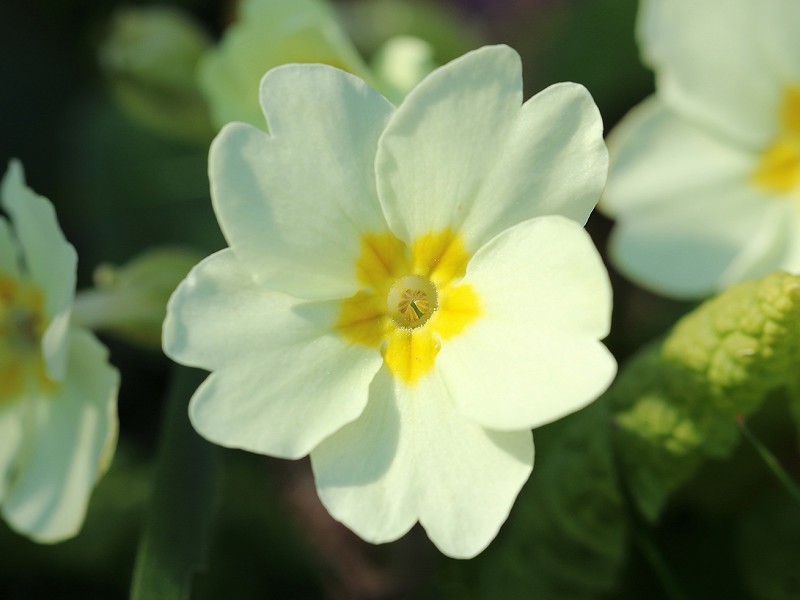
The Primrose (Primula vulgaris) provides a beautiful splash of woodland colour early in the year, often when few other plants are in bloom. The name 'primula' in fact derives from a pair of Latin words meaning 'first rose,' suggesting that early flowering tendency. Its attractive blooms are so welcomed by the nation that it was even voted England's second favourite flower (beaten only by the Bluebell) in a poll back in 2015. Twice serving Prime Minister Benjamin Disraeli probably wouldn't have agreed with the Bluebell's placing, with 'Primrose Day' created on April 19th to celebrate the love for his favourite flower.
The Primrose also features in the works of William Shakespeare, particularly with the origination of the phrase 'primrose path.' He used it as a metaphor for following an easy, pleasurable path in life, though one perhaps resulting in eventual self-destruction. In The Winter's Tale he referenced 'pale primroses that die unmarried,' a nod to a couple of points; their early blooming and lack of insect pollination prospects; their usage as a symbol of death in young women from hypochromic anaemia or 'green sickness.' The women who died from this often displayed a skin-tinge similar to the flowers' colour and were hence considered to have been turned into Primroses after death.
When growing in the same spot, Primrose may often be found hybridising with Cowslip (Primula veris) to form False Oxslip. This tends to grow taller than Primrose and hairier than Oxslip. Wild Primrose also happens to be an ancient woodland indicator, pointing to woodlands that have existed in England since AD1600 and Scotland since AD1750. Ironically the 'vulgaris' in its name refers to it being common, though it's certainly less numerous than it once was, owing to over-picking in the past and more recently, habitat loss and mis-management.
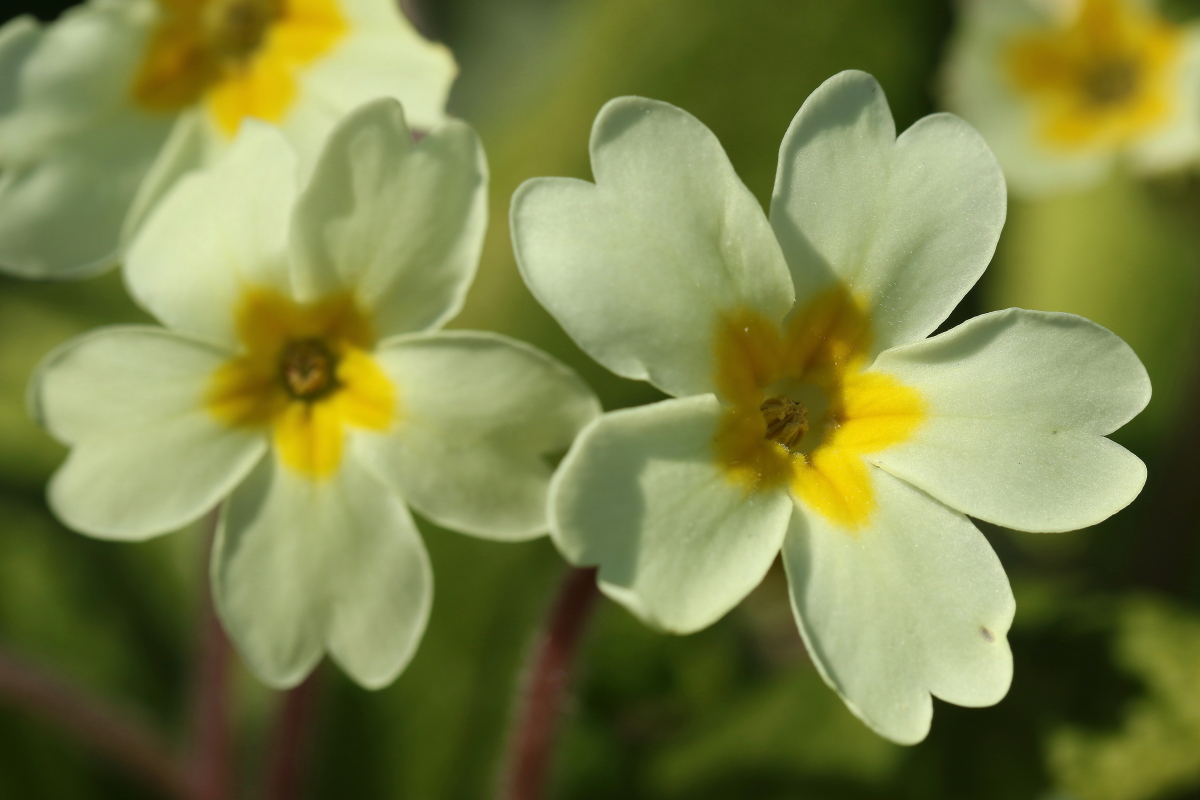
Primrose © James Duncan