
Species of the day: Ivy-leaved Toadflax
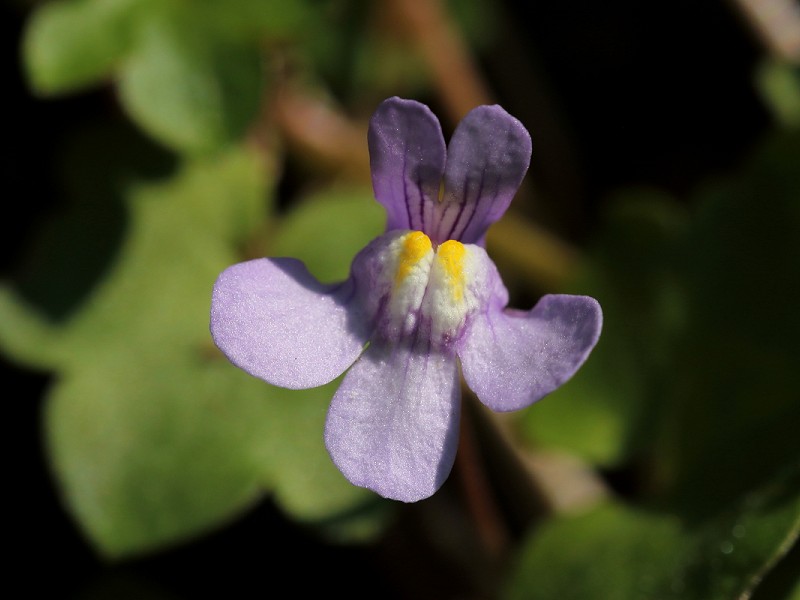
By James Duncan
Learning & Engagement Officer
The charming Ivy-leaved Toadflax (Cymbalaria muralis) isn't a native British species, having thought to have hitched a ride on imported Italian sculptures and first recorded living wild in 1640. It is, however, very much naturalised having adapted well to our climate from its traditional Mediterranean home. It's also hugely abundant in our towns and cities, but not in the typical growing habitat you may expect. This attractive herbaceous perennial is actually a magnificent master of stonework, for its wonderfully compact, snapdragon-like flowers and swathes of ivy-esque foliage adorn walls and pavements - indeed anywhere rocky, even on shingle beaches. A traditional French name of 'Ruine de Rome' is entirely suggestive of its favoured type of living space. This plant does an admirable job of living in what would typically be considered uninviting terrain, dry, sun-baked and largely inhospitable.
This adept wall-scrambler can predominantly be seen in flower from April through to October and has a rather wonderful method of propagation, one that enables its vertical rock climbs. Like most plants it begins positively phototropic, its flowering stems reaching actively for the sunlight. The flowers comprise a bright yellow 'nectar guide' on the lower lip, which serves as an attractant to pollinating insects. Owing to its habitat, it's rather favoured by wall-nesting solitary bee species. Once pollination has been achieved, it enters the unique stage of its growth, becoming negatively phototropic. The seed-heads then abandon their quest for light and bend back toward the darkness, eventually depositing the seed into a dark crevice where germination becomes possible - an ingenious method of ensuring survival in such an environment. The seed-heads are heavily ridged to ensure they remain locked in place as the growing roots take hold.
The naming of Cymbalaria requires quite a bit of imagination, for it relates to the vague similarity of the leaves to a cymbal. Clearly they aren't the right shape, though it's the depression in the centre of the leaves that are responsible for this. The 'Ivy-leaved' component doesn't necessarily require much explanation, though the 'toadflax' may be indicate of the flowers' gaping approximation of a toad's mouth, though equally it may derive from a simple misreading of the latin. Either way, it certainly adds a beautiful splash of insect-friendly colour to our bare urban walls.
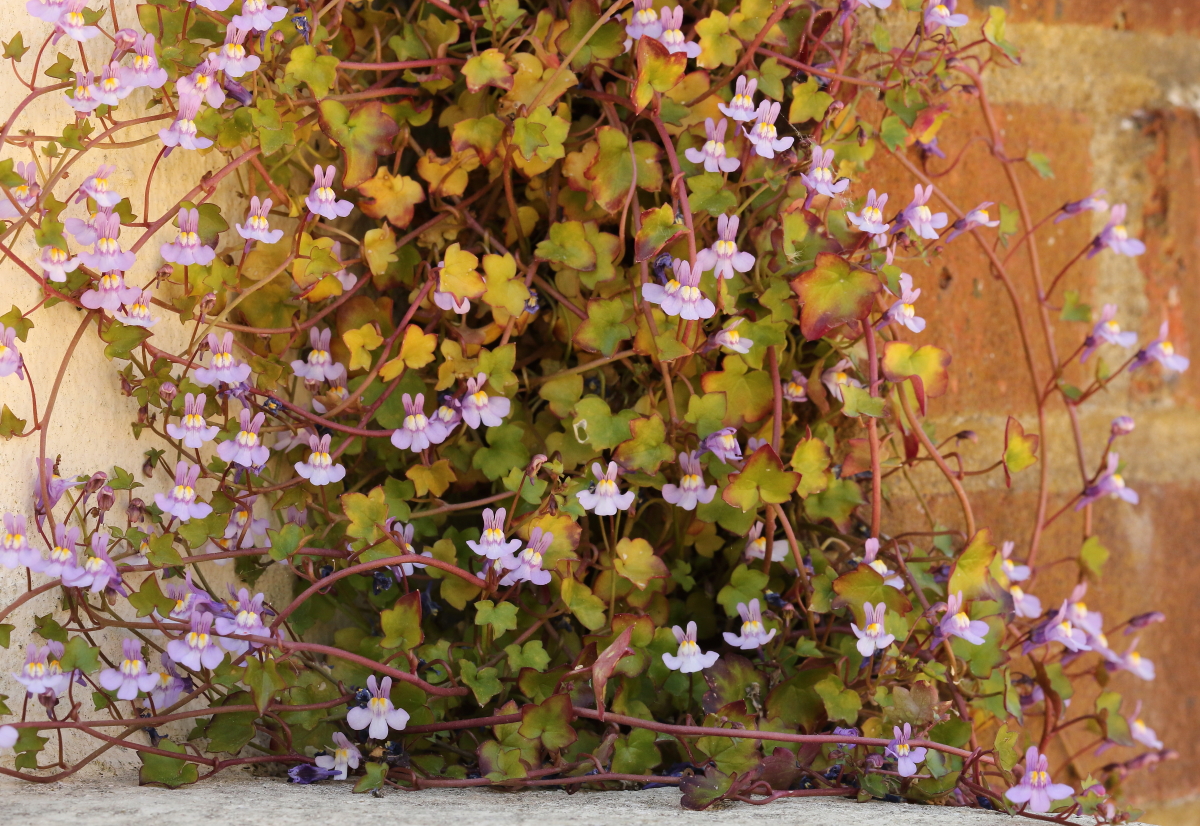

Ivy-leaved Toadflax © James Duncan
Comments
Thank you so much this was really informative
The reserve looks lovely with all the purple flowers
I don’t recall it being so prolific in the past
05 May 2020 07:51:00
Although this is an attractive plant it is becoming invasive and working it’s way around my decking and under the cladding of the house wall.
I am afraid of any damage it may cause and wonder what is the best way to curtail it.
Any suggestions, please.
08 Apr 2022 11:22:00
Lovely little article – thank you! I have posted it on Twitter, following a discussion of this plant: https://x.com/LissaKEvans/status/2038223400095658198?s=20
29 Mar 2026 11:55:00