
Species of the day: Hedgehog
By James Duncan
Learning and Engagement Officer
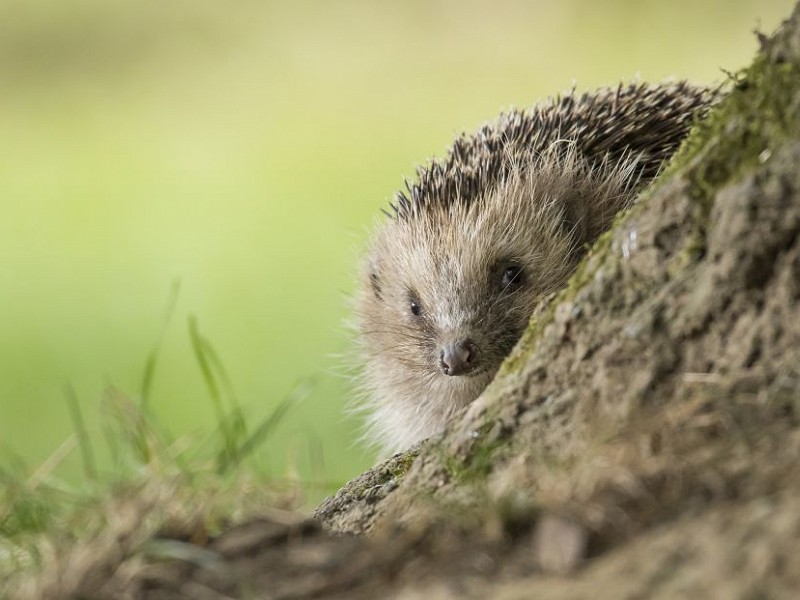
Roaming the countryside far and wide, the much-loved Hedgehog (Erinaceus europaeus) was once considered an exceedingly numerous species, one we very much took for granted.
Hedgehog sightings are now a whole lot rarer, particularly in that once commonly frequented habitat - our gardens. The Hedgehog is of course an unobtrusive nocturnal predator that spends a third of its year in hibernation, so it seems peculiar that our sightings should be expected to precisely illustrate their total numbers.
Anecdotally, the volume of unfortunate Hedgehogs deceased on our roads seems very much lower in recent years. Paradoxically, it's strange that this should be considered a 'bad thing' but that's the crux. The predominant driving force behind the very notion of declining Hedgehogs is our own vehicle-based travel - there are simply fewer casualties owing to there being fewer Hedgehogs.
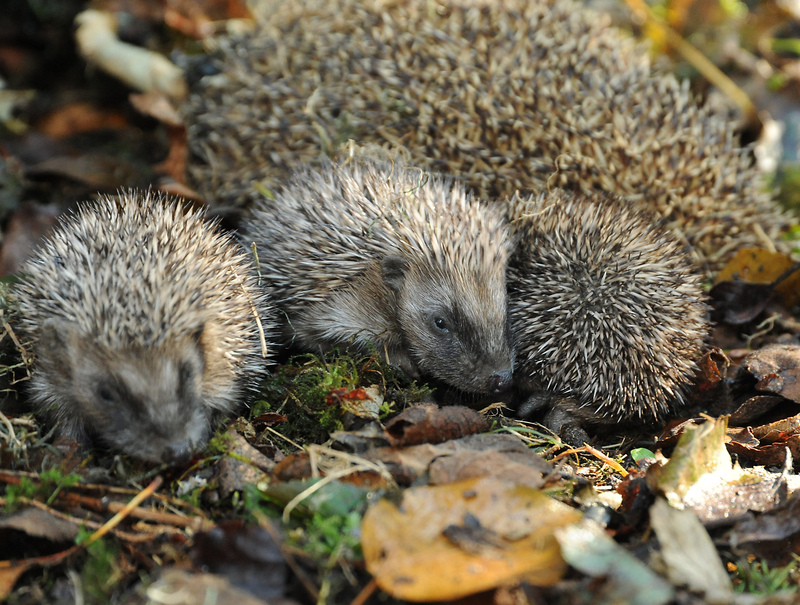
Their numbers have always been difficult to quantify, there being no distinctly reliable method for accurately recording numbers. Estimates, through extrapolation with limited data, put them at more than 30 million during the 1950's, recalculated to around 1.5 million in the 1990's, and perhaps less than a million today. Seems rather conclusive. The problem is there just isn't any precise data, with surveys and trends showing not just wild fluctuation year-upon-year but dramatic changes in population distribution, indicating their decline is a complicated issue.
The bewildering complexity in interpreting Hedgehog numbers doesn't, however, change two key facts; the first being that the long-term trend is still indicative of ongoing decline, though it may be slowing; the second being that Hedgehogs face an awful number of major threats in modern Britain.
Rural dwellers have long been at the mercy of intensified agricultural practices, where the loss of pasture, field margins and hedgerows has been devastating. Even the name 'Hedgehog' is entirely characteristic of their feeding habits, 'a snuffling creature below the hedges.'
Pesticides and insecticides have no doubt wiped out a significant quantity of their food, poisoning them in the process. Habitats have been continuously fragmented, making their nightly territorial forays that much more difficult. Of course this isn't restricted to rural locations and the unsympathetic development and virtual imprisonment within urban habitats has led to a similar issue.
Hedgehogs are also a fan of 'mess', requiring places to sleep and breed - our innate desire to 'tidy-up' hasn't complimented their habitual preferences. Though seen less regularly upon them, our roads continue to be a seriously hostile environment. Even gardens themselves pose a threat through mowers, bonfires and garden chemicals.
Unfortunately these are but a few of the problems they face, and when combined with the effects of natural predation and climate change on both food supplies and the intricacies of hibernation, it appears to add up to a gloomy picture.
Though hedgehogs aren't the only British mammals to face these threats, the flip-side to the somewhat distressing outlook is the sheer volume of protective measures that are now being put in place to help.
Far more people than ever now build 'wildlife-friendly' gardens and ponds. People put out hibernacula to aid their winter survival and significant quantitates of food to supplement their typical diet, around 75% of which is beetles, earthworms, caterpillars, slugs and eggs. There is now far more widespread publicity surrounding ways to keep bonfires and lawn-mowing safe and how to more appropriately care for the needs of our Hedgehogs.
Huge numbers of volunteers and public donations help to rescue, rehabilitate and release injured individuals and the love shown for our native Hedgehog is stronger than its ever been.
Outside of the protection championed by both conservation charities and individuals, the Hedgehog was included on the 2007 British Government Biodiversity Action Plan (BAP), composed to draw up a detailed strategy for exactly how resources should assist species in serious trouble.
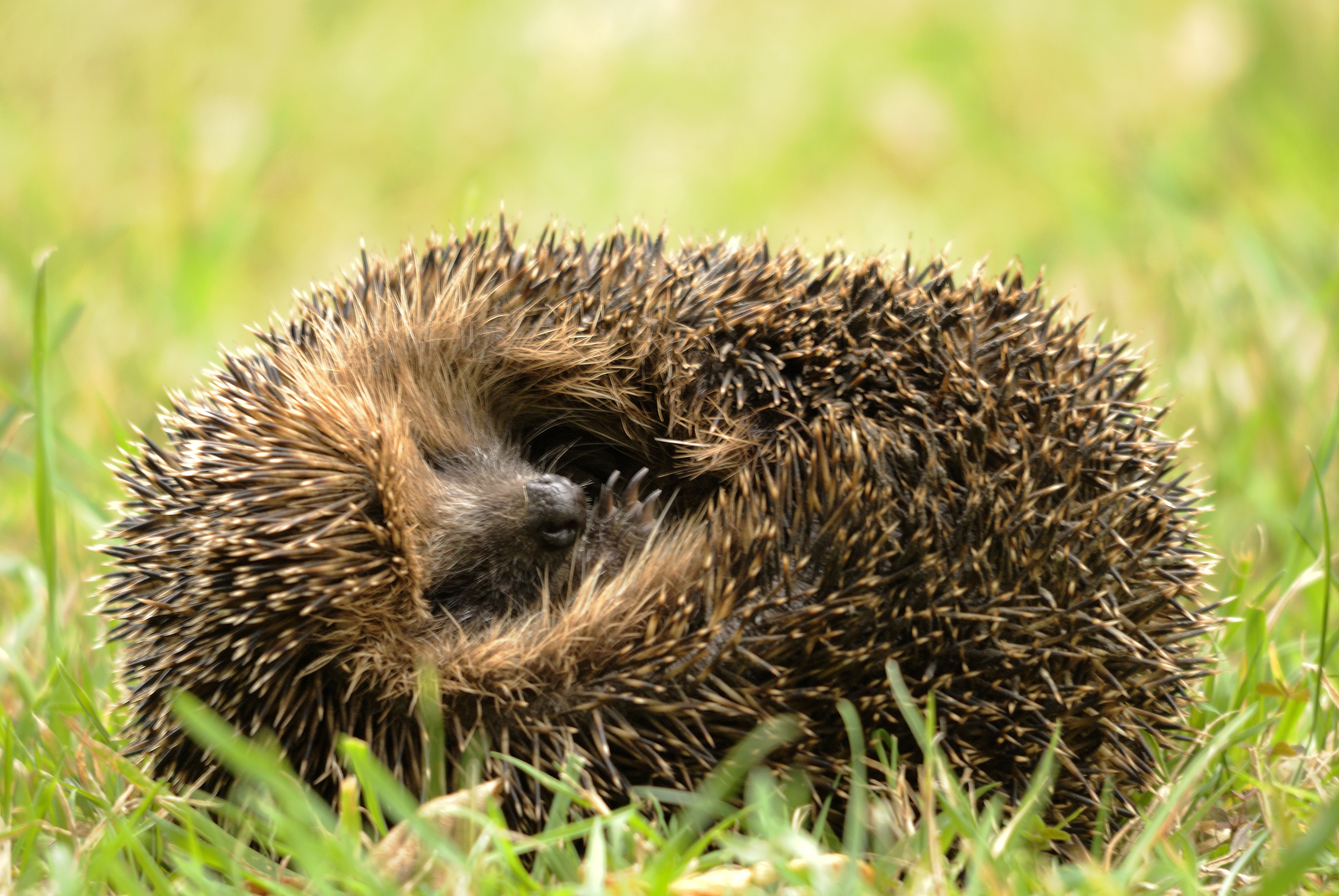
The modern-day Hedgehog family has survived on Earth for an awfully long time, existing unchanged for fifteen million years. The ancestry of the Hedgehog goes back a whole lot further, possibly to a time when the Dinosaurs roamed. But the threats they now face are greater than ever and it's vital that we carefully monitor numbers and take whatever actions we can to avoid one of our most charismatic mammals from disappearing altogether.
The article was updated in October 2025
Comments
Hi I have hedgehog in my garden. In hedge House I built is it OK to feed it Sun flower hearts
08 May 2020 15:56:00
ToGerald,Hedgehogs do love sunflower hearts but i am told that they shouldnt be given regularly.A far better food for attracting them is called Bogena Universal Insectivorous Food. Last year in our garden we had 4 hogs and 8 foxes feeding on it together nightly with no agression. Hedgehogs doing well in Woodingdean,increasing in numbers !
09 May 2020 16:57:00
We’ve just had a hedgehog in our back garden. Our dog tried to pick it up but found out the hard way that is not a good idea
03 Jan 2021 18:08:00
I live in north Wiltshire and have had three different hedgehogs visiting my garden this summer, sometimes two at once. I have given them water and dried cat food. It appears that one of them used my hedgehog house last winter, and will hopefully do so again this winter.
06 Nov 2025 15:53:00
A very interesting article. I have been feeding hedgehogs for over 25 years and have a camera in my ‘wild’ corner of the garden , but sadly in the last three months there have been no visitors. In the past I have seen up to three or four adults visiting at the same time.
06 Nov 2025 16:05:00
I feed hedgehogs every night, and up until the last couple of weeks or so, have seen hedgehogs every night.
06 Nov 2025 16:42:00
I feed a hedgehog cat food plus hedgehog nibbles (from pet shop). Used to be able to watch it but now long dark evenings make it impossible to see. I THINK it is a hedgehog eating the cat food but I stopped feeding at. one point when I saw a cat helping itself!!
I have a hedghog house and a load of fallen Acer and Wisteria leaves so hoping one will hibernate again in my garden.
06 Nov 2025 17:15:00
After having hedgehogs around for many years this year we have had them killed by badgers. We think these are more due to being displaced from all the new housing estates in the area.
06 Nov 2025 17:28:00
A very interesting article. I have been feeding hedgehogs for over 25 years and have a camera in my ‘wild’ corner of the garden , but sadly in the last three months there have been no visitors. In the past I have seen up to three or four adults visiting at the same time.
06 Nov 2025 22:23:00
I had a hedgehog in my garden earlier inthe summer. He now seems to have gone I have a house for him and fed him dog food every night. I wonder why he went away. My garden is full of leaves and other wildlife. Hope he or another comes back.
07 Nov 2025 08:14:00
Interesting and informative
07 Nov 2025 11:09:00
I feed hedgehogs, and up to a couple of weeks ago, I saw hedgehogs every night, sometimes as much as 3 at the same time. Now I am only seeing 1 every few nights.
08 Nov 2025 08:09:00
Thank you for a very interesting article. I used to have hedgehogs in my garden but haven’t seen any for a year or two. I do have a long hedge and a wild are with a compost are where I am now putting my fallen leaves. I also have a pond. I stopped putting slug pellets down a few years ago, I don’t seem to have much of a problem with slugs so maybe the hogs are getting them. Neither do I use any other pesticides because of bees and other pollinators. So I hope I am doing my bit to look after our wildlife. I look forward to receiving my Hedgehog kit to see what more I can do. Thank you
08 Nov 2025 11:21:00
Very interesting article. Thank you. We moved to an area isolated by roads on all sides in 2016. It’s pretty central in a small village. Our neighbour has a wild garden and massive thick overgrown hedge – we were delighted to see hedgehogs in good health. Even set up a spare Ring camera and saw them at nights and even in winter. Sadly saw a dead one in the road nearby about 2 years ago and since this time about one sighting in a year. The neighbour’s garden is still wild, but no visitors to our hedgehog highway – just cats. Would be interested to know of any natural predators to the lovely hedgehog? No foxes or badgers in recent years either and the setting of our village is quite rural. Sad but typical trend…..
10 Nov 2025 09:34:00
Sussex Wildlife Trust:
Hi Doug. Sorry to hear you don't see many Hedgehogs anymore - sadly this is the case for many areas of the UK. The highways are so important, and it could be that neighbours along the highway have renewed a fence or wall which has prevented the Hedgehogs coming through as far as your garden. As you mention, roads can be a real problem for Hedgehogs, especially as they are nocturnal and small, so motorists don't often see them until too late. There is some information here on natural predators of the Hedgehog - Hedgehog predators - Hedgehog Street
Badgers can predate them, but only in cases where other food sources are scarce. We know, sadly, that Hedgehogs have suffered great decline even in areas where any feasible predators are not present - it is more a case of habitat and food loss which is leading the decline. It sounds like you are doing all you can to provide a good habitat for them - perhaps have a chat with other residents and let them know, as this may increase your chances of seeing them again.
Am in sympathy with hedgehogs survival but there is a warning that should be added:
They have ticks that can bite you and infect you with Lyme disease (Borellia) and Babesia ( another bacterium). Both infections are markedly on the rise in US, UK, and Europe. The nymphs (2 mm, like black dots on yourskin) and adult ticks are easily picked up on walks in long grass, so inspect yourself after walks. I know and am suffering the results.
12 Nov 2025 09:25:00
We have a hedgehog house, but aren’t sure where to site it or how to attract hedgehogs to use it. We’re in West Sussex and the temperatures are still very mild.
12 Nov 2025 17:47:00
Sussex Wildlife Trust:
Hi Christine. BHPS and Hedgehog Street have lots of info on Hedgehogs, with some specific info here on where to place a Hedgehog box: Hedgehog Homes.
I have a hedgehog that frequents my garden, though where “it” resides I have no idea. That said I would love to help and encourage this dear creature.any help you can offer/suggest would be much appreciated.
25 Nov 2025 13:32:00
Sussex Wildlife Trust:
That's great. Here's some info to help you https://sussexwildlifetrust.or...