
Species of the day: Ground-Ivy
By James Duncan
Learning & Engagement Officer
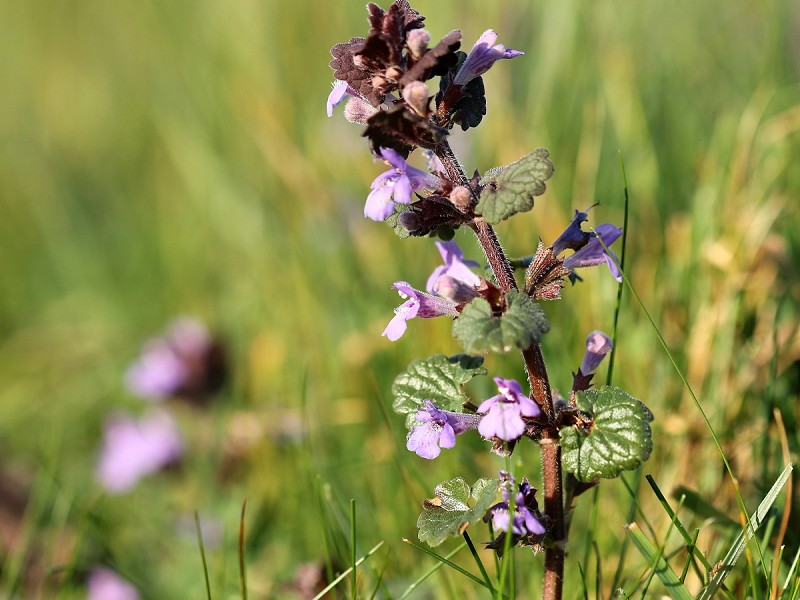
Ground-ivy (Glechoma hederacea) is a beautifully proportioned and supremely common perennial herb of the mint family. It's no relation of true Ivy in anything other than name (hedera) and relates to their shared evergreen nature, with leaves retained all year round. It's a creeping sprawler that typically uses underground stems, known as rhizomes, to promote growth. The volume of sunlight and environmental conditions ultimately dictate its height, which can in extreme cases reach 50cm though more usually to around half of this. Otherwise, it's an inconspicuous, somewhat overlooked species and the chances are most don't give it a second glance. Unless it happens to be growing in a well-manicured garden, in which case its aggressive growth may make it unwelcome.
It's tolerant of a wide variety of habitats, though ideally damp, well-drained and relatively neutral soils and can be seen in flower all the way through spring. Like other members of the mint family, it offers a fantastic nectar resource for insects early in the year and is particularly liked by a wide variety of bees. It's rare to find a large patch of ground-ivy without a chorus of buzzing wings nearby. Indeed, chalk downland areas in Sussex with plentiful ground-ivy cover have been found to support one of Britain's most heavily declining bee species, the Potter Flower Bee (Anthophora retusa).
Ground-ivy is an aromatic species, with a scent close to that of sage. Its use in traditional medicine dates back millennia, with benefits for lung and throat complaints particularly well documented. Though widely used in both traditional food and medicine it remains toxic to horses, and is a tad more astringent than other mints, thought to be due to the level of rosmarinic acid. It may not be widely known but ground-ivy is also a rather effective remedy against nettle stings. Its traditional name of 'alehoof' points to its use in the production and flavouring of ale during Anglo-Saxon times. Leaves were added during the brewing process, effectively clarifying the fermenting liquid, prior to the widely accepted introduction of Hops to Britain in the sixteenth century.


Ground-ivy © James Duncan