
Snuggling down for winter and shrinking shrews

Charlotte Owen
Conservation Officer
Some mornings you just want to stay in bed. It’s cold outside, it’s dark, raining or blowing a gale – no thanks, I’m fine where I am. Sometimes this is the best strategy for our wildlife too, and sleeping through the winter can be fundamental to survival – especially if you’re small.
Small animals struggle most to keep warm because their little bodies are wrapped in a large surface area of skin, meaning they lose heat quickly. So, just as a pint of boiling water will cool faster in a shallow tray than a tall mug, a tiny Common Shrew will lose body heat much more rapidly than a bigger Fox or Roe Deer.
It’s easier for larger mammals to stay active when it’s cold but smaller mammals must take more precautions. They too will grow a thicker coat of winter fur and it’s a common tactic to get as fat as possible in autumn, making the most of fruits, berries, nuts and seeds while they’re available. Some will also gather food and hide secret supplies to see them through the lean winter months. Even with a full larder, they’re still likely to burn more calories than they consume just to maintain body heat. So, on very cold days, it’s best to do nothing: hunker down in a cosy, dry nest and sleep.
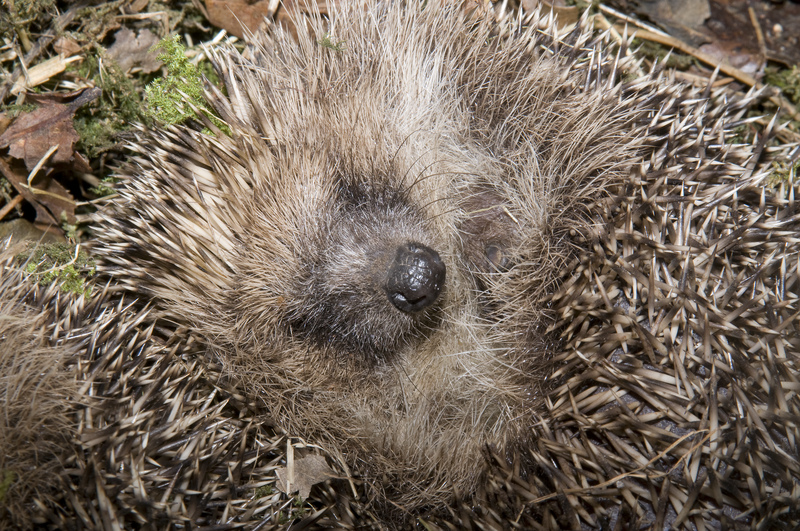
Sometimes small mammals will sink into a state of torpor, allowing their body temperature to drop close to ambient and slowing their breathing and heart rate to a bare minimum to conserve as much energy as possible. Some small birds do this too, usually overnight, while cold-blooded reptiles and amphibians shut down for most of the winter, tucked up in sheltered spots until spring. These extended periods of torpor are known as hibernation, and Hedgehogs are probably best known for this strategy. Together with all bats and Hazel Dormice, they are the only native mammals that do truly hibernate - they all rely heavily on invertebrate prey, which is particularly scarce in winter, so the only way to survive is to ‘sleep’ their way through.
Interestingly though, this isn’t an option for the tiny Common Shrew. It has such a high metabolic rate that even the chubbiest shrew would starve to death within hours if it stopped eating. Instead, shrews stay active even in the coldest months, and achieve this by a remarkable adaptation. They shrink! This would seem to make the issue worse, since being even smaller would mean losing even more heat. But, by shrinking themselves - including vital organs like the brain - a shrew needs fewer calories to survive. Since food is scarce in winter, needing less of it is a big advantage, and the shrew’s high metabolic rate produces enough excess heat to keep them warm while foraging. So, next time you’re tucked up under a cosy blanket, spare a thought for the busy little shrews still scurrying through the undergrowth.
Comments
If you find a cold unmoving short-tailed shrew can the animal be possibly alive?
I found one and I have it by a heater warming up. I don’t have high hopes but if I find one again I want to be more prepared.
13 Dec 2024 21:47:00
Sussex Wildlife Trust:
We suggest you contact one of the wildlife rescues for advice if this happens again: https://sussexwildlifetrust.org.uk/discover/wildlife-advice/injured-wildlife