
Six spring flowers to spot
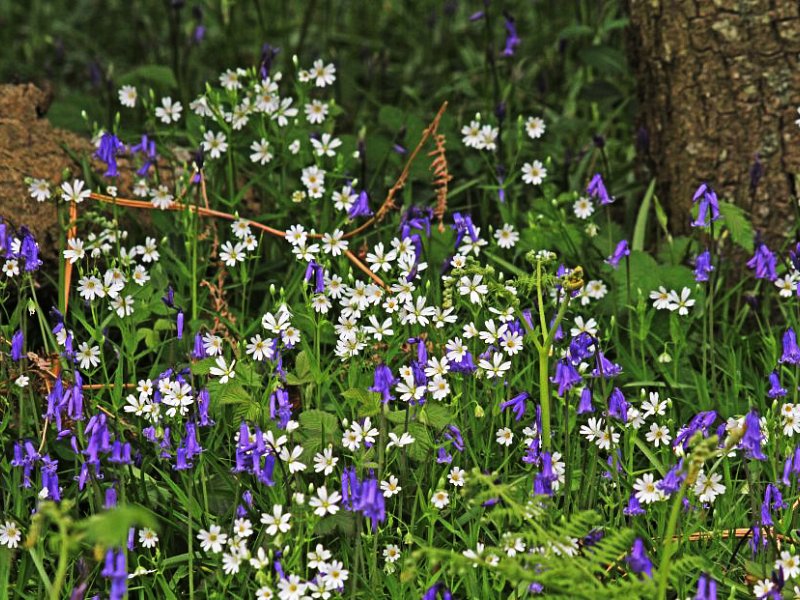
Woodlands and hedgerows in Sussex are bursting into life, here are six wild flowers to spot this spring.
Here are our top six blooms to spot this spring
1. Lesser Celandine

© Roger Wilmshurst
The Lesser Celandine is a welcome sight at the end of winter. Its golden –yellow flowers cover the woodland floor and damp banks. Most people think daffodils were Wordsworth favourite flower, but it was actually the Lesser Celandine.
"There's a flower that shall be mine,
'Tis the little Celandine."
- William Wordsworth, "To the Small Celandine"
2. Wood Anemone

Drifts of Wood Anemones carpet woodland glades, the flowers open and follow the sun during the day. This delicate flower is an indicator of ancient woodland, spreading slowly over time through the growth of its roots.
3. Dog Violet

With its purple flowers and heart shaped leaves, the Dog Violet is a distinctive flower of the Sussex countryside. The ‘dog’ part of its name refers to the fact that it produces no scent (unlike its sweet-smelling relative the scented violet). The Dog Violet is important as a food plant for rare woodland butterflies including the Pearl Bordered Fritillary and Silver-washed Fritillary.
4. Early Purple Orchid

© Stephen Watson
As the name suggest this is one of the first orchids to flower. Impressive deep-purple flower spikes appear from a rosette of spotty leaves. Sadly this beautiful plant is not as common as it once was, but it is adapted to a variety of habitats including in meadows, woodland and often on roadside verges.
5. Blackthorn

© Roger Wilmshurst
This small tree, also known as Sloe, will be familiar to many as it is seen in hedgerows across Sussex. The flowers appear in early spring, before the leaves, turning hedgerows into fluffy clouds of blossom. Blackthorn is brilliant for wildlife, providing an early source of pollen for bees and other insects, it is a food plant for moths and brown hairstreak butterflies and the dense thorns provide protection for numerous nesting birds.
6. Bluebell

Nothing is more evocative of a Sussex spring then a walk through a wood awash with bluebells. Their deep violet-blue colour and distinctive bell-shaped flower make native bluebells one of our best known plants. We are lucky enough in the UK to be home to half of the world’s total population of bluebells and spectacular displays can be seen across most of Britain, particularly in the South. Their rich nectar provides food for many butterflies such as brimstone, orange-tip, and peacock along with other insects including newly emerged queen bumblebees.
Unfortunately our bluebells face a series of threats from habitat destruction, illegal collection of bulbs, climate change and competition from non-native species.
Comments
Thank you. Very interesting and informative
11 Mar 2021 13:51:00
Thank you for posting the 6 flowers to look out for.
I have seen all of these so often, but now I know the names of all of them.
What a beautiful spring we are experiencing!
11 Mar 2021 20:16:00
I’m so loving these seasonal updates and talks. Could you provide a list of woods where we can see carpets of bluebells, please?
Answer: more information about bluebells can be found on our website15 Mar 2021 13:41:00
Thank you. It brings these little beauties to life to know their names. x
22 Mar 2021 16:38:00
We saw dog violets celandine and woodland anemone today in chick sands Bedfordshire
25 Mar 2022 16:55:00
Does anybody know where I can find Wood Sorrel sites in Sussex? I’ve learned the kind of habitat it prefers but given that it is thought to be a common wildflower I have failed to find it.
02 Jan 2023 17:50:00
Sussex Wildlife Trust:
Wood Sorrel typically grows deciduous woodland and can be an Ancient Woodland indicator. You can find it at SWT nature reserves, including Woods Mill, The Mens and Marline Valley. It usually flowers in April.
I was recently told that one reason for orchids giving up on our downland is dog wee. So many dogs taken to wee there changes the soil so the orchids can no longer survive on the changed soil. Is there any research on this?
12 Mar 2023 09:51:00
Sussex Wildlife Trust:
We don’t know of any research specifically on orchids and chalk grassland but there may well be some, and it is widely recognised that dog urine and faeces can alter environmental conditions (nutrient levels, pH etc), especially in areas that are heavily used for dog walking and alongside footpaths for example.