
Sea slugs, seaweeds and snorkel trails make headlines in The Wildlife Trusts’ 2024 marine review
By Sarah Ward
Marine Conservation Officer
- Ordinary people find extraordinary ‘climate indicator’ species in UK waters
- Wildlife Trust volunteers clock over 46,000 hours of surveys and beach cleans
- Research highlights the need to improve protection of the UK’s blue carbon
Innovation, research and a mammoth volunteering effort by people helped conservationists learn more about wildlife in UK seas, reveals The Wildlife Trusts’ 2024 marine review, published today.
Seaside volunteers clocked over 46,000 thousand hours surveying shorelines and recording wildlife. Discoveries include climate-indicator sea slugs and seaweeds, plus sightings of Conger Eels and Humpback Whales.
Groundbreaking research, pioneering nature recovery projects and a complete network of snorkel trails around Scotland also feature in the annual marine round-up.
The Wildlife Trusts – and 80% of the British public – want to see bottom trawling banned in protected areas, and measures to ensure that offshore developments are nature positive. The charities say that strengthening protection of the UK’s blue carbon can help to achieve climate and biodiversity goals.
Here in Sussex, we highlighted two stories: a new species to Sussex shores and celebrating three years of no trawling on the Sussex coastline.
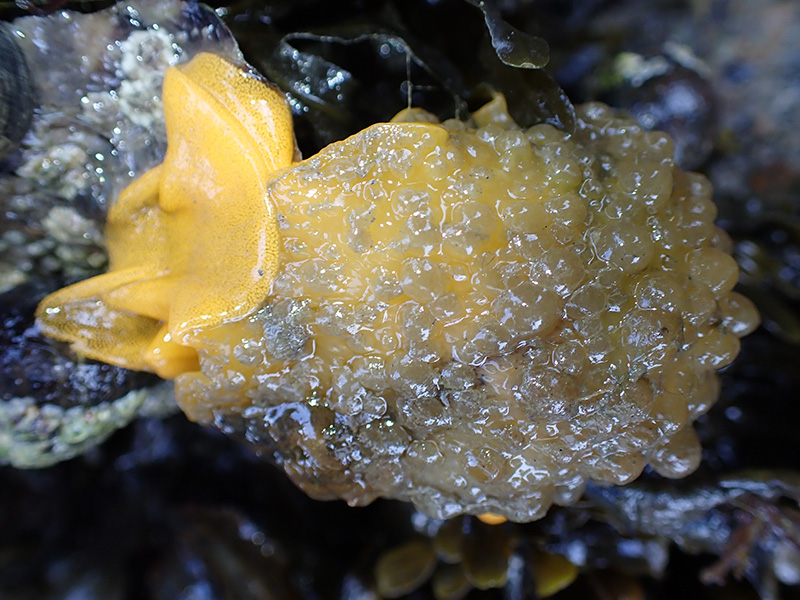
The Warty Doris – a new species for Sussex
In August, our staff and volunteers were thrilled to encounter a species of sea slug not previously recorded in Sussex, the Warty Doris, Doris verrucosa. As its name suggests, this species is covered in distinctive warts which form part of its mantle, which is the dorsal surface of the animal (sea slugs are molluscs, but just like their garden-variety counterparts, they do not possess a shell).
The species was found on one of our Shoresearch surveys, in the lower intertidal zone at Pilsey Island (Chichester Harbour). As can often be the case with sea slugs, the egg masses were actually spotted first – this is always a good indicator that there’s sea slugs around and to keep an eye out for them. Sure enough, we then found a number of the sea slugs shortly afterwards. The species had been recorded for the first time last year in the Solent, so it’s unsurprising that it’s made its way across the boarder to Sussex, particularly given that this site has lots of its favourite food, the Estuary Sponge, Hymeniacidon perlevis.
Over three years of protection for the Sussex coast
In March this year, Sussex Kelp Recovery Project celebrated 3 years since the Sussex nearshore trawling byelaw saw 300km2 of local seabed protected from bottom-towed fishing gear. The removal of this pressure has given the ecosystem a chance to recover, with large expanses of Blue Mussel beds appearing and increases in Black Sea Bream being reported by freedivers, fishers and scientists alike.
Blue Mussels act as an ecosystem engineer, binding the seabed sediments together and creating a three-dimensional habitat. These beds are essential for the recovery of our underwater forests, as in the absence of rocky seabed, mussels provide kelp with a hard surface to latch onto and grow. Our hope is that as these mussel beds grow, they will allow kelp to re-establish and the marine life associated with them to flourish.
Ruth Williams, Head of Marine Conservation at The Wildlife Trusts, says:
“People are central to nature recovery and made huge contributions to our knowledge of UK seas this year. Wildlife surveys and monitoring have led to incredible discoveries, including new species on UK shores. Success stories demonstrate the enormous value of marine conservation and why robust protection is critical for nature recovery.
“As the first country to map all its blue carbon habitats, the UK has a unique position to champion better protection for seabed habitats. They are the unsung heroes in our fight against climate change. We need policies that stop damaging activities in protected areas, plus continued support for innovation, monitoring and work to improve coastal habitats.”
The Wildlife Trusts’ Marine Review 2024 can be read here.