Say hello and wave goodbye
By James Duncan
Communities and Wildlife Officer
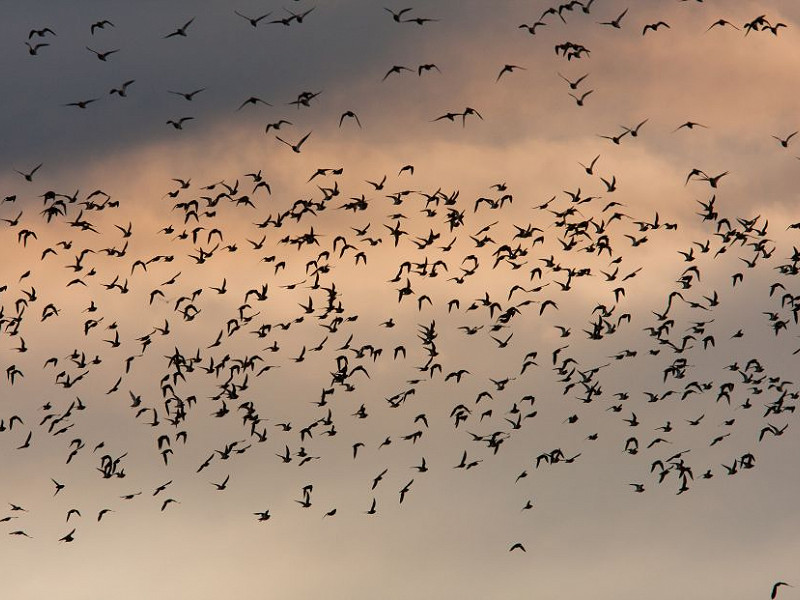
Just over a week ago, most people began to stash their seasonal shorts in the 'warm weather' clothing drawer and the Autumnal Equinox signalled the end of summer for the Northern Hemisphere. As the nights lengthen beyond the diminishing hours of daylight, signs of autumn become prominent - golden leaves begin to fall, seeds begin to ripen, flowering ivy provides a daily bounty, colourful fungi dot the dew-laden ground and the cooling nights punctuate mornings with ethereal mist. But this aside, it also signals a time when vast numbers of birds are on the move.
These spectacular movements are of course migration - a bird's direct reaction to the availability of resources, through adaption to the seasonality of many of Earth's environments. The patterns of movement that birds have evolved for this purpose are both hugely variable and staggeringly complex. They're also incredibly demanding and require remarkable feats of stamina and endurance - many will fly thousands of miles over open seas, barren terrain and even mountain ranges to make it to Britain.
It may seem more logical to associate spring as the key time of mass migration, but autumn sees vast numbers of birds undertaking this unparalleled phenomenon. Of course, birds have the perfect mechanism for dispersal, allowing them to uniquely adapt to some truly isolated and inhospitable parts of the planet. However, with average winter temperatures in the Arctic circle hitting -35°c, few birds which devote the vast proportion of their metabolism to regulate body temperature feel inclined to stay! Paradoxically, whilst many birds rapidly depart cooling northerly latitudes, we're fortunate to welcome many more who appreciate the UK's 'comparatively' warm winter climate (courtesy of the Gulf Stream). In fact, Britain is unique in drawing winter visitors from a longitudinal region extending more than half way across the planet; from Siberia to Canada.
More than 1.5 million waterfowl, approximately four million waders, 2.5 million gulls and assorted seabirds arrive from abroad to overwinter in and around Britain. However, even these numbers may be dwarfed by the 20+ million passerines ('true perching birds' that form the largest Order of Birds) that collectively arrive on our shores.
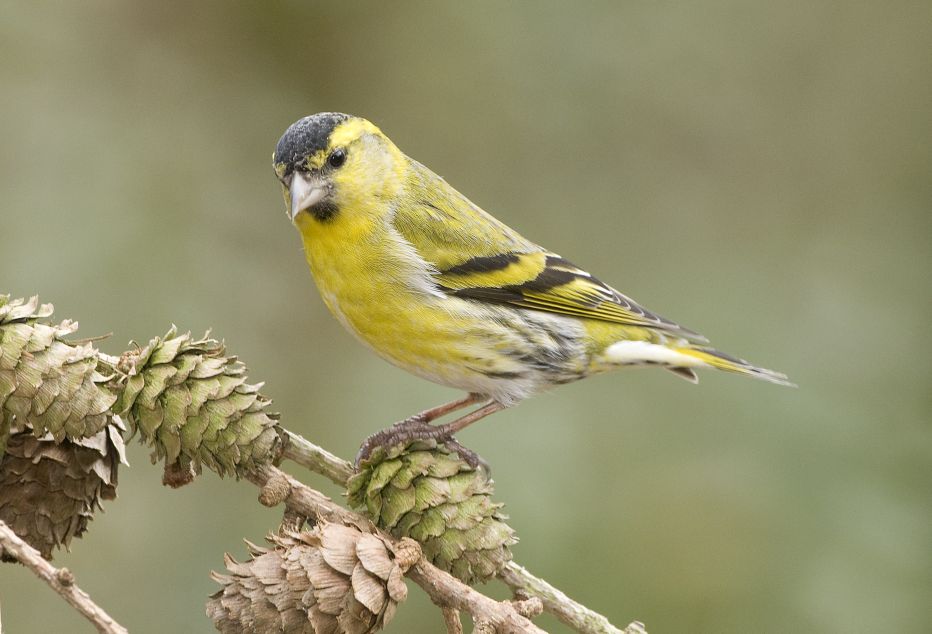
As we wish bon voyage to our Swallows and Martins, Hobbies, Wheatears, Warblers, Yellow Wagtails and many more, we'll greet this suite of new visitors but also see numbers of our familiar resident birds significantly bolstered by European populations - Siskin, Goldcrest, Chaffinch, Starling, Blackbird, Chaffinch, etc. Somewhat surprisingly, there are actually few species in northern Europe that have little to no migratory instinct - think Tawny Owl, Green Woodpecker, Grey Partridge, Crested Tit, etc.
So, just who will be arriving in Sussex? And where have they come from? Here's some you might spot.
Lovely weather for Ducks? (and Geese, and Swans...)
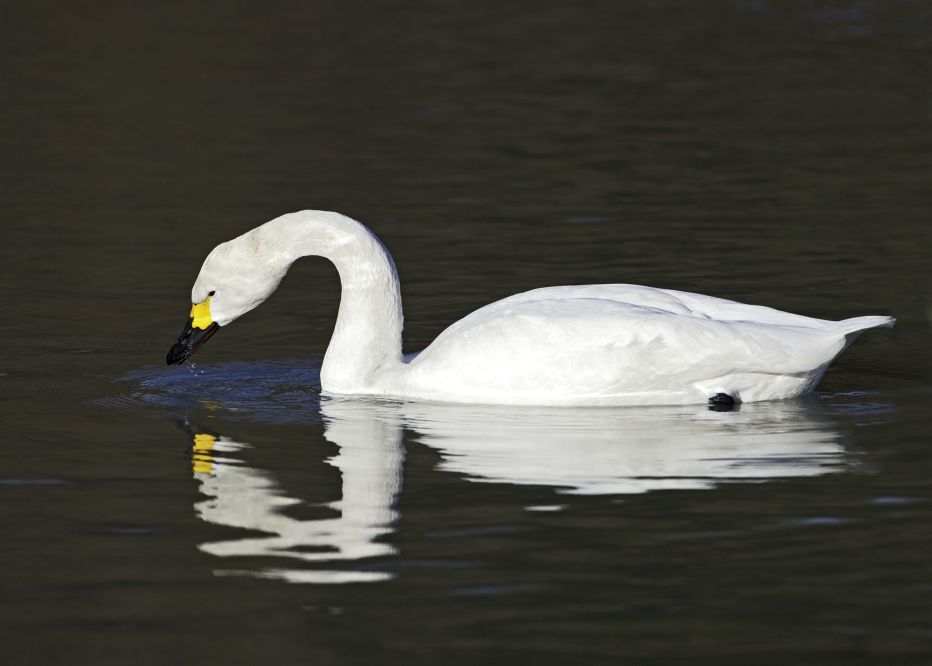
Bewick's & Whooper Swan
Keep a careful eye out for Swans that look that little bit different to our resident Mute Swans. With (black-tipped) yellow beaks (instead of the Mute Swans' orange beak) they're otherwise similar, though the Whooper is particularly long necked and the Bewick's is a smaller, more compact bird than either. With hugely powerful wings, they're capable of big journeys at surprising speed! The hardy Whoopers typically arrive from Iceland and Scandinavia whereas the rugged Bewick's breed on the icy tundra of Northern Siberia.
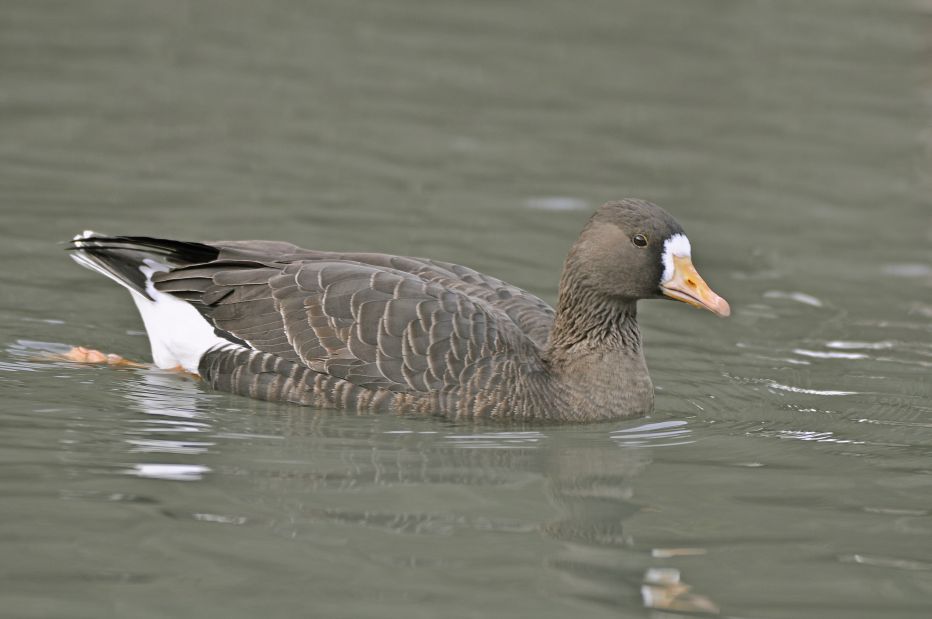
White-fronted Goose
Shrink a Greylag Goose by about a 1/4, add a splash of white to the forehead and base of the beak and you have a White-fronted Goose (technically a 'Greater White-fronted' in this case). Look out for flocks of them on low-lying coastal grassland. Whilst one race breeds in Greenland and winters in Scotland and Ireland, birds here in Sussex are a subspecies that can be found breeding on Russian tundra close to the Arctic Ocean. If European winters are particularly brutal, even more will turn up in southern Britain.
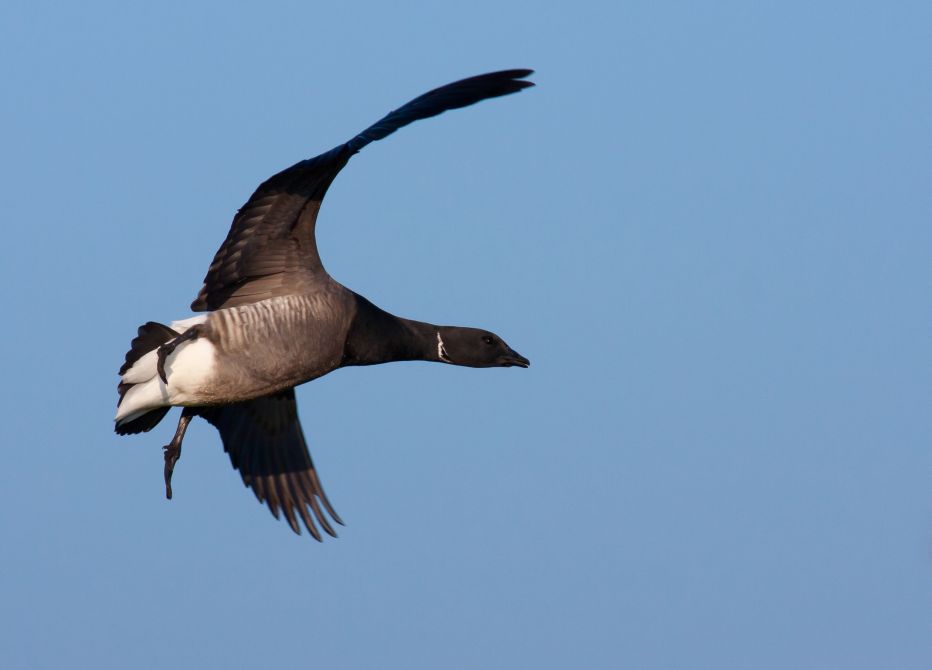
Brent Goose
The Brent is a miniaturised Goose, actually the size of a Mallard, though longer-winged. Technically there are three races that visit Britain, though the one most often encountered in Sussex is the 'dark bellied' race. Keep your eyes peeled on estuaries and saltmarsh and don't be surprised to see them sea swimming and up-ending. A true Arctic wanderer, nesting further north than any other Goose, family units migrate together from tundra on Arctic islands and coasts. Britain may in fact house nearly half the world population of Brents through winter!
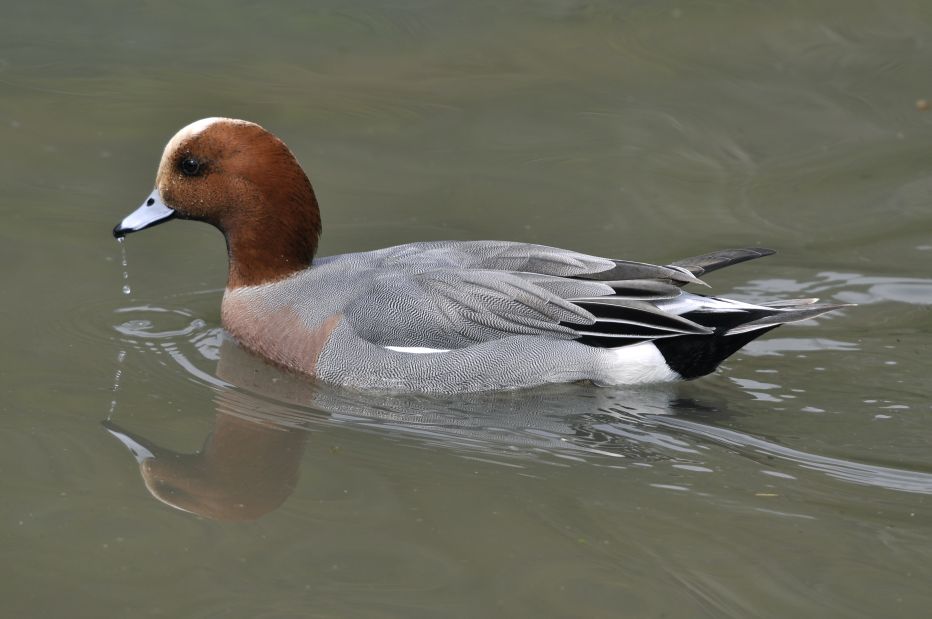
Wigeon
The whistle ("weee-oooo") of the Wigeon is a common backdrop of a winter wetland. An attractive duck, the male has a striking chestnut head with a tan stripe across the top. Though Britain has a small, but scattered breeding population, it's only 0.5% of the wintering total (approx 1/2 million). Their numbers really start to build from October. The vast majority of northern Wigeon are found breeding on boreal forest lakes and tundra pools across Iceland, Scandinavia and northern Russia.
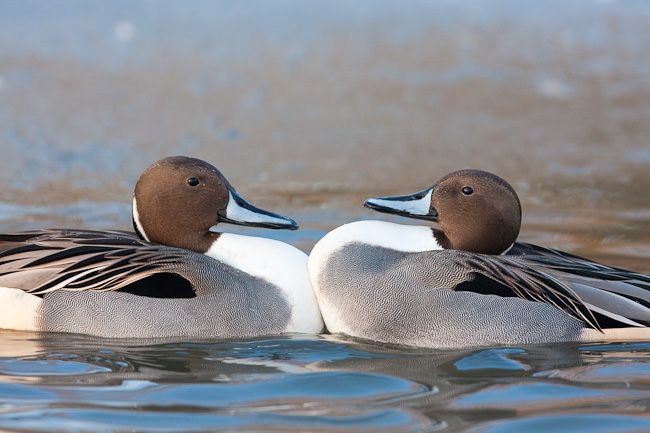
Pintail
You really can't miss a male Pintail in breeding plumage (from late autumn). A magnificent and elegant duck, with a chocolate brown head and pair of striking 'pin' tail feathers, the Pintail is slightly larger than a Mallard. Wintering Pintails converge on Britain's tiny breeding population from all directions - Iceland, Scandinavia, the Baltic and Siberia. Usually found breeding on lowland, steppe and tundra pools, over 40% of Europe's population may reside with us in winter.
Goldeneye
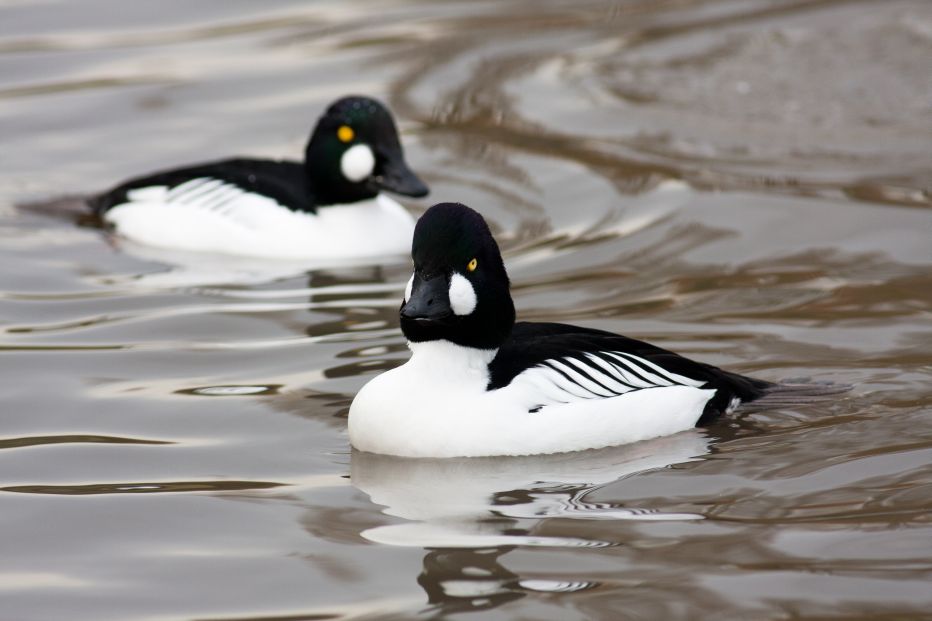
Compared to the two 'dabbling' ducks above, the Goldeneye is a compact 'diving' duck, the male exhibiting a distinctive gloss green head and female, chocolate brown. Look out for their courtship display in winter, the male demonstrating extreme flexibility by throwing his head back along the body. With an unusual propensity for nesting in trees, Britain has only a small breeding population in Scotland. Most migratory Goldeneye winter on large lakes and reservoirs, having flown from Northern Europe and Russia, though all populations move south from their breeding areas.
Common Scoter
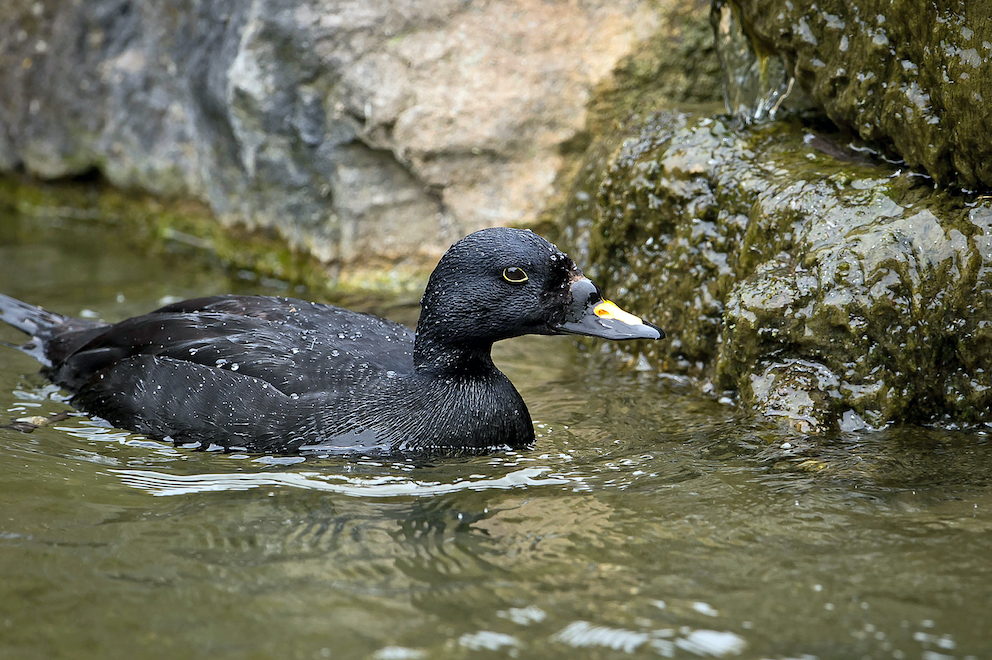
You'll have to look at a different habitat for this one, for the Common Scoter is in fact a sea duck. A buoyant, restless species, you're likely to spot them in flocks, often standing on their tails and flapping wings. Look out for long straggling lines of dark birds (completely black in the case of the adults) flying in loose formation over the water. It's now one of our rarest breeding species, but found more typically breeding in the boreal forests of Scandinavia & Russia, migrating by day in autumn to reside around the coasts of western Europe.
Wading through Winter
Grey Plover
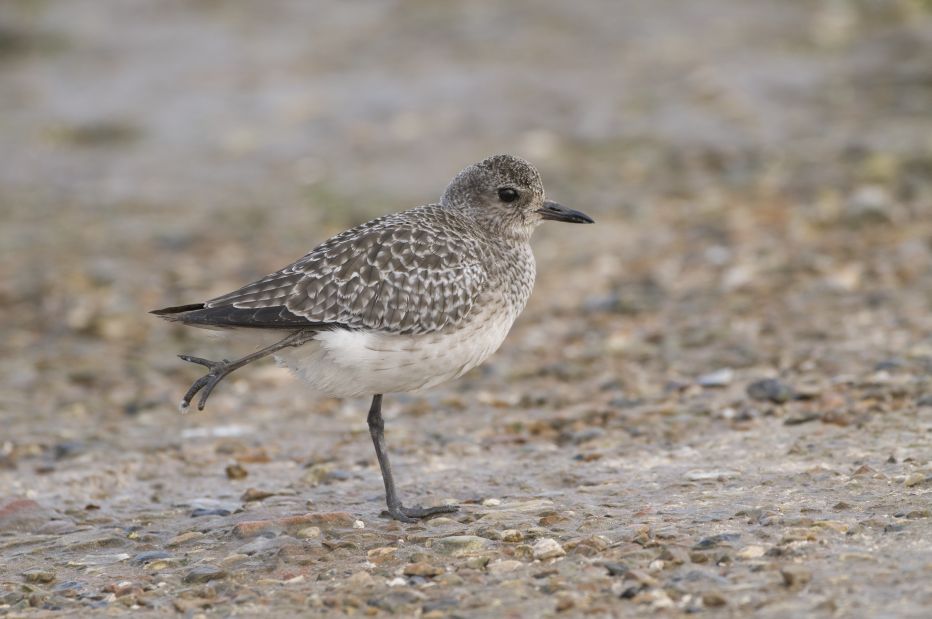
This stocky plover is indeed largely speckled grey, though you may spot early individuals arriving in breeding plumage with extensive black underparts, which they'll then moult. A species that doesn't nest in Britain, it spends its spring and summer in the high Arctic, with the majority moving on to Africa to overwinter. The Grey Plover is a seriously spectacular migrant, capable of non-stop flights of 4000 miles. Most of the birds seen here in winter are males and as a whole, it's seen in much smaller flocking numbers (often solo!) than the next bird...
Golden Plover
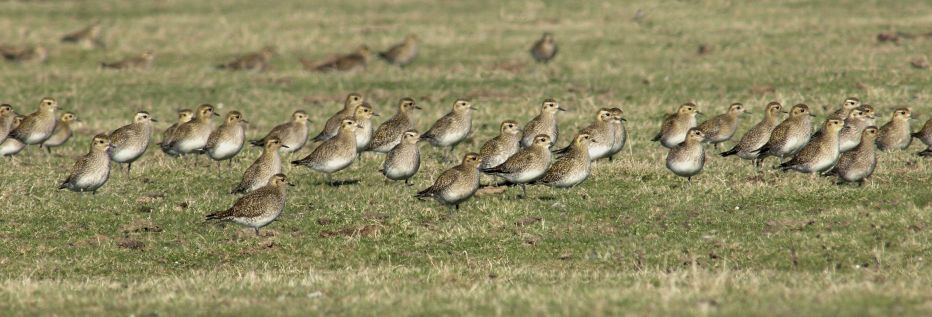
Living largely up to its name, an assorted palette of colours create an appearance of spangled gold on the upperparts. Though Britain has a significant breeding population, it's still only between 5-10% of the wintering total. Residing on upland moors whilst breeding, it undertakes an altitudinal migration to spend the winter around coastal sites and lowland pasture, where you'll often see them in the company of lapwing. Winter flocks are truly spectacular, numbering hundreds, if not thousands of birds - check them out at Rye Harbour, where the contrast between the brown-gold back and white underparts is particularly prominent in flight.
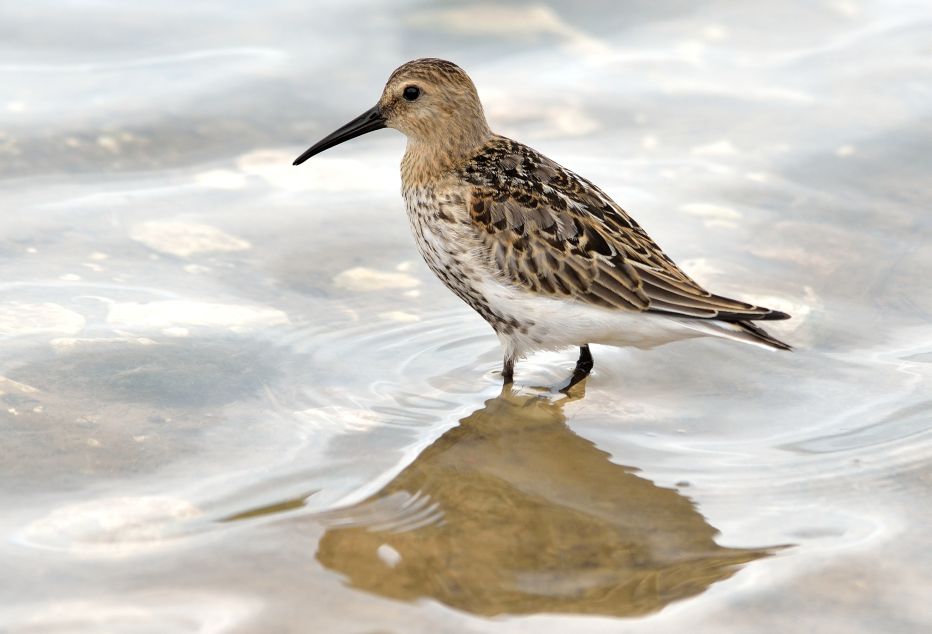
Dunlin
The diminutive Dunlin is the yardstick 'Sandpiper' with which to compare all others to. Only the Knot is found here in anything like comparable numbers. None the less, Dunlin populations have crashed by over 50% in recent years. With a bewildering variety of plumages to confuse the non-wader aficionados, the Dunlin is typically seen both feeding and roosting in flocks in winter. Dunlins nest across a huge longitudinal range from North America to Northern Asia, though somewhat confusingly there are six races worldwide - the ones that do breed here don't stay, whereas two other races that don't breed here join us for winter! (from Scandinavia and Arctic Russia).
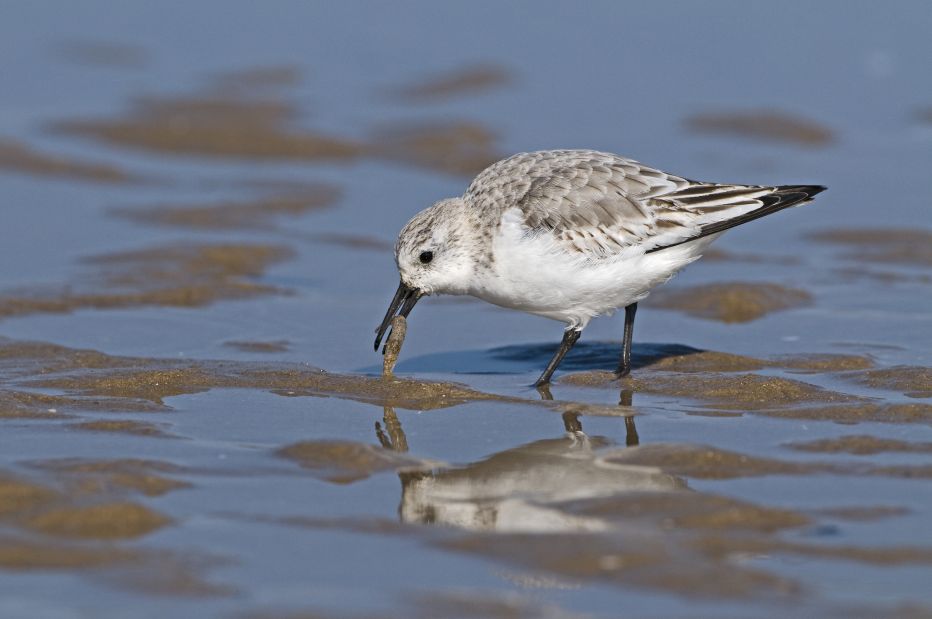
Sanderling
A smidge larger than the Dunlin, the charismatic Sanderling is a tiny fizzing ball of energy. You'll see it manically following retreating waves on the shoreline in its search for food. In winter plumage it's a starkly pale bird, punctuated only by black legs and bill. The Sanderling doesn't breed in Britain, spending its breeding time on high Arctic tundra near freshwater lakes and within spitting distance of the North Pole. This tiny bird will pile on body weight to give it enough energy to complete 3000+ mile non-stop migratory flights.
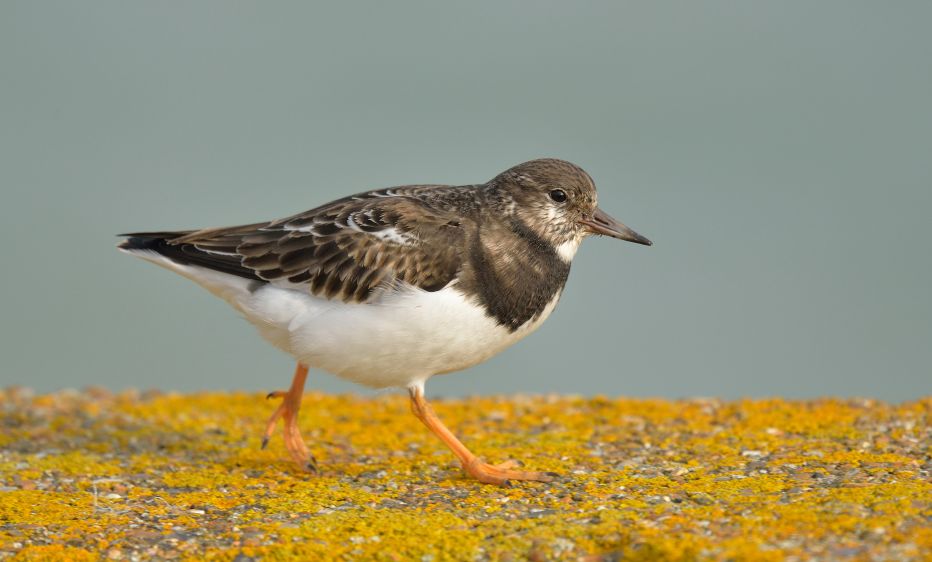
Turnstone
The Turnstone is well named, frequently observed tossing pebbles and seaweed aside to reach mollusc and invertebrate prey. It's a bold approachable species, often observed in close proximity to humans. Turnstones don't breed here and spend the warmer northern hemisphere months stretched right around the Arctic Circle. They'll turn up in Britain in two waves, those from Northern Europe which pass through on route to Africa in July/August and those from Greenland and Canada which typically overwinter here. Look out for them associating with the rarer Purple Sandpiper, another Arctic nester, particularly around rocky coast and breakwaters.
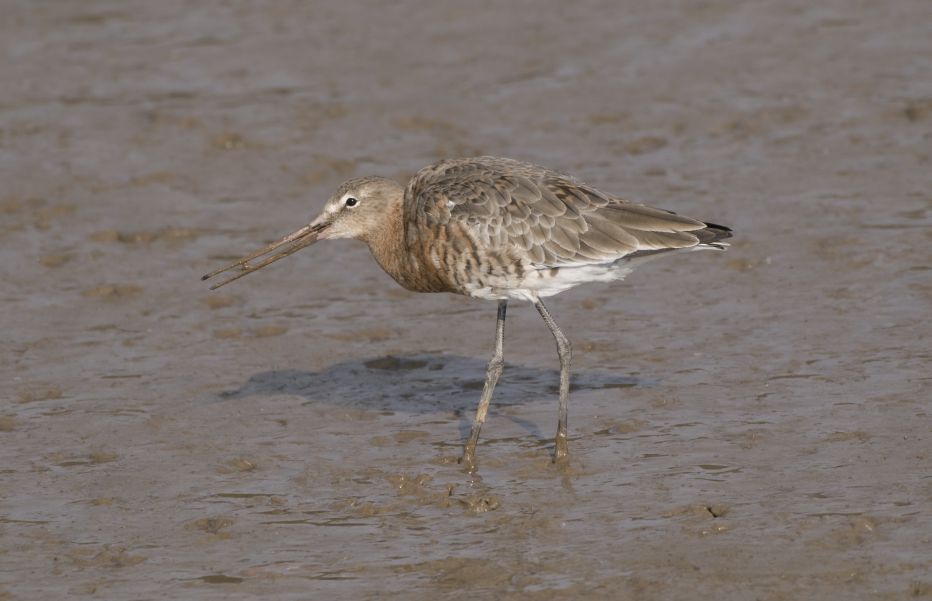
Black-tailed and Bar-tailed Godwit
Both these species may be seen here in winter, with the Black-tailed displaying longer legs and the Bar-tailed a slightly upturned bill. Perhaps the easiest way to split the two is in flight, where the Black-tailed presents a bold white wing-bar, the Bar-tailed does not - hence 'Black & White' or 'Bar none.' Our largest waders aside from the Curlew, the Godwits are significantly more subdued in winter plumage (as are the vast majority of waders!) The Black-tailed exists in three races worldwide, though it's typically Icelandic breeders (a subspecies) that remain in the UK for winter. The Bar-tailed breed on open tundra and taiga bogs in the sub-Arctic, not breeding at all in Britain, (unlike the Black-tailed) but winter around the North Sea and Atlantic coasts.
Keeping cosy inland
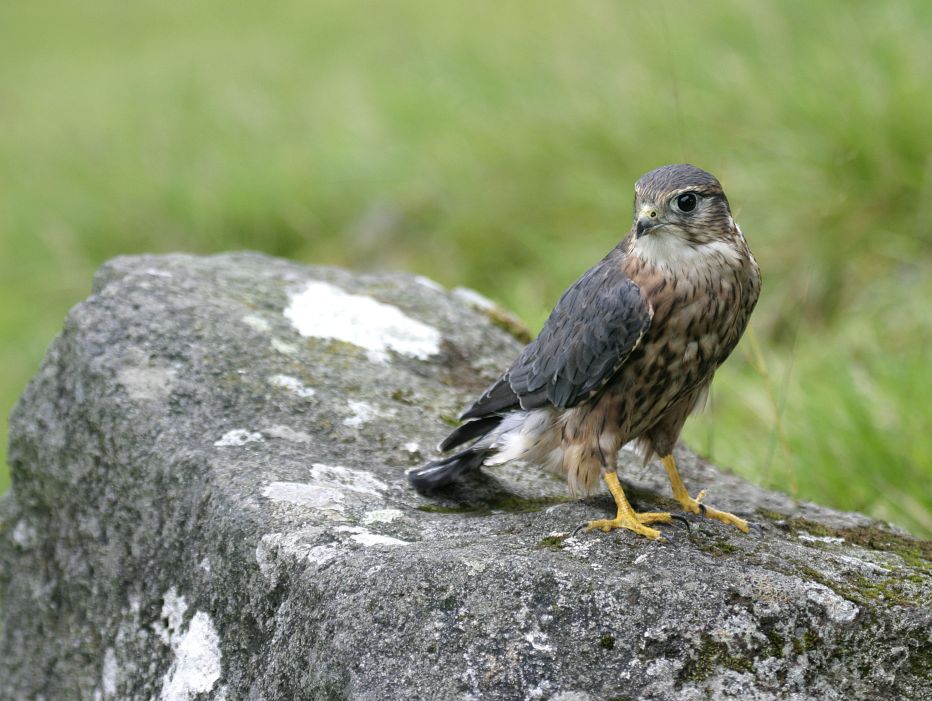
Merlin
The mighty Merlin punches well above its weight by being a superbly aerobatic and skilful hunter. The females are a good chunk larger than the diminutive 'Mistle Thrush sized' males. You may witness their their dashing speed and agility as they chase small birds a short distance above the ground. An explosion of Meadow Pipits frantically dispersing often signals a Merlin's arrival. Traditionally nesting in northern and western British uplands, (and throughout Northern Europe) Merlins disperse widely in winter, visiting farmland and coastal marshes.
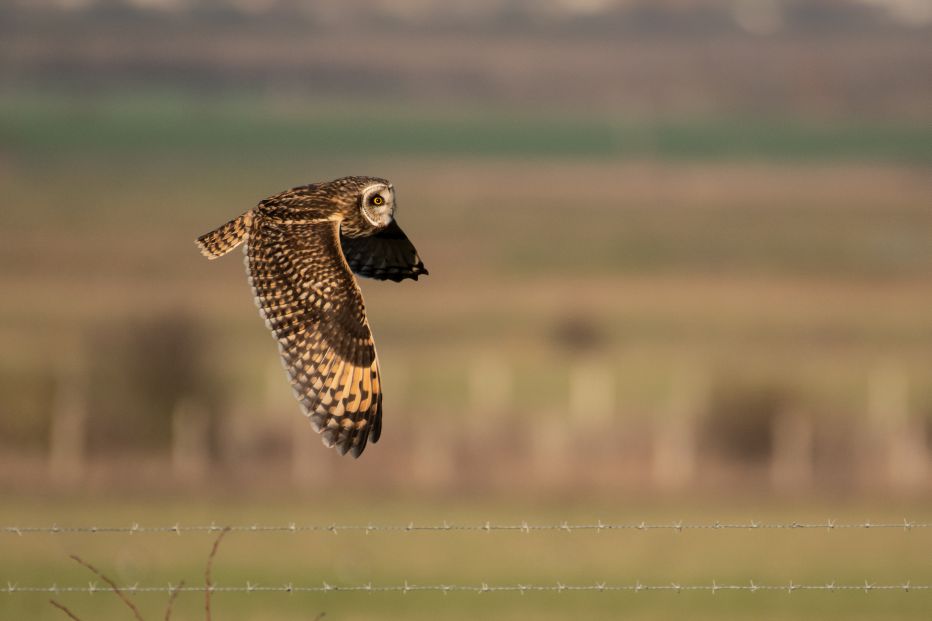
Short-eared Owl
Unusually amongst Britain's owls, the Short-eared is both a diurnal and crepuscular hunter - seen in daylight and at dusk/dawn. Long-winged, often gliding and with bright yellow eyes, this mottled brown owl can often be seen perching on the ground. Like the Merlin, it breeds in upland Britain, but is a highly nomadic species, roving around to where prey is most abundant. They breed in a broad front across Northern Europe and Russia, with some making it all the way to central Africa to overwinter, though it's predominantly those furthest north that choose to leave their breeding areas.
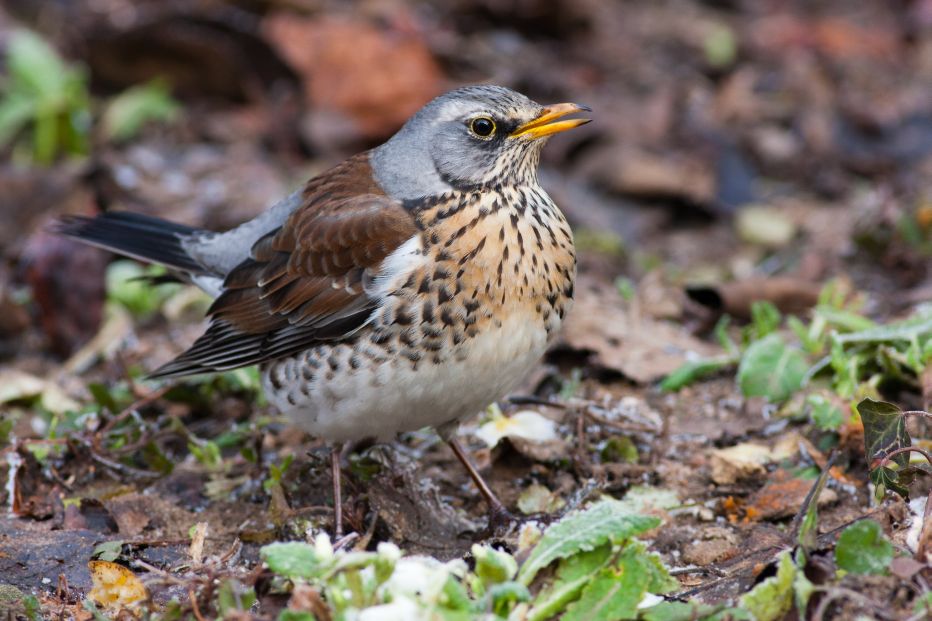
Fieldfare
Add a good splash of grey and chestnut to a Mistle Thrush and you end up with the highly attractive Fieldfare. It's a stocky, long-tailed thrush that lacks the significantly undulating flight of Mistle Thrush and has a prominent grey rump. Fieldfare have an extensive breeding zone across central and Northern Europe, dispersing nomadically to join us in early autumn. Expect their arrival to ramp up in pace from October, though that'll only be the case when responding to food shortages or particularly severe Scandinavian weather. Keep an ear out for their distinctive flight calls, which resemble a rapid camera shutter going off ("schack schack schack").
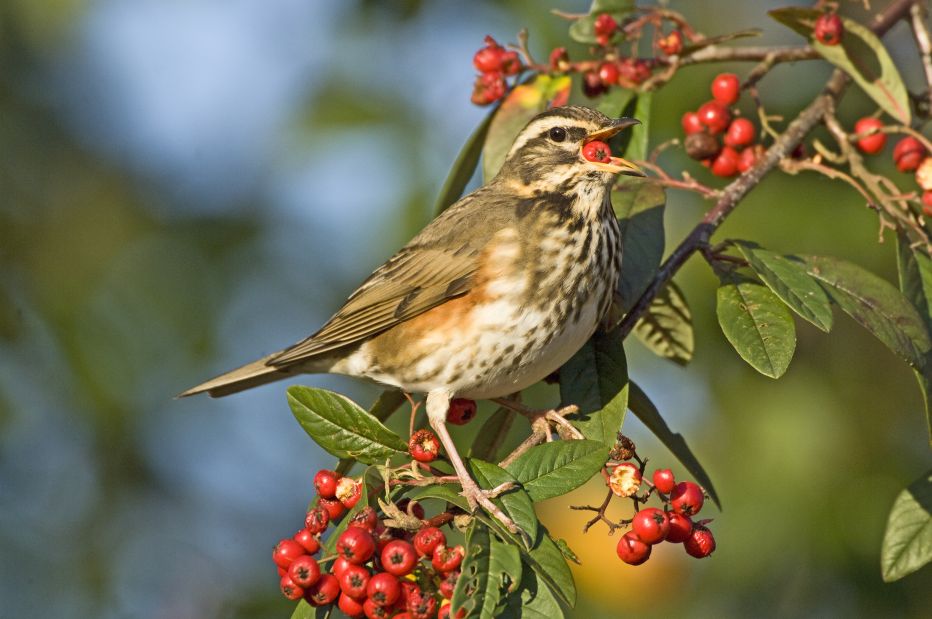
Redwing
A thrush emanating from the upland birch and conifer forests of Scandinavia and Siberia, the delicate Redwing usually seeks to join us in Britain during October. Head outside during the evening (no matter where you live) and you may well be treated to the flight call of this nocturnal migrant, a high-pitched and particularly thin "pseeeip." Whereas Icelandic Redwing will normally be found in Scotland during winter, birds from Sussex will likely stem from Scandinavia. Like the Fieldfare, Redwings will roam widely looking for fruit and berries, before switching to invertebrates when the cache is expended.
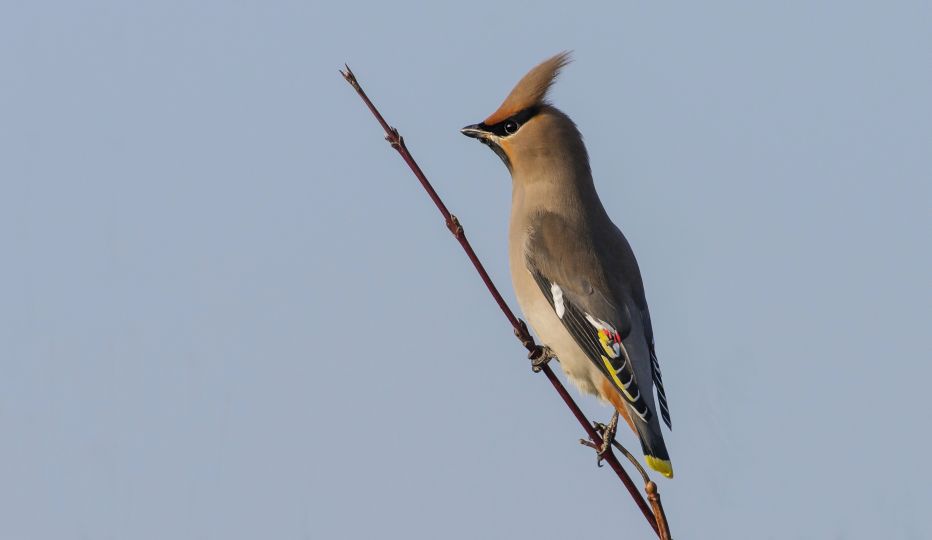
Waxwing
This Starling-sized bird really is a unique looker amongst European species, silky smooth, immaculately preened, overwhelmingly striking. Fingers across the country are usually kept firmly crossed for the impending arrival of the Waxwing. Unfortunately it's unpredictable in nature as there's no guarantee any significant numbers will leave their breeding areas across the northern coniferous belt. Typically we have to rely on Waxwing 'irruptions' when their population exceeds the available food resource. Should this happen, keep an eye out for them at your local supermarket thanks to the amenity planting of berry-laden trees.
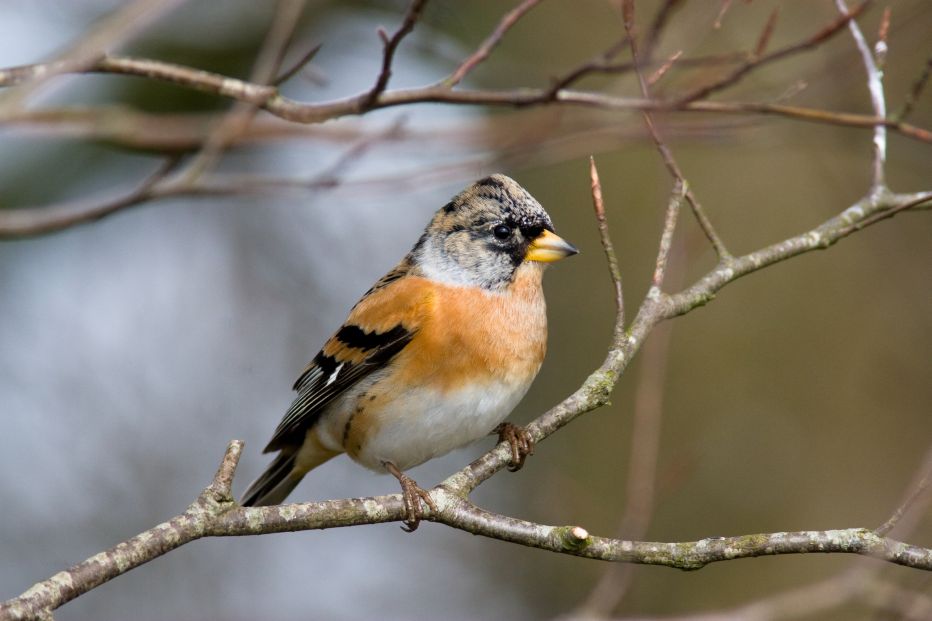
Brambling
You could easily miss a Brambling, for they blend in well with a flock of their close cousins, the Chaffinch. A clear white rump tends to split them in flight, whereas their mottled plumage with spotted flanks helps when feeding on the ground. Known as 'upland Chaffinch' this shy species breeds in in the mixed forests of Scandinavia and northern Russia. Though many will head south in Europe following the availability of beechmast, many may winter here. That number may fluctuate between many thousand to a couple of million - when the beechmast is at its most plentiful, enormous flocks may form. Check those Chaffinches carefully!
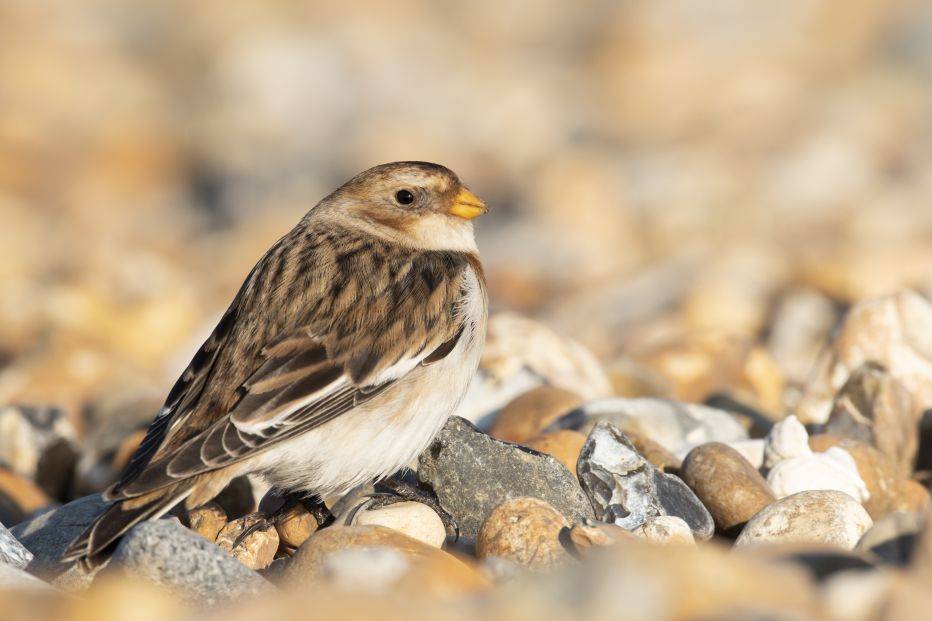
Snow Bunting
Likely the world's most northerly breeding songbird, the delightfully confiding Snow Bunting breeds in an extensive tundra zone right the way around the Arctic Circle. You're most likely to see them foraging on the ground, on strand-lines and coastal grassland where they appear to shuffle along with barely perceptible legs. Most arrivals here stem from Iceland, Greenland and the Faroe Islands and you may well be mighty surprised at just how approachable these birds are.