
Rye Harbour Nature Reserve sightings March 2026
By David Bentley
The UK experienced its joint tenth hottest March, in a series dating back to 1884, with the Rye area being warmer and drier than usual, but with an average amount of sunshine. This weather provided some welcome respite after a very wet start to the year.
March is a month filled with excitement at the first proper arrival of summer bird migrants and also with anticipation that the main floodgates are about to open.
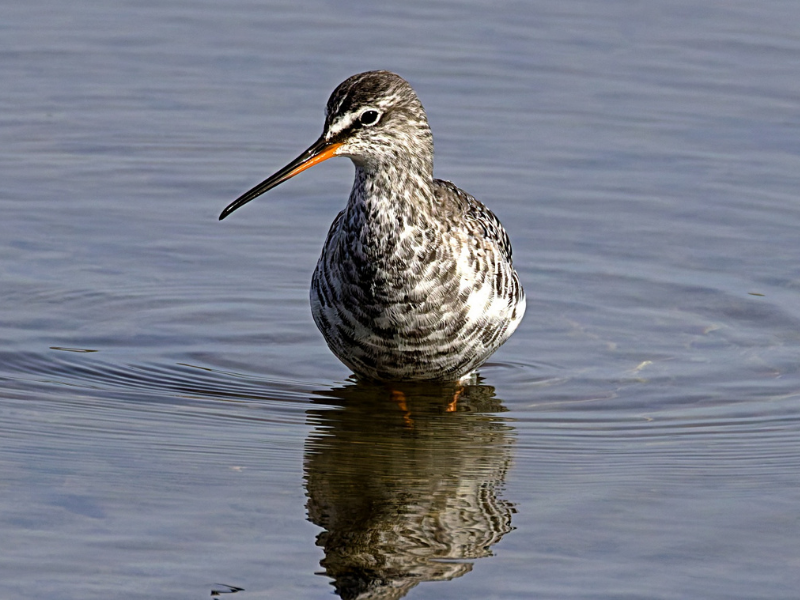
After another winter in residence, 'our' Spotted Redshank started its moult towards the end of the month. You can watch its ghostly, pale elegance being replaced by tarry-black beauty.
Our first Little Ringed Plover was seen at Salt Pool on 11th, four others having been seen at nearby Pannel Valley on the exceptionally early date of 5th.
Two Black-tailed Godwits on 14th, 11 Ruff on 18th, all at Flat Beach, and a single Bar-tailed Godwit on Salt Pool on 19th hinted at a (hopefully) heavy passage of spring waders soon to come.
Around 40 Golden Plover were still present at the end of the month, most now sporting their smart summer suits. Catch them quick, as they'll be heading north very soon.
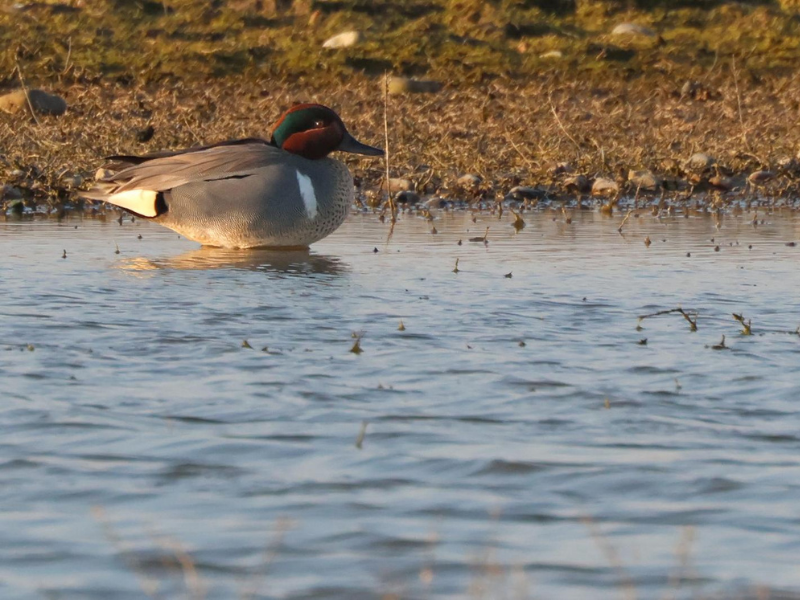
Bird of the month goes to the male Green-winged Teal seen on 19th at Salt Pool. This is the American cousin of our Eurasian Teal. The male birds of the former species are easily picked out as they have a bold, vertical white stripe down the side of the breast, as opposed to a horizontal white stripe along the body of our resident species.
Scaup is an increasingly scarce winter visitor, so it was great to have a male bird at Castle Water on 24th.
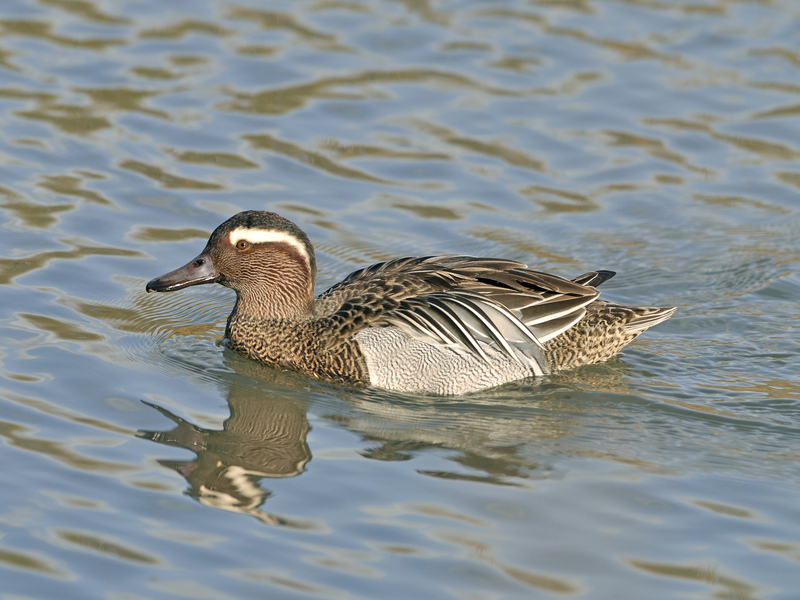
A male Garganey - a regular and popular early spring migrant - was at Salt Pool from 11th until at least 20th.
Over 100 handsome Sandwich Tern were gathered on Flat Beach by the end of the month. Listen out for their 'squeaky-garden-gate' calls as they pass over, heading out to sea to feed.
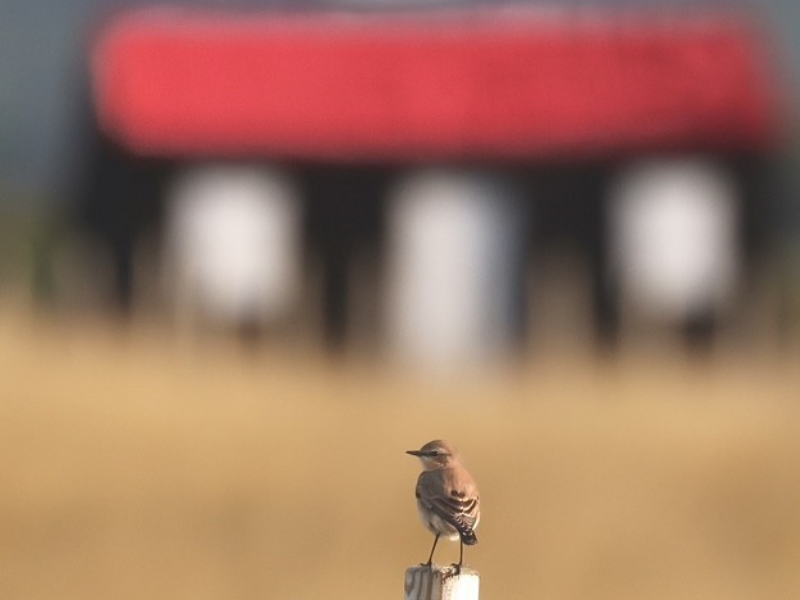
One of the special days of the year on the reserve is when the first Wheatear arrives. As usual it was an almost impossibly beautiful male bird, this time at the north end of Castle Water on 16th. There were at least three more there on 26th. The male birds are usually seen first, stealing a march on the females, so that they arrive at their breeding grounds first, ready and waiting to woo.
Several pinky-tinged 'Scandinavian' Rock Pipit (sub-species littoralis) could be seen right in front of Gooders Hide on 6th and 7th.
The first Sand Martin sighting of the year consisted of at least ten birds at Castle Water on 26th. The first Swallow was seen near the caravan park on 28th. We know that just one
Swallow doesn't make a summer, but we can be sure that we are now well into spring, with the exciting months of April and May to follow.
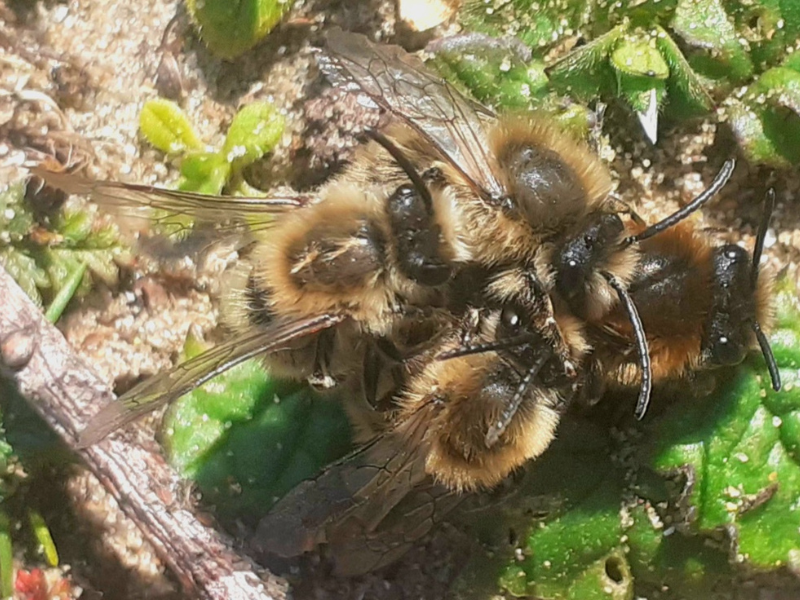
The Castle Water colony of rare Early Colletes Bee was extremely active on 19th. Emerging females were immediately pounced on by hoards of super-keen males, forming excited 'mating balls'.
Plants in flower this March included Coltsfoot, Danish Scurvy-grass, Blackthorn and Wallflower, the latter on the ramparts of Camber Castle.
Comments
Did not know about you & your blog. Lovely to see.
10 Apr 2026 16:30:00
Very informative. Thank you!
25 Apr 2026 07:12:00